Bellflower Wood Flooring handles wood-flooring in Bell with more than 20 years in the trade, and many of the calls we take from this city arrive with a sale already on the calendar. A seller wants the floors ready for showings, or a buyer has just been handed a list of items to correct and wants to know where the floors fit.
We plan floor work around that timeline. Refinishing, board replacement and new installation each have their own sequence, and the order matters more when a report, an escrow and a moving date are all in play at once. Getting that order wrong usually means sanding a floor twice or tearing out work that was just finished.
This page covers what the city’s presale process looks at, which floor jobs are best finished before the report is ordered, what records to keep when work goes deeper than the finish, and how a buyer can plan floor repairs alongside a correction agreement. Through all of it we measure moisture, write down what we find and put every scope in writing.
What Bell’s Presale Report Actually Covers

Bell requires a Real Property Presale Report under Ordinance 1173, adopted in September 2008, before residential property changes hands, and the same requirement reaches commercial and industrial property. The city covers about 2.5 square miles on the west bank of the Los Angeles River, so in a city that compact one ordinance touches a large share of the houses that sell.
Permits, Codes and Structures
The report covers whether required building code and Uniform Code permits were issued for work on the property. It also reports on compliance with health, safety and property-maintenance codes, on nonconforming or illegal structures, and on land-use approvals. Before an escrow can close, the city discloses to the buyer what its records show about the property.
It is a records and compliance check, not a flooring inspection, and we never tell a seller otherwise. What it does touch is the paperwork behind any work that went past the surface, which is where a floor job can end up mattering. That distinction shapes almost every conversation we have with a Bell homeowner getting ready to list.
Why the Ordinance Exists
The Bell Municipal Code states the purpose plainly: the report protects a buyer against undisclosed restrictions on the use of the property, or the illegal construction of additions, alterations or improvements. The concern is work done without the approvals it needed, discovered only after a new owner has moved in and started paying for it.
For floors, that framing is useful. Refinishing a worn finish is maintenance, while cutting into a subfloor, reframing around an old floor furnace opening or sistering a sagging joist is work on the structure of the house. A seller who knows which side of that line a past job fell on can answer a buyer’s questions without guessing.
When the Report Applies
The report is tied to a sale, and the code excerpts we have read say it is not required on a refinance. Two title and retrofit sources list the fee at $200. Owners who are only refinancing skip this step entirely, but anyone listing the property faces it, and knowing that early helps when floor work gets scheduled.
Code enforcement runs on a separate track. Bell’s Code Enforcement Division lists properties in deterioration and disrepair among the violations it addresses, and its officers work both proactively and reactively. That program operates year-round, sale or no sale, so a house in visible disrepair can draw attention outside the presale process as well.
Looking for wood-flooring closer to Los Alamitos? See Wood-Flooring in Los Alamitos.
Floor Work Before the Report Is Ordered
Most floor work a seller wants is cosmetic, and cosmetic work is easiest to finish before the report is ordered and showings begin. The goal is a floor that looks cared for, carries no open questions and does not need anything reopened once a buyer’s inspector walks through the house.
Finish-Layer Jobs That Fit a Listing Window
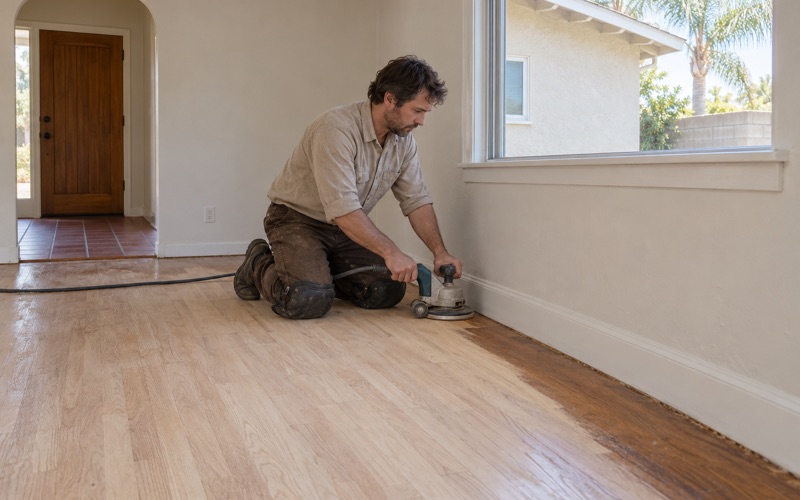
A screen and recoat refreshes a worn but sound finish without cutting into the wood, and it is the shortest job we do. A full sand and refinish with a drum sander, an edger and a proper grit sequence takes longer, but it removes white water rings, blotchy stain and the orange oak look older finishes pick up.
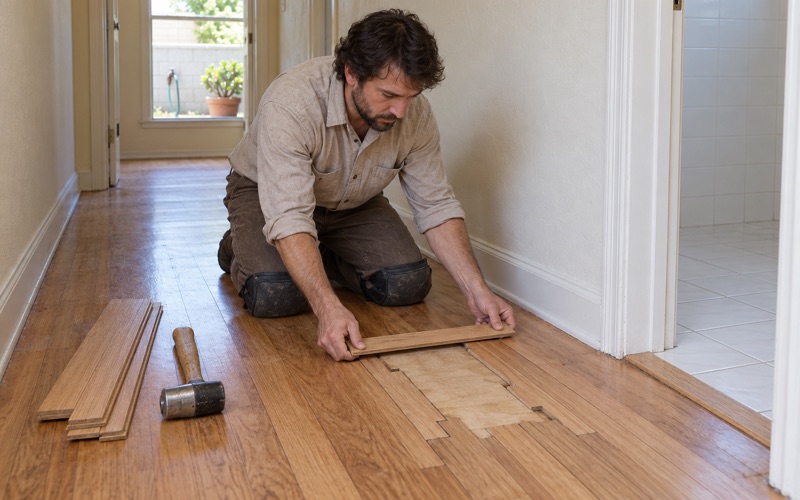
We quote both honestly and let the calendar decide. If showings start soon, a recoat may be a smarter call than a full refinish that leaves no margin for cure time. Board replacement and weave-in repair around a damaged area fit into either plan, and the patch gets finished along with the rest of the room.
Repairs That Go Past the Surface
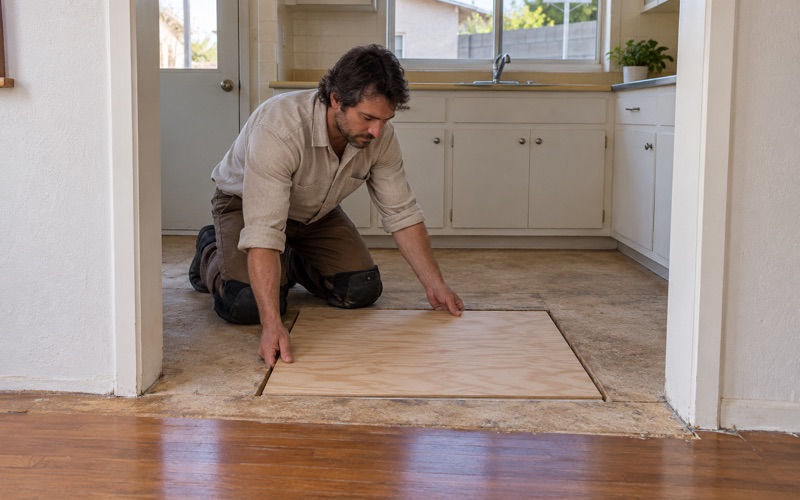
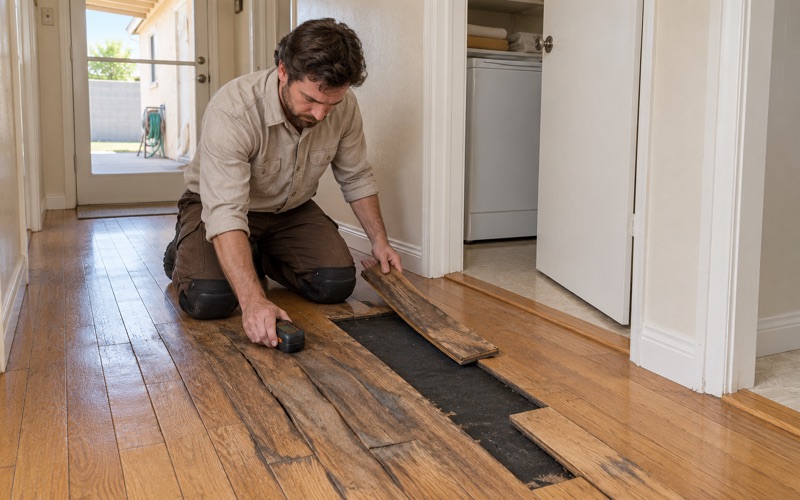
Some pre-listing jobs are not cosmetic at all. Soft spots, bounce and sagging usually trace back to a plywood subfloor, a board subfloor or a floor joist, and we find the cause before pricing a finish floor. Old floor furnace openings are another common one, and we close those with framing and woven-in boards rather than a plywood square under a rug.
When a repair reaches the subfloor or framing, the question of whether a permit applies goes to the City of Bell Building and Safety Division before work starts. That division enforces the city’s building, plumbing and electrical codes, including plan review, permit issuance and construction inspection. Asking first is cheaper than leaving an open question for the middle of escrow.
Older Houses Need a Slower Start
Bell’s housing is old: 82.6 percent of its units were built before 1980, and 16.8 percent went up before 1940. That age changes how we open a floor. On any pre-1978 house we follow lead-safe work practices under the EPA Renovation, Repair and Painting rule before sanding painted trim, thresholds or stair parts.
Old tile and black mastic under carpet or linoleum are treated as a possible asbestos question before anything is scraped or sanded. A 9x9 asbestos floor tile hiding under a later floor is a familiar find in houses of this age. We stop, recommend an asbestos survey, and plan the rest of the job around the result rather than guessing.
Keeping Records of Work Below the Finish
A buyer’s agent, an inspector or the city may all ask what was done to a house and when. For floor work that stayed in the finish layer, a dated invoice is usually enough. For anything that went deeper, the records are what let a seller answer cleanly instead of reconstructing a job from memory.
What We Write Down on Every Job
Before material is ordered, we take moisture readings in the wood with a wood moisture meter and in any concrete slab, and those readings go on paper. Slab testing may use an ASTM F2170 in-situ relative humidity test or a calcium chloride moisture test, depending on the floor. The numbers show the substrate was checked, not assumed.
Photos of the subfloor, joists and any damage we uncover go into the same file. If a joist was sistered, a subfloor panel replaced or a furnace opening framed in, the file says where and why. A buyer’s inspector looking at a clean finished floor has no way to see that work, so the written record has to carry it.
Invoices That Describe the Scope
An invoice that just says refinish floors tells a buyer very little. Ours list the rooms, the species, the finish product, the sheen level and anything done below the finish, with stairs priced per tread and riser rather than folded into a square-foot number. That level of detail answers most questions before anyone has to ask them.
If a permit was part of a repair, the permit record belongs in the same folder as the invoice. We keep our own scope documents so an owner can pair them with whatever the city issued. Together, the two pieces show that the work was done, what it involved and that it went through whatever approvals applied at the time.
Records for Rental Owners
Bell is largely a renter city, with 73.5 percent of occupied units rented. Many houses that come up for sale are ones an owner has leased for years, with floor repairs done between tenants and the paperwork scattered across old folders. We write estimates and invoices a landlord can actually file, so that history is easier to assemble later.
When an investor sells a house that turned over several times, those turnover invoices become part of the sale file. They show which rooms were refinished, which boards were replaced after water damage and whether the subfloor was ever opened. That is the history a buyer will want once the presale report is in hand.
Buying With a Correction Agreement
Buyers see the other side of the same process. When the report lists violations, Bell allows them to be corrected after the sale rather than holding up the closing, and that window is where many buyers also want floor work done. Planning both together saves money and spares the house a second round of dust.
How the Six-Month Window Works
Violations may be corrected up to six months after the sale. The buyer can do that through an agreement recorded with the Building and Safety Director, or through escrow funds set aside for the work, and repairs have to start within 90 days. Under Section 15.38.100 the Community Development Director may delay abatement once the buyer signs and records that agreement.
That schedule belongs to the city, and a buyer should confirm the terms written into their own agreement. Our part is fitting the flooring inside it. If a correction involves framing, plumbing or electrical work in a room with wood floors, the finish floor should come last so other trades do not scratch or stain it.
Sequencing Floor Repair With Corrections
A sensible order is correction work first, subfloor and framing repair second, then the finish floor. If a plumber has repaired or rerouted a line after a slab leak, we put the floor back once that work is done and the slab has been tested. Laying a new floor over a slab that has not dried is how cupping starts.
Where the correction list and the floor plan overlap, we look at both before quoting. Sometimes a subfloor repair the buyer wanted anyway sits in the same room as a correction item, and doing them in one opening is cleaner than two. Sometimes the correction work needs the floor up first, and we plan the reinstall around that.
Choosing Materials and Finishes for Move-In
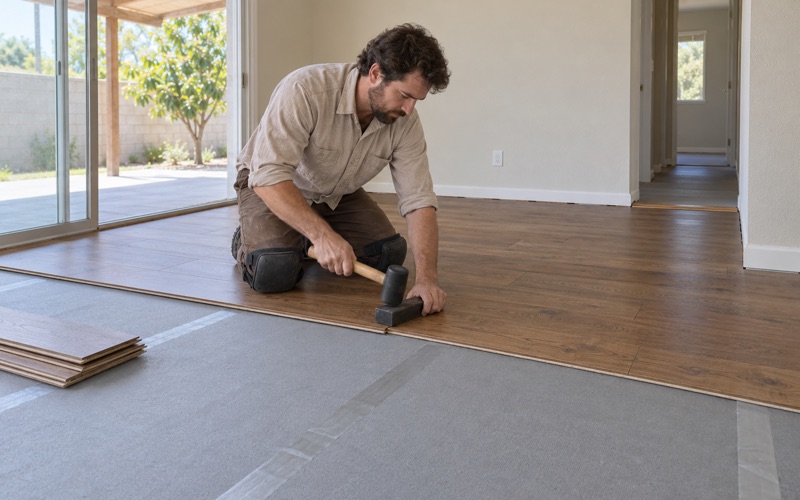
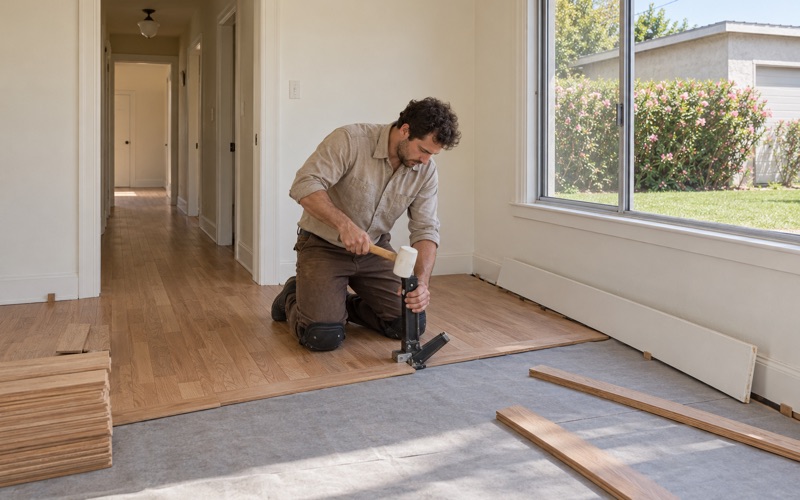
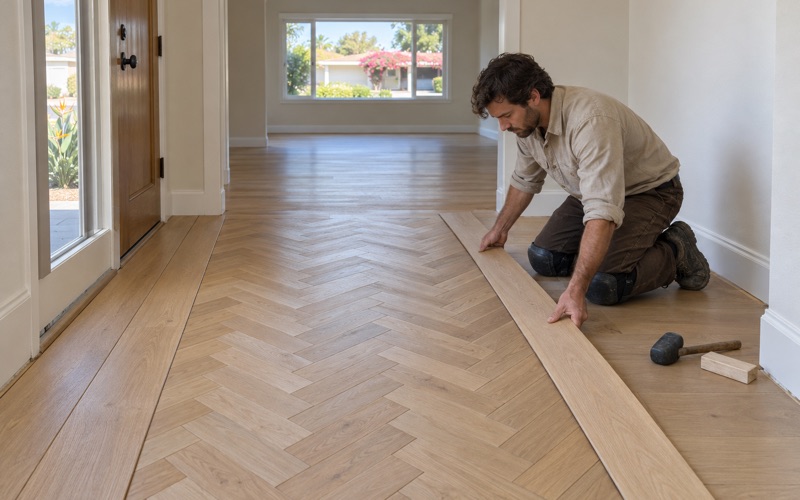
A move-in date shapes the material choice. Prefinished hardwood and engineered floors go down and can be walked on quickly, while site-finished hardwood needs acclimation, sanding, coating and cure time before furniture comes in. Engineered core construction also suits slab-on-grade rooms where a glue-down or floating installation works better than nail-down.
We choose finishes from products legal to apply in the South Coast air basin, where SCAQMD Rule 1113 sets a 275 g/L limit for wood coatings. Waterborne polyurethane dries faster and suits a tight move-in, while oil-modified polyurethane and hardwax oil each carry their own cure times. The buyer gets those dates before the first board is ordered.
- 20+ Years on Hardwood
- Written Moisture Readings
- Lead-Safe Work Practices