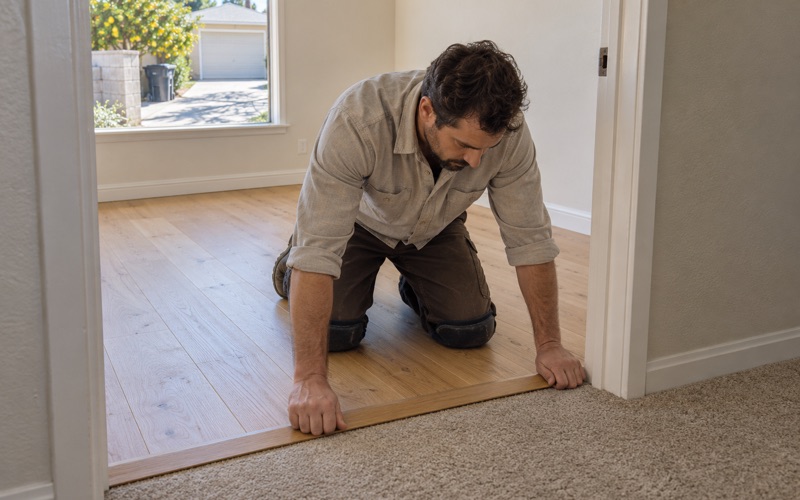
Bellflower Wood Flooring brings more than 20 years of work to wood-flooring in Bell Gardens, and this page is about the side of the trade that rarely makes a showroom brochure: repair. A board that gives when you step on it, a stair tread worn thin at the front edge, a strip of flooring that rocks and squeaks in a hallway. Those are upkeep problems, and we treat them as upkeep.
Upkeep means finding out why the floor failed before deciding what goes back down. A soft spot can be a single split board, a subfloor panel that has taken on water, or a joist that no longer carries its share of the load. Each of those calls for a different repair, and only one of them is solved by new flooring laid on top.
So the first visit is a diagnosis. We walk the floor, lift what needs lifting, take moisture readings in the wood, and write down what we find. The owner gets a written scope that separates the finish surface from what sits under it, with every line priced on its own so nothing is hidden inside a square-foot figure.
The Property Maintenance Code Bell Gardens Adopted
In January 2026 the city adopted the 2024 International Property Maintenance Code by reference in Ordinance No. 962, which passed unanimously on January 26. The same ordinance brought in the 2025 California Building Standards Code as amended by Los Angeles County, incorporating County Code Titles 26 through 31. For anyone who owns a house or a rental here, that code is now the local yardstick for upkeep.
Who the Code Puts in Charge
Section 301.2 of the model text is direct: the owner of the premises shall maintain the structures in compliance with the code. Under the IPMC, the owner is responsible for maintaining the structure, not whoever happens to live in it. In practice, a loose tread or a failing section of flooring in a rented home is the owner’s to repair, and a clear scope of work is the owner’s best record that the repair was done.
We have not read the city’s own adopting amendments, and we will not guess at them. What we can do is quote the model sections the ordinance brings in, explain how they bear on a floor, and leave the local enforcement questions to the city. That keeps a repair conversation grounded in the actual wording rather than in rumor.
Interior Upkeep in the Model Text
Section 305.1 says the interior of a structure shall be maintained in good repair, structurally sound and in a sanitary condition. Section 305.2 adds that structural members shall be maintained structurally sound and be capable of supporting the imposed loads. Neither section uses the word floor, but a floor sits squarely on top of both ideas: it is interior finish over structural framing.
That is why we look beneath the surface before pricing anything. A new finish floor laid over a joist that has lost its bearing does nothing for the structure it hides, and the problem simply returns under the new boards. The model wording points at soundness, and soundness lives in the framing and subfloor as much as in the finish layer.
Where the City Office Fits
Building permits in Bell Gardens are handled by the Building and Safety Division of the Community Development Department at 7100 Garfield Avenue. The city lists repair among the kinds of work its permit rules cover. Whether a particular floor repair needs one is a question for that office, and we raise it before any structural work begins rather than after.
Looking for wood-flooring closer to La Palma? See Wood-Flooring in La Palma.
What Sound Condition and Good Repair Means Underfoot
Section 305.4 is the sentence that matters most for a floor contractor. Every stair, ramp, landing, balcony, porch, deck or other walking surface shall be maintained in sound condition and good repair. A hallway floor is a walking surface, and so is every tread on an interior staircase. The phrase sets a plain test: the surface should hold firm and stay intact.
Sound Condition, Read Plainly
Sound condition, as we read it, means the surface does what it is supposed to do under a person’s weight. It does not flex, drop or shift. A floor can be scratched, faded or out of fashion and still be sound. A floor that gives near the bathroom door or bounces between two rooms is not, however good the finish looks.
We test that with our feet and our hands before any tool comes out. We note where the floor deflects, where a board moves against its neighbor, and where nail pops or squeaks cluster. Mapping those spots tells us whether we are looking at loose fastening, a failed subfloor or something further down in the framing.
Good Repair Versus a Fresh Look
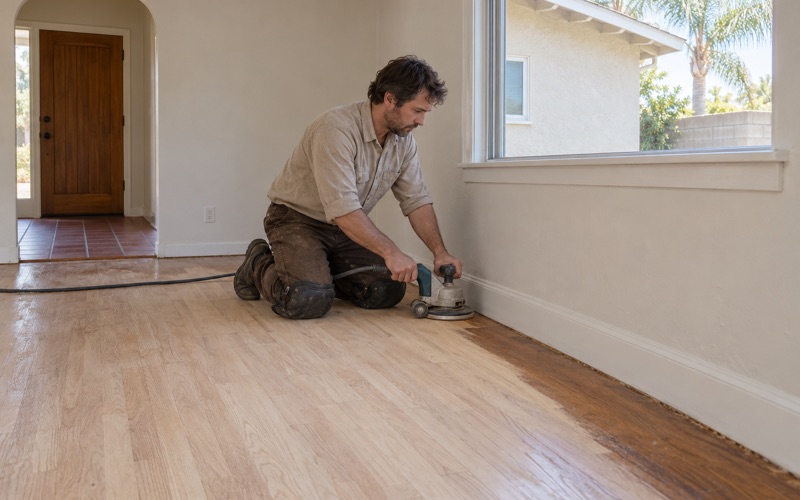
Good repair is a different question from appearance. A screen and recoat can make a dull floor look cared for without fixing a single loose board. We are happy to refinish, but we separate cosmetic work from repair work in every estimate, so an owner can see which line addresses soundness and which addresses looks.
That split matters when a house changes hands between tenants. An owner who wants the floor in good repair before the next lease starts can do the repair lines first and hold the cosmetic ones for later. Our written estimates and invoices are laid out so a landlord can keep them with the property’s maintenance file.
Soft Spots, Loose Boards and Worn Stair Treads
The age of the housing here shapes what we find. Census figures show that 50.5 percent of the city’s housing units were built before 1960, and the single busiest decade was the 1940s. Floors that have carried families for seventy or eighty years have been patched, covered, re-covered and sometimes patched again, and each layer changes how a repair has to be approached.
Tracing a Soft Spot to Its Cause
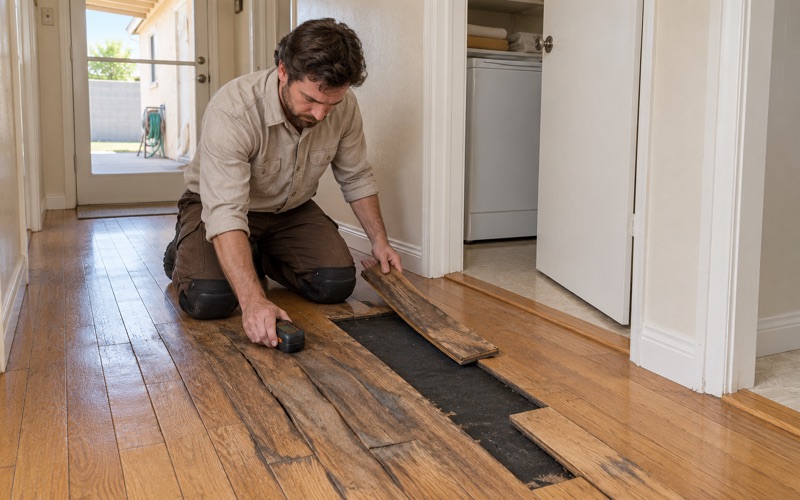
We trace soft spots, sagging and bounce to the subfloor and framing before a finish floor is priced. That can mean pulling a few boards at the weakest point, checking the subfloor for water staining or delamination, and looking at the joists for sagging, splits or old cuts made for pipes. A sagging joist may call for joist sistering; a rotted panel calls for replacement.
Moisture is part of the same diagnosis. A wood moisture meter reading taken at the soft spot and compared against sound flooring nearby tells us whether water is still arriving or whether the damage is old. If a leak is still active, the plumber comes first. Laying new wood over wet framing guarantees cupping or buckling later, whatever species goes down.
Loose Boards and Weave-In Repair
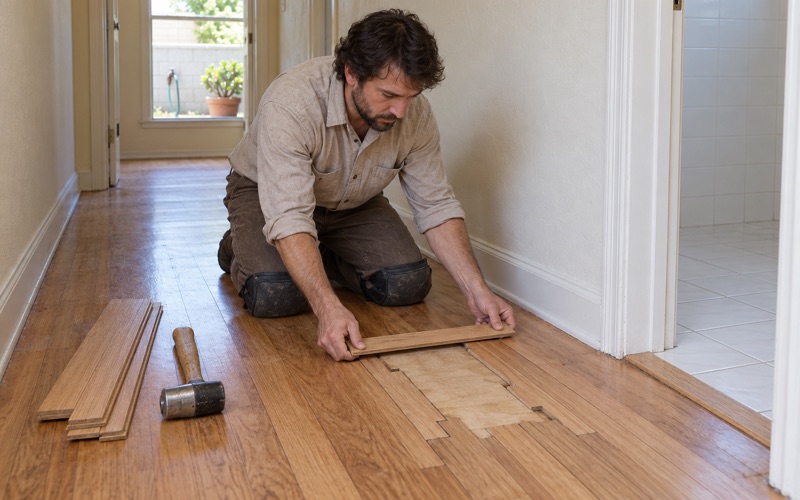
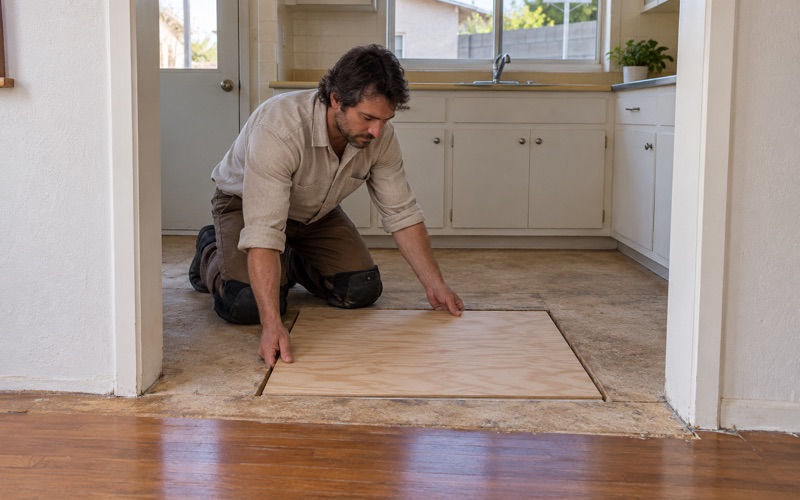
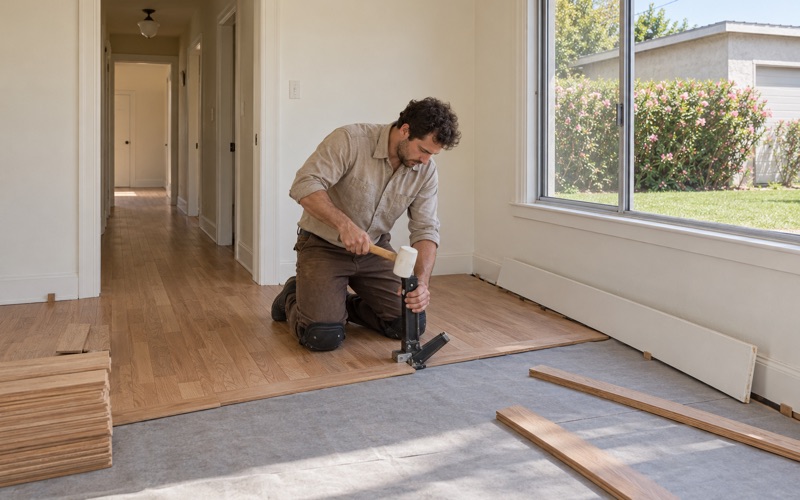
A loose or cracked board in a finished floor rarely needs a whole room replaced. We cut out the damaged boards and weave new ones into the existing field, staggering the joints so the repair does not read as a square patch. The same approach closes old floor furnace openings and floor vents with framing and woven-in boards rather than a plywood square and a rug.
Where older flooring has been covered by carpet or linoleum, we assess what is underneath board by board before anyone talks about a full replacement. Some of it can be refastened and kept. Old tile and black mastic found under a floor are treated as a possible asbestos question before anything is sanded or scraped, and nothing is disturbed until that is answered.
Stair Treads and Nosings
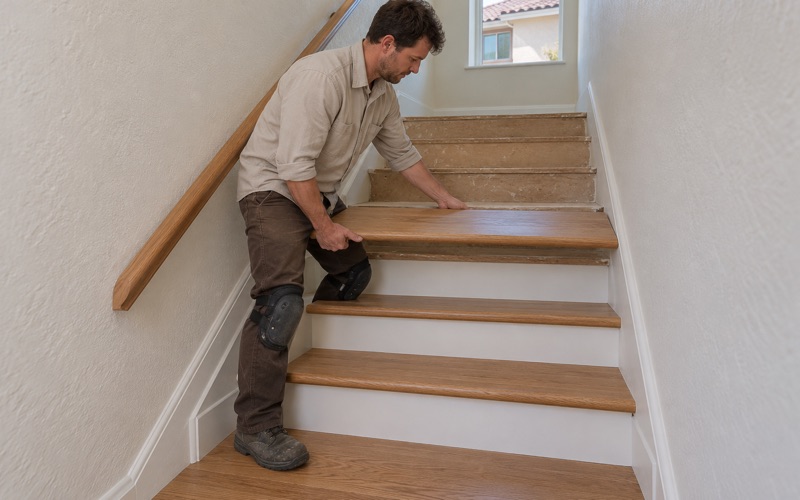
Stairs take more wear per square foot than any other part of a house, and the front edge of each tread takes most of it. A rounded, split or loose stair nosing is exactly the kind of walking surface that section 305.4 has in view. We check each tread for movement, cracks at the nosing and loose risers before recommending anything.
We price stairs per tread and riser instead of folding them into a square-foot number, so an owner can replace the three worst treads now and leave the sound ones alone. That keeps a stair repair honest and affordable, and it gives the invoice a clear record of which treads were renewed and when.
Repairing the Floor, Not Just Covering It in Rented Homes
Renters occupy 78.8 percent of the city’s occupied housing units, nearly four homes in five, and 47.2 percent of renter households live in detached houses. That means a large share of the floors we see belong to an owner who does not walk on them every day. It also means repairs often happen on a turnover schedule, in the gap between one tenant and the next.
Why a Cover-Up Costs More Later
The fastest turnover fix is to lay vinyl plank or carpet over a floor that moves. It looks finished on move-in day, but it hides the soft spot rather than repairing it, and the movement usually shows up again as separated seams or a spongy patch within a few seasons. By then the new surface has to come up too.
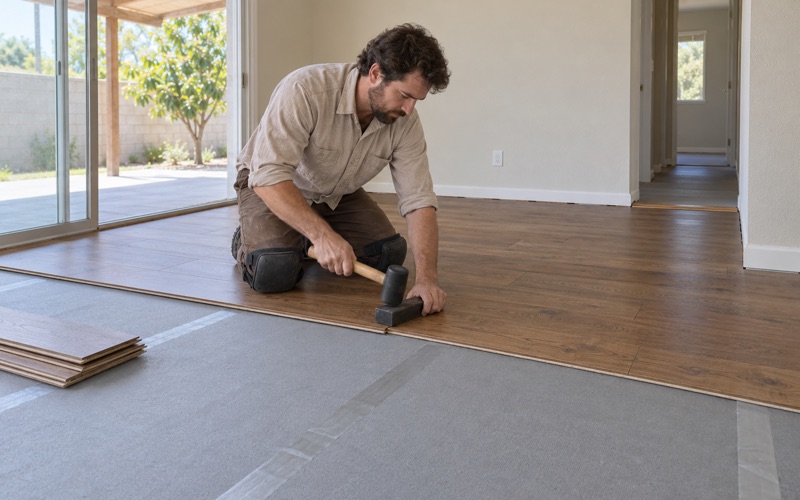
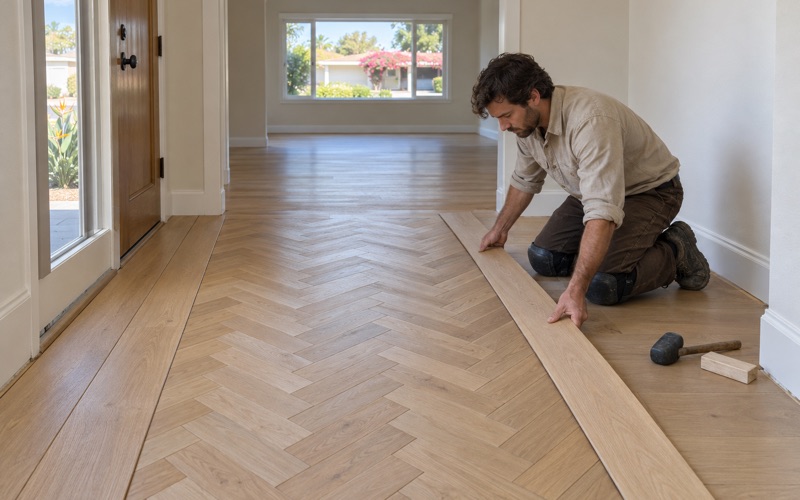
We would rather scope the real repair and let the owner choose the finish on top of it. Once the subfloor and framing are sound, the choice between refinished hardwood, new site-finished hardwood or a floating product is a budget decision, not a gamble. Our estimate shows the repair and the surface as separate lines so that decision is easy to make.
Lead, Dust and Occupied Units
With so much of the housing built long before 1978, we follow lead-safe work practices under the EPA Renovation, Repair and Painting rule on older houses. That matters in any home, and it matters more when a unit is occupied or about to be. Containment, dust control and cleanup are part of the scope, not an afterthought.
Finishes are chosen from products legal to apply in the South Coast air basin under the 275 g/L wood-coating limit. For an occupied rental, a waterborne polyurethane with a shorter cure window can shorten the time a tenant has to stay off a floor, and we plan the work sequence around that.
The City’s Code Enforcement Programs
Bell Gardens Code Enforcement runs two programs: Property Maintenance, which deals with violations on private property within public view, and Property Rehabilitation. The city’s housing element counted 343 housing rehabilitation cases opened between 2013 and 2020. We do not predict what any inspector will decide about a given floor. We do help owners keep a clear, dated record of what was repaired and why.
That record is simple: photos before and after, the moisture readings, the scope that was agreed and the invoice that closed it. An owner who keeps those papers with the property file can show exactly how a soft spot or a worn stair was handled, which is what good repair looks like on paper as well as underfoot.
- 20+ Years on Hardwood
- Written Moisture Readings
- Lead-Safe Work Practices