Bellflower Wood Flooring has handled wood flooring in Cerritos for more than 20 years, and a good share of that work happens in a house the owner does not live in. The keys come back, the rooms sit empty for a few weeks, and the floor has to be ready before the next household carries in a sofa.
This page is written for that owner. It covers what a floor in a rented house goes through, what should be fixed between leases and what can wait, which materials hold up when occupants change, and how to schedule the job so one vacant month does not stretch into two.
Every visit ends with a written estimate, and every finished job with an invoice, laid out so a landlord can file both with the property’s records and show exactly what was replaced, refinished or repaired, room by room, at each turnover.
Cerritos Rents Houses, Not Just Apartments
The city’s own planning document makes the point. In section 3.10 of the Housing Element Update 2021-2029, Cerritos says its higher median rent in 2019 “can be partly attributed to the City’s higher proportion of home rentals to apartment rentals.” The element puts that 2015-2019 median rent at $2,410.
Detached Houses on the Rental Market
Census figures agree with the element. Of 3,872 renter households in Cerritos, 2,032, or 52.5 percent, rent a one-unit detached house, and another 497 rent a one-unit attached home. Renters occupy 24.1 percent of the city’s occupied units, so about one occupied home in four here is rented rather than lived in by its owner.
That changes the floor conversation. A detached rental has bedrooms, a hallway, a family room and sometimes stairs, the same rooms an owner-occupant would have, and every one of them takes wear from people who will eventually move on. The floor has to be judged as an asset the owner keeps, not a finish the owner enjoys.
Houses From the 1960s and 1970s
The rented houses are mostly the same houses everyone else lives in. Census estimates date 83.2 percent of Cerritos housing units to before 1980, and 55.1 percent to the 1970s alone. The city incorporated in 1956 as Dairy Valley, took the Cerritos name in 1967, and its housing element describes a boom between 1960 and 1979.
A house of that age has been through several rounds of floor coverings. Before we price anything, we find out what is underneath: carpet over tack strip, sheet linoleum, old tile or covered wood. Houses built before 1978 get lead-safe work practices under the EPA Renovation, Repair and Painting rule, and black mastic or 9x9 tile is treated as a possible asbestos question before any sanding or scraping.
Looking for wood-flooring closer to East Rancho Dominguez? See Wood-Flooring in East Rancho Dominguez.
The Owner Who Rents Out One House
The landlords this page is written for are not property companies. They hold one house and manage it themselves, and their floor decisions come down to cost per tenancy, how many days a repair keeps the house off the market and whether the paperwork will still make sense to them years later.
Tenants Change, Floors Stay
Renter households in Cerritos turn over far more often than owners do: 83.4 percent of renters moved into their current home in 2010 or later, against only 29.8 percent of owners. For a landlord, that means the same floor will likely serve several different households before it is due for replacement.
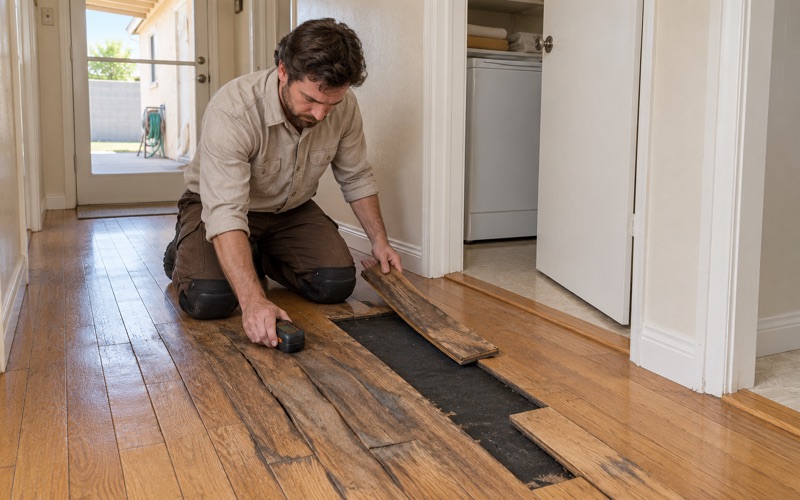
Between those moves, a tenant lives on the floor every day. By the time the house is empty again, the hallway and kitchen entry usually show traffic lanes, the bedrooms carry furniture dents, and doorways may have pet urine stains or white water rings where plants sat. We sort each mark into what a recoat covers and what needs sanding or board replacement.
Paperwork a Landlord Can Keep
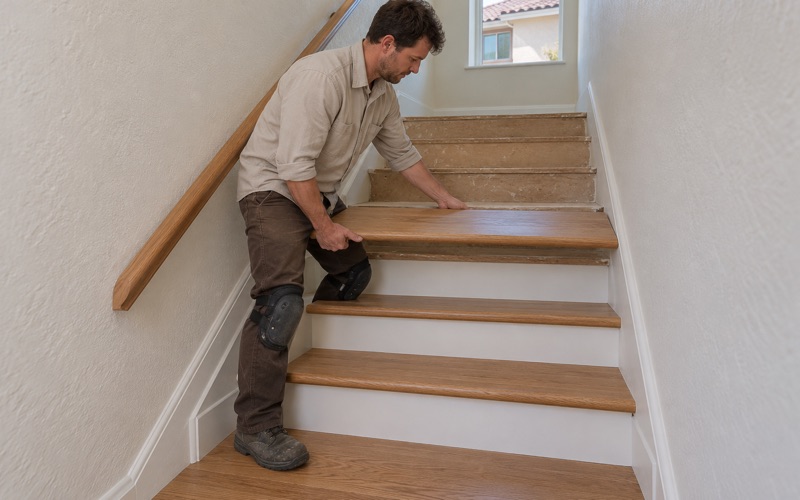
When one house carries the rental income, records matter. Our estimates list each room, its square footage, the work proposed and the product, and stairs are priced per tread and riser instead of being folded into a square-foot figure. The invoice at the end matches the estimate line by line, with any change noted and explained.
We also photograph the floor before work starts and write down moisture readings from the wood and any concrete. We do not advise on leases, deposits or tenant matters; those belong to the owner and their own advisors. What we provide is a clear record of the floor’s condition and exactly what was done to it.
Floor Work Between Tenants
The vacant weeks between leases are the best time to work on a rented floor. Rooms are empty, nobody has to cross wet finish, and dust containment is simpler without furniture in the way. The owner’s goal is usually a floor that looks cared for at the showing and holds up through the next lease.
Assess First, Then Quote
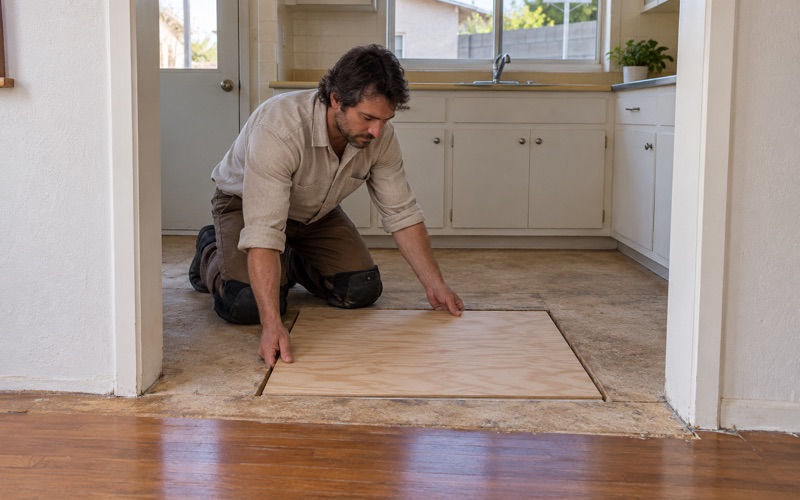
We walk every room with a wood moisture meter and look for cupping, crowning, board gaps, squeaks and nail pops. Soft spots and bounce are traced to the plywood subfloor or the floor joists before we price a new surface, because laying finish flooring over a sagging joist only postpones the next call.
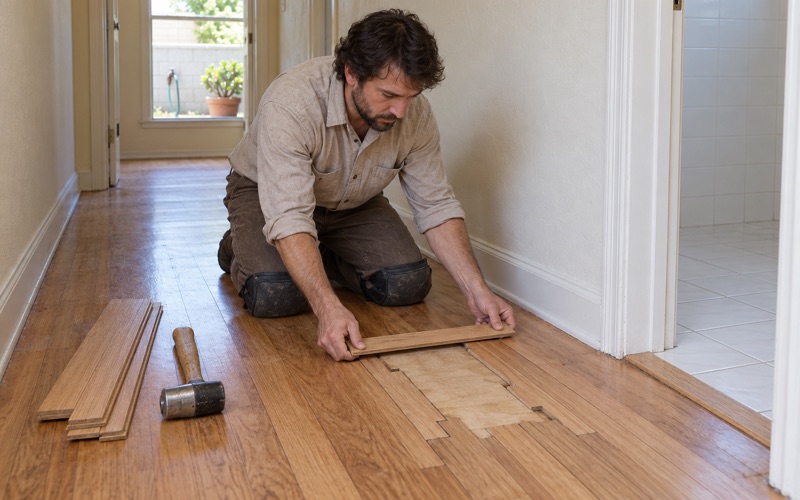
If wood turns up under carpet or linoleum, we check it board by board before anyone mentions replacement. A worn but sound floor may need only sanding, a weave-in repair at a damaged patch and a fresh finish, which usually costs less and takes fewer vacant days than tearing it out and starting over.
Recoat or Full Sand
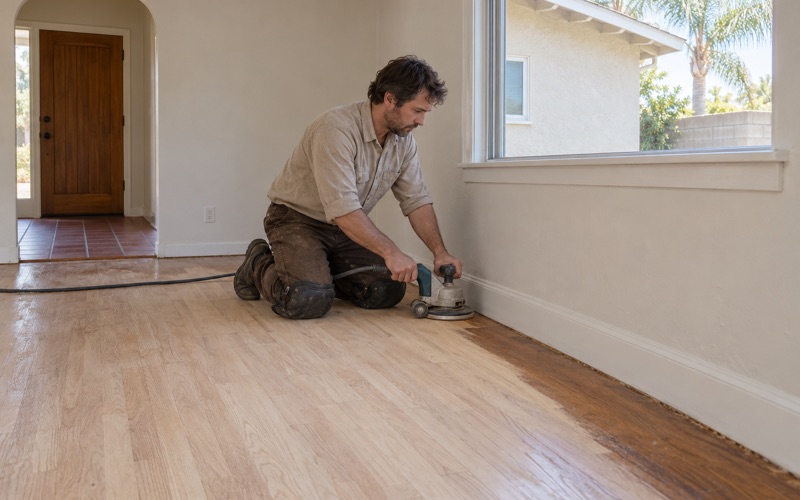
Where the existing finish is scuffed but not worn through, a screen and recoat is usually the shortest option on the schedule. Where traffic lanes reach bare wood, stain has gone blotchy or pet stains have soaked in, the floor needs a full sand with a drum sander, edger and orbital sander through a proper grit sequence.
We run a dustless sanding system and use finishes that meet the South Coast Air Quality Management District’s 275 g/L limit for wood coatings under Rule 1113. Waterborne polyurethane dries faster and smells less than oil-modified polyurethane, which matters when the next tenant’s move-in date is already fixed on the calendar.
Repairs That Should Not Wait
Some work can wait for a later turnover. Other problems cannot: a buckled section from a leak, a soft area near a bathroom, termite frass along a baseboard, or a patched floor register that no longer sits flat. We trace water damage to its source and document it with photos and readings an insurance adjuster can use.
Fixing those items while the house is empty adds a few days to this turnover. Leaving them means scheduling around an occupied house later, working around a tenant’s routine, and possibly paying for the same room twice when the damage has spread further into the boards.
Choosing a Floor and Timing It to the Lease
A floor for a rental house has a different brief than a floor in the owner’s own home. It has to survive several households, be repairable in patches and look neutral enough to suit whoever rents next. It also has to go in inside the window the lease sets, not whenever a crew happens to be free.
Materials for a House That Changes Hands
We usually steer rental owners toward harder species and tougher surfaces. White oak and hickory rate well on the Janka hardness scale, and a site-finished hardwood can be sanded again at a later turnover. With engineered flooring, wear layer thickness decides how many future refinishes the floor can take, so we compare it before price.
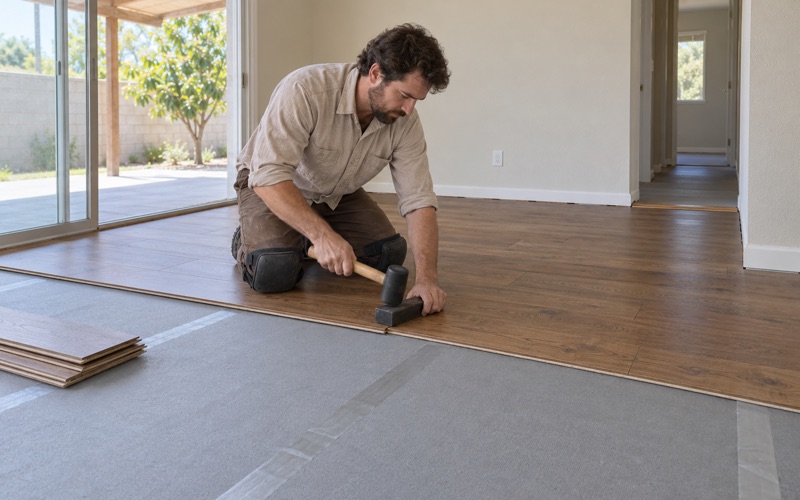
Wood-look vinyl plank has a place in kitchens and laundry areas where spills are routine, though it cannot be sanded. We favor a mid-tone stain and a satin or matte sheen level, which hide dust and light scratches between cleanings better than dark, glossy floors. Wood products go in to NWFA installation guidelines.
Repairable Beats Perfect
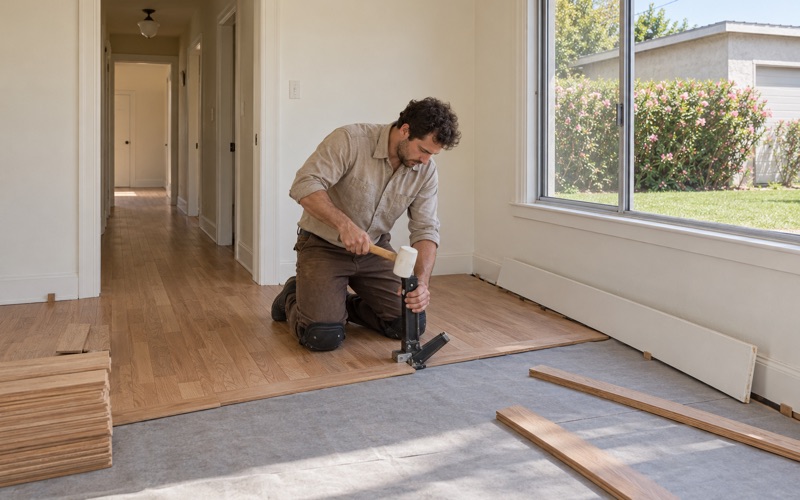
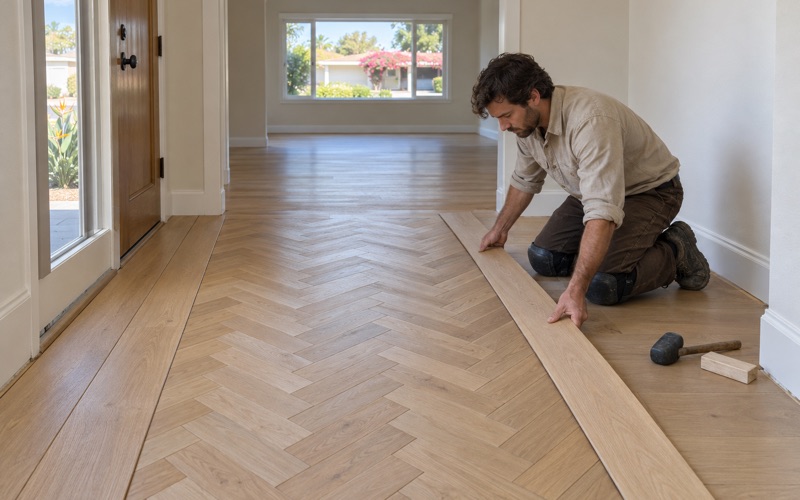
Pick something that can be fixed in pieces. Nail-down strip flooring and many glue-down engineered floors allow a single board replacement after a dropped pan or a small leak, while a floating installation can be harder to repair in the middle of a room. We keep stair nosing, reducer strips and shoe molding consistent for the same reason.
We record the product name, color and lot on the invoice so matching boards can be sourced at the next turnover. For a house expected to stay a rental for many more years, that single line on the paperwork is often worth more than any upgrade chosen on the day.
Working Back From the Move-In Date
Start with the day the current tenant leaves and the day the next one arrives, then work backward. Flooring needs time to acclimate before installation, and a concrete slab may need a calcium chloride test or an ASTM F2170 in-situ relative humidity test before a glue-down floor goes over it. Those steps take days, not hours.
The practical move is to call us as soon as a tenant gives notice. We can measure while the house is still occupied, if the tenant agrees to the visit, order material so it arrives in the vacant window, and book sanding and finishing so the cure time ends before the new household moves in.
Finish Cure and the Handover
A floor that looks dry is not always ready for furniture. Waterborne finishes usually allow light foot traffic well before they reach full hardness, so we give the owner a written date for when rugs, furniture and a moving crew can safely come in, and we build that date into the schedule.
We leave felt pads, a note on cleaning products that will not dull the finish, and a copy of the invoice the owner can hand on or keep. Small habits from the first tenant on a new floor decide how soon the next refinish comes around.
- 20+ Years on Hardwood
- Written Moisture Readings
- Lead-Safe Work Practices