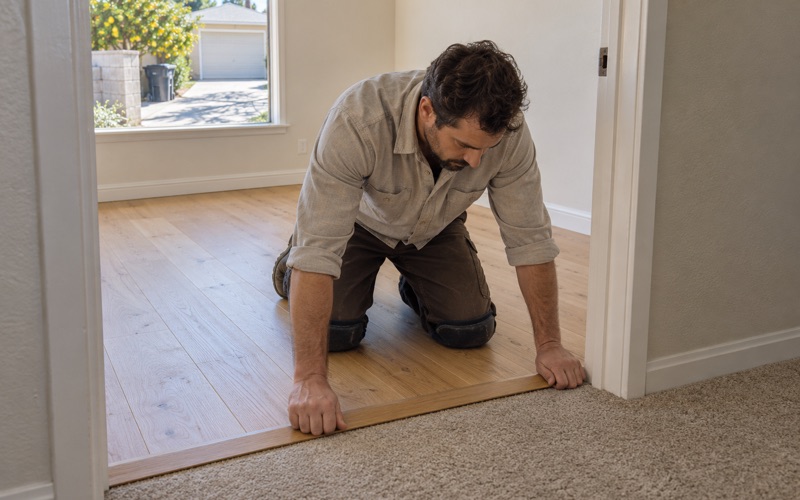
Bellflower Wood Flooring has spent more than 20 years on wood-flooring in Cudahy and the neighborhoods around our home base, and much of what owners ask us about here happens in rented units rather than owner-occupied houses. When a floor in a tenant’s unit is worn through, cupped or torn out between tenancies, the owner is usually weighing two questions at once: what the work costs, and how the city will read it afterward.
This page is written for owners of covered rental units. We explain how Cudahy’s rent rules treat a floor replacement, why a replacement is not the same thing as a repair, and which records are worth keeping from the day of the first estimate. We do not decide what the city approves, and we say so plainly wherever it matters.
What we can control is the paperwork on our side of the job. Every estimate and invoice we write names the unit, the rooms, the material removed, the material installed and the dates. That gives an owner a clean record to work from, whether or not they ever file anything with the Housing Division.
How Cudahy’s Rent Stabilization Handles Capital Improvements
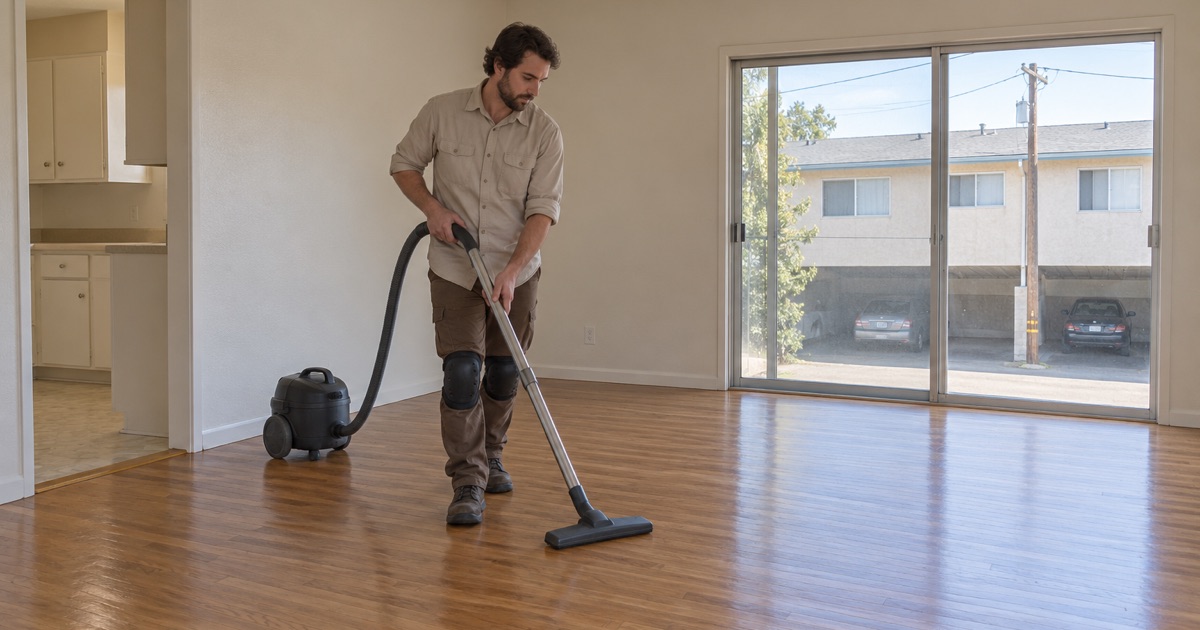
Cudahy’s Rent Stabilization Ordinance, Chapter 5.13 of the municipal code, took effect July 7, 2023. For a covered unit, the rent increase in any 12-month period is capped at 3 percent or the change in the Consumer Price Index, whichever is less. That cap is the backdrop for every larger repair decision an owner makes in a covered building.
The Pass-Through Application
Alongside the annual increase, the ordinance lets the owner of a covered unit file a Capital Improvement Pass-Through Application with the city’s Housing Division. The application asks to recover up to 50 percent of eligible costs from the affected tenants. It is a request rather than an entitlement, and the Community Development Director decides it.
The owner carries the burden of showing that the improvement is for the primary benefit, use and enjoyment of the tenants, that it is permanently fixed in place or relatively immobile, and that its cost has been factored and amortized. A finished wood floor is fixed in place by nature, but the other conditions depend on the facts of each job.
Amortization and the 5 Percent Ceiling
Costs are spread over the useful life of the improvement, with a minimum amortization period of five years, which the application expresses as sixty months. If an owner proposes a different period, the application asks for it to be stated. Any insurance payment or other reimbursement is deducted from the cost before anything is amortized.
If the Director approves an application, the pass-through payment may not exceed 5 percent of any affected tenant’s rent, and nothing is charged until approval comes through and the units are registered. That ceiling and that order of events shape how an owner should think about a floor budget: the recovery is partial and slow by design.
Registration Comes First
Landlords register rental units with the city every year unless an exemption applies. Since April 2025 the registry has run online through HdL Companies, with an annual fee of $126 per covered unit and $91 per exempt unit, due July 1. An owner planning floor work in a covered unit should confirm that registration is current before the work starts.
Looking for wood-flooring closer to Signal Hill? See Wood-Flooring in Signal Hill.
Flooring on the City’s Application
The application’s category table lists sixteen types of capital improvement, from air conditioning and roof replacement to stucco and security gates. Flooring is item five. Its presence tells an owner that the city expects floor work to come through this process, but a listed category is not an approval, and we never predict how the Director will rule on a particular floor.
What the Director Weighs
Page two of the application sets out eight relevant factors. The work may not be unpermitted, it must be completed, and the application must be initiated within 12 months of completion. It must be distinguished from ordinary repair or maintenance and serve the tenants’ primary benefit. It must be fixed in place, carry no separate use fee, and be cost-factored and amortized.
Several of those factors are settled by what happened on the job, not by what the owner writes afterward. The completion date is the day the floor was finished. Whether a permit was obtained is a question the owner answers on the form itself, directly under the category table. We keep those facts straight on our paperwork so nobody is reconstructing them months later.
Old Layers Under a Worn Floor
Much of Cudahy’s housing is old enough that the layer under a worn floor deserves a look before anyone scrapes it. Of the city’s 5,925 housing units, 68.3 percent were built before 1980. We treat old 9x9 asbestos floor tile, linoleum and black mastic as a possible asbestos question and stop until an asbestos survey answers it.
The city’s application lists hazardous material abatement as its own category, separate from flooring, and names asbestos and lead-based paint among the materials. When testing leads to abatement under SCAQMD Rule 1403, we keep the flooring scope on its own lines of the estimate, so the floor installation and the abatement are never blurred into a single number.
Pre-1978 housing raises one more question when baseboards, shoe molding or door casings come off during a tear-out. We follow lead-safe work practices under the EPA Renovation, Repair and Painting rule on those units, and we note on the estimate which trim was removed and replaced, so the record matches what was actually disturbed.
Replacement Versus Ordinary Repair
The city draws the line in one sentence: capital improvements cannot include regular maintenance or repairs from wear and tear, cannot be the result of a landlord’s failure to perform regular maintenance and repairs, and cannot be repairs covered by insurance. For flooring, that sentence sorts most jobs quickly, and it is worth reading before any estimate is signed.
Work That Reads as Maintenance
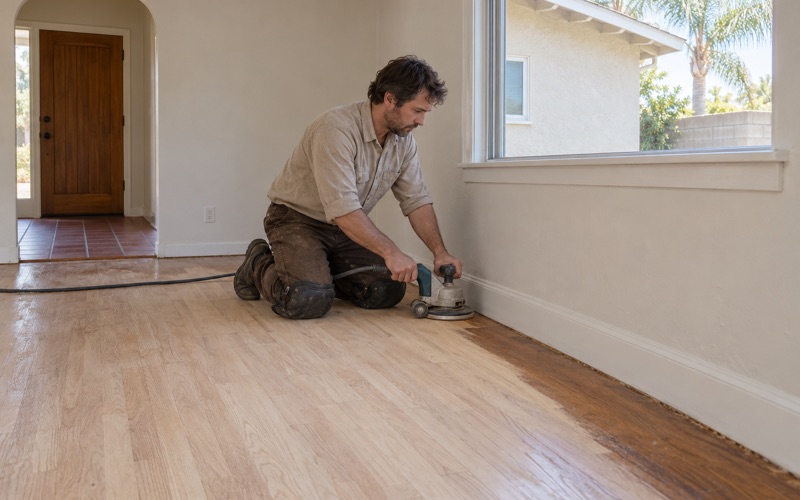
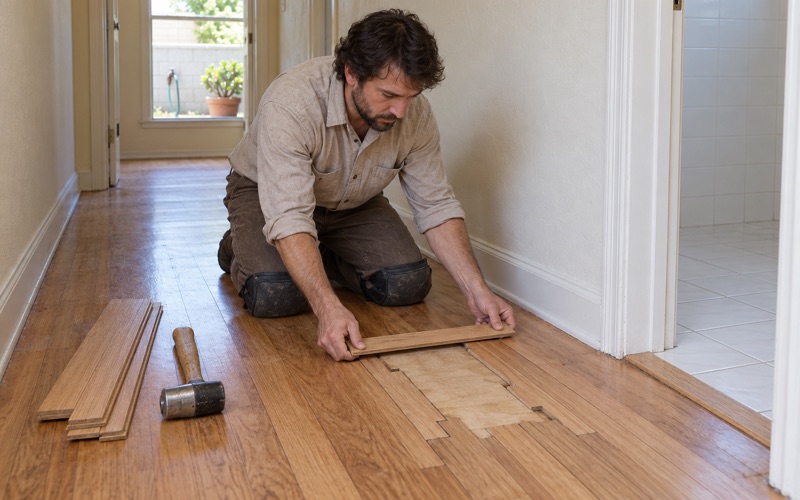
A screen and recoat, sanding out a worn traffic lane, a weave-in repair of a handful of damaged boards, or refastening squeaks and nail pops are the ordinary upkeep of a wood floor. So is refinishing after a tenant moves out. They are often the right call, but on their face they look like the maintenance the city excludes.
We say that plainly at the estimate stage. If an owner asks us to price a refinish, we price a refinish and describe it as one. Relabeling routine work as a replacement on an invoice does an owner no favors when the Director is reading the same page with the exclusion in mind.
Work That Reads as Replacement
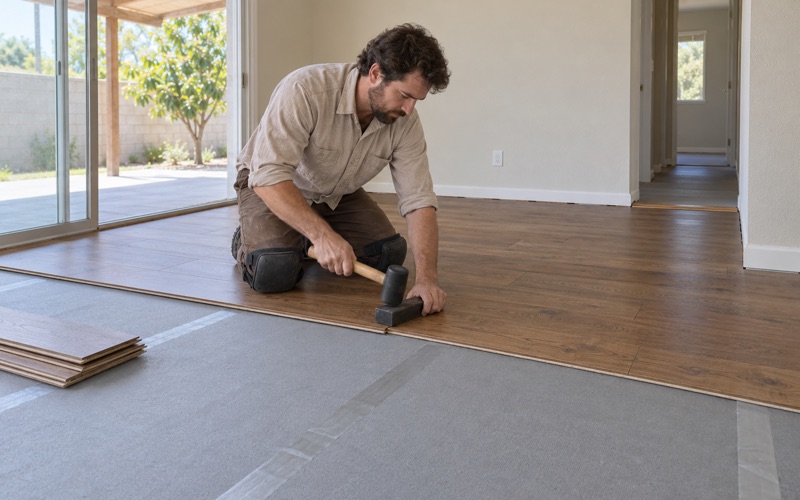
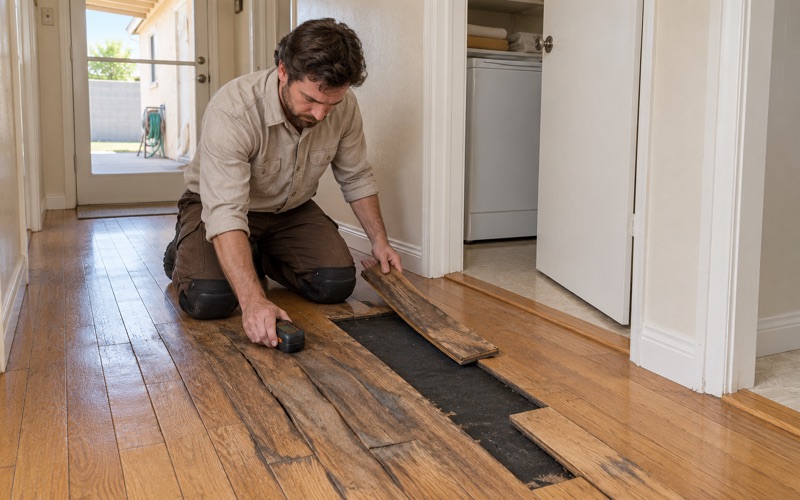
Removing a failed floor down to the subfloor and installing a new one throughout a unit is a different kind of job. Our estimate describes what was there, why it is coming out, what goes in its place and the square footage involved. Whether that is distinguished from ordinary repair is the Director’s call; our part is describing the scope accurately.
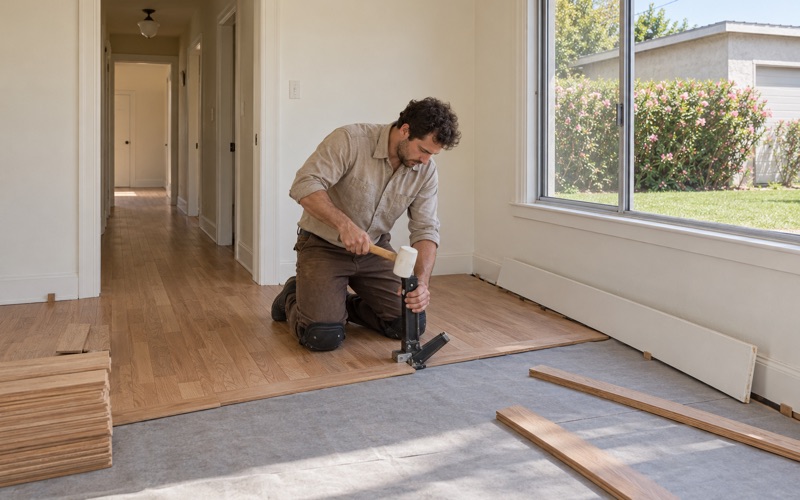
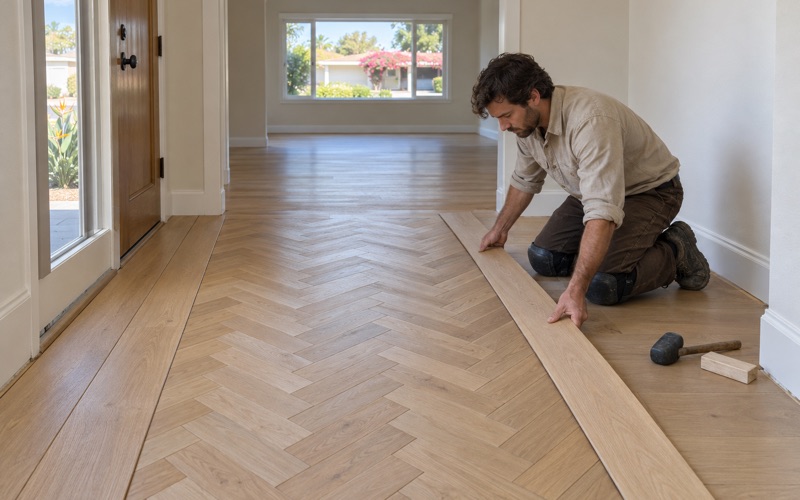
Material matters here mostly as description. Whether the new floor is site-finished red oak, prefinished white oak or an engineered plank with a stated wear layer thickness, the invoice names it, along with the installation method, whether nail-down, glue-down or floating. A vague line reading ‘new floors’ leaves an owner nothing specific to point to.
Subfloor Findings Mid-Job
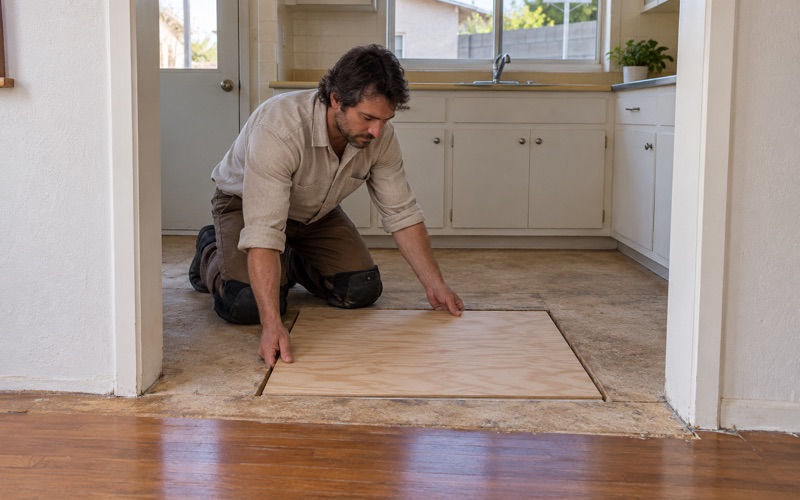
Tearing out an old floor sometimes exposes soft spots, sagging or bounce that nobody could see from above. We trace those to the subfloor and framing before the finish floor goes down, and we write the finding up as a separate item with photos rather than folding it quietly into the flooring total.
Keeping that work distinct helps the owner describe the job honestly. Replacing damaged plywood subfloor or sistering a sagging joist is a different scope from the finish floor above it, and the city reads the categories separately. A clear line item lets the owner decide how to present each part without us guessing on their behalf.
Deferred Maintenance and Insured Damage
Two situations sit awkwardly. A floor that failed because upkeep was skipped for years falls under the exclusion for a landlord’s failure to maintain. A floor ruined by a covered water loss is a repair covered by insurance. We trace water damage to its source and record moisture readings and photos, which serve the adjuster and the owner’s own file alike.
Records to Keep and Planning the Work
The application asks for a copy of all estimates, contracts, bills and invoices, and it must be filed within 12 months of the date the capital improvement was completed. The owner must also notify each affected tenant within five calendar days. None of that assembles well from memory, so the record starts before the first board comes up.
From the First Estimate
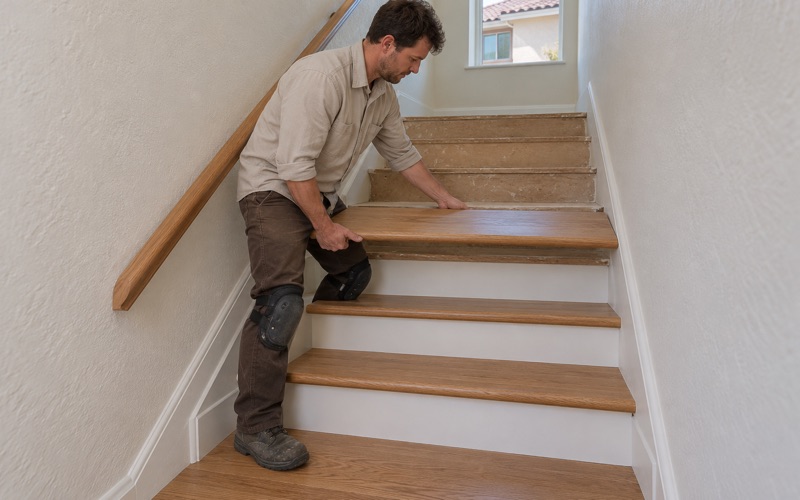
Our written estimates list the unit address, each room, the existing floor and its condition, the reason for replacement, the new material, stairs priced per tread and riser where there are any, and the finish. We note moisture readings in the wood and in any concrete before material is ordered, and a changed scope gets a revised written estimate.
Photos taken before demolition matter as much as the paper. They show the condition of the old floor, which bears directly on the repair-versus-replacement question, and they show any layers found underneath. We date them and hand them to the owner with the estimate, so the file is complete from the first visit onward.
Invoices and the Completion Date
The final invoice states the finished scope, the total cost and the date the work was completed. That date starts the city’s 12-month filing window, so we never leave it implied. When a job runs across several units in stages, each unit gets its own completion date, since tenants and rents are separate for each one.
Finishes are chosen from coatings legal to apply in the South Coast air basin under SCAQMD Rule 1113 and its 275 g/L limit for wood coatings, and the product is named on the invoice. That keeps the record specific about what was applied, whether a question later comes from the city, a tenant or the next contractor.
Timing Around Tenancies
In Cudahy, 85.8 percent of occupied households rent, and stucco apartment complexes replaced many residential tracts after the late-1970s factory closures. Floor replacement is usually easiest when a unit turns over between tenants, since the rooms are empty and acclimation can run without furniture in the way. When a tenant stays in place, we plan the work room by room.
For questions about the application itself, the Housing Division takes them at RSO@cityofcudahyca.gov or (323) 773-5143. We can explain the flooring and supply the records, but we are not the city and do not offer legal advice. Our job is a well-built floor and a paper trail that describes it honestly.
- 20+ Years on Hardwood
- Written Moisture Readings
- Lead-Safe Work Practices