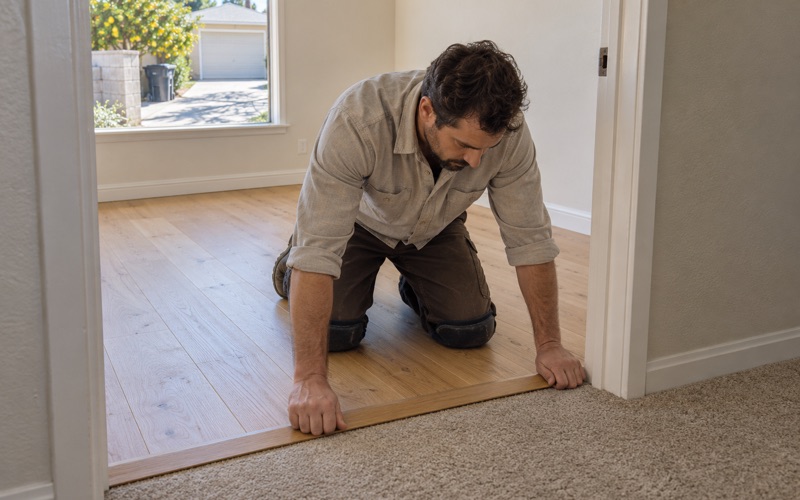
Bellflower Wood Flooring handles wood-flooring in Downey for homeowners who are working out where a floor fits among bigger repairs, and we bring more than 20 years of work in houses of the same age and build. Many of the calls we get from Downey owners start with a question that is not really about wood at all: should the floors wait until the rest of the house is settled?
Our usual answer is yes, and this page explains why. When a house needs electrical, plumbing or safety repairs, the floor is the layer that gets opened, walked on and patched by other trades. Laying or refinishing it first often means paying for it twice.
What follows is how we plan floor work around the city’s rehabilitation grant, what we check before any material is ordered, and what an owner waiting on a decision can reasonably do in the meantime. Every recommendation comes with a written estimate, so you can set it beside the rest of your repair list.
What Downey’s Rehabilitation Grant Covers and Who Approves It
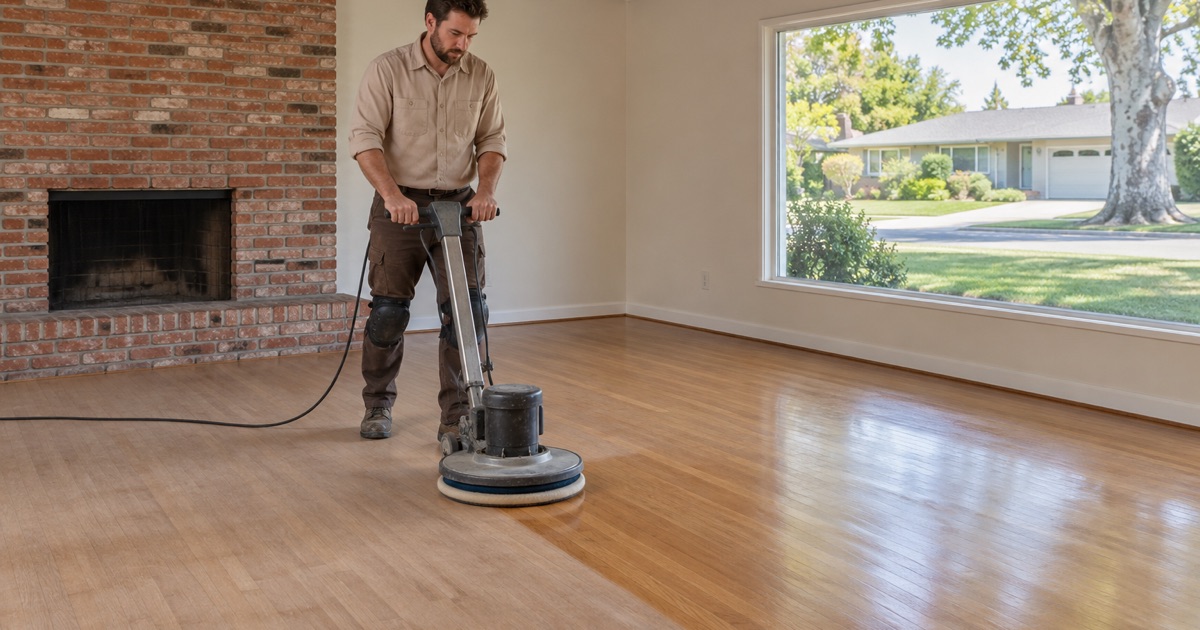
A grant for critical repairs, not finish work
The City of Downey’s Housing Division runs a Housing Rehabilitation Program that can provide a grant of up to $50,000 for critical home improvement projects. It is aimed at low- and moderate-income owner-occupants, with household income at or below 80 percent of area median, and it is federally funded by HUD.
The city’s own description names health and safety repairs, not flooring. We never tell a Downey owner the grant will pay for a new floor or a refinish, because nothing the city has published says so. What we can do is help you plan the floor so it fits around whatever the approved work turns out to be.
Which houses qualify
Eligible properties are owner-occupied conventional detached single-family dwellings. Applicants may not own other residential property, and a household that has received the grant before is not eligible again. That describes a large share of the city: 51.1 percent of Downey’s occupied units are owner-occupied, and 90.2 percent of those owner households live in detached houses.
Renters are mostly in a different position. About 61.5 percent of Downey renter households live in buildings of five or more units, which fall outside the program, and floor decisions there sit with the building owner.
Approval comes before any work
The program states that all proposed improvements must be approved by the Housing Division before work begins. That rule matters for floors more than people expect. If an owner tears out carpet, sands a floor or pulls up old tile before the city has signed off on a scope, the condition the city would have assessed is gone.
So our advice to anyone who has applied, or plans to, is simple: do not start demolition on your own. Contact the Housing Division at 11111 Brookshire Avenue, (562) 904-7161, and ask how the program wants related work handled before you schedule anything with us.
Looking for wood-flooring closer to Cerritos? See Cerritos Wood-Flooring.
Health and Safety Items Come Before the Finish Floor
What the city lists first
Mandatory improvements under the program can include installing smoke and carbon monoxide detectors, correcting electrical, plumbing and HVAC hazards, and abating lead-based paint and asbestos. Those items protect the people living in the house, which is why they sit at the top of the list and cosmetic work sits well below it.
From a flooring point of view, nearly every item on that list can touch the floor. Electricians fish wire through floors and walls, plumbers open floors to reach supply and drain lines, and HVAC corrections can mean new ducts, returns or registers cut into the floor.
Why we sequence floors last
A new floor laid before those repairs is a floor that will be cut, patched and scuffed by other trades. We would rather set the floor after the electrical, plumbing and HVAC corrections are finished, so any opening they leave can be framed and closed properly instead of covered.
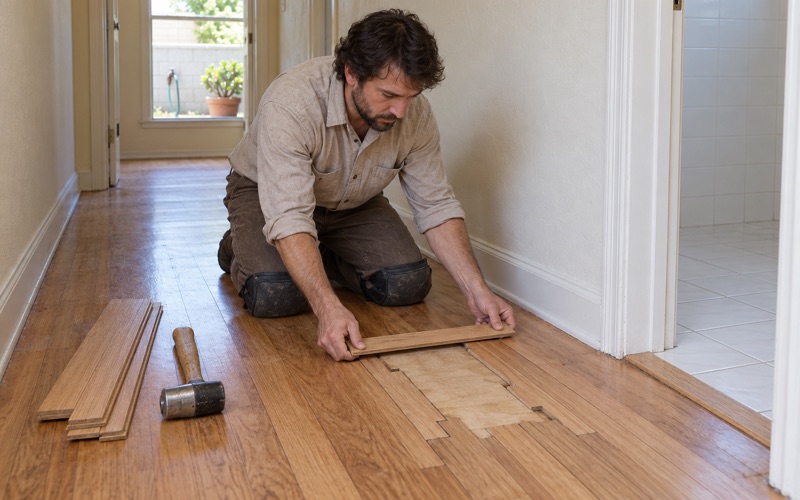
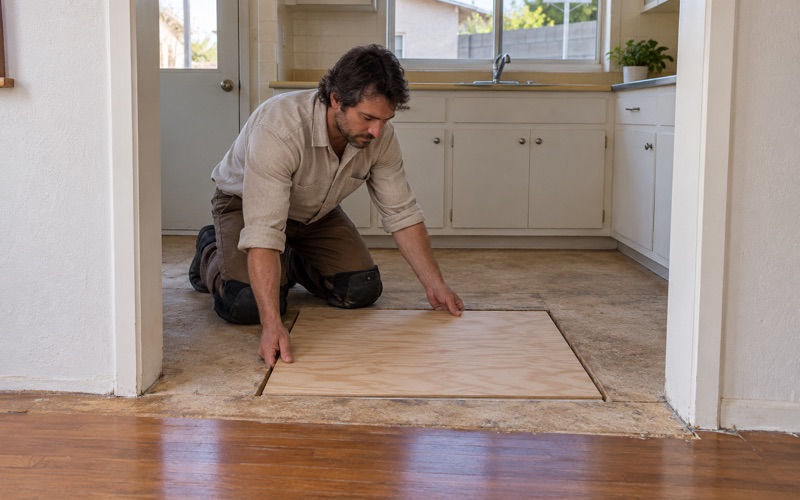
That includes old floor furnace openings and unused floor vents. When a heating system is corrected or replaced, we close the leftover hole with framing and boards woven into the surrounding floor, not a plywood square hidden under a rug.
Sequencing also keeps the floor out of the budget conversation until the must-do items are priced. An owner who knows what the safety work will cost can decide on the floor with a clear picture rather than a guess.
Plumbing hazards and wet floors
When plumbing work turns up a leak that has already reached the floor, we trace the water to its source and document what we find with photos and moisture readings. Those records help whoever is paying for the repair, whether an insurer or the owner, see what the floor went through.
We also take moisture content readings in the wood, and in any concrete, before ordering replacement material, and we write the numbers down. A floor installed over a subfloor that has not dried out after a plumbing repair can cup or buckle after it goes in.
Old Floor Coverings, Lead and Asbestos in Downey Houses
Why the age of the house matters
Downey’s housing stock is old enough that these questions come up often. Of the city’s 35,919 housing units, 38.6 percent were built in the 1950s, its largest building decade, and 82.9 percent went up before 1980. The city itself incorporated on December 17, 1956, in the middle of that building period.
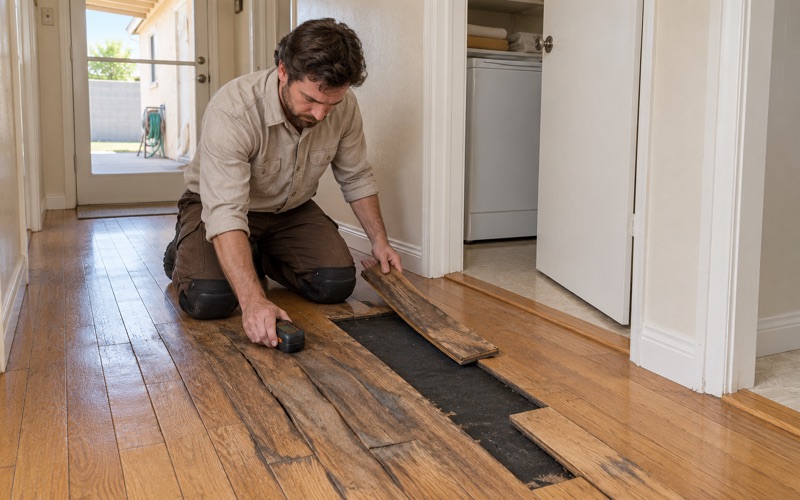
Houses from that era often carry several generations of floor covering. Carpet over linoleum over tile is a common stack, and each layer went down with its own adhesive.
Asbestos before anything is scraped
Older 9x9 asbestos floor tile and black mastic may contain asbestos, and the only way to know is to test. We treat any old tile or dark adhesive under a Downey floor as a possible asbestos question and stop until an asbestos survey answers it. Sanding or scraping first is the one step that cannot be undone.
Asbestos abatement is one of the items the rehabilitation program names. If your house is in the program, the Housing Division decides how that abatement is scoped, not a flooring crew. SCAQMD Rule 1403 governs asbestos removal in this air basin, and the survey always comes before the scraper.
Lead-safe practices on pre-1978 houses
The EPA Renovation, Repair and Painting rule applies to renovation in pre-1978 housing, which covers most of Downey. Lead-based paint on baseboards, shoe molding and door casings gets disturbed whenever a floor is removed or trim is pulled to fit a new one.
We follow lead-safe work practices on these houses: containing the work area, limiting dust and cleaning to a standard rather than by eye. Where lead abatement is part of an approved rehab scope, we wait until that work is done before any trim comes off for the floor.
What may be under the carpet
Some Downey houses from the 1940s and 1950s still have wood strip flooring under carpet or sheet goods. We assess what we find board by board before anyone quotes a full replacement, because a floor that looks finished at first glance is sometimes the best material in the house.
Planning Floor Work While You Wait for a Grant
Two to three years is a long time
The city states that there is currently a 2-3 year waiting list for the program. For an owner with a worn floor, that is too long to ignore and too uncertain to plan a full renovation around. The sensible middle ground is work that is safe, modest and easy to build on later.
What we suggest doing now
Start with information rather than demolition. We can visit, identify the floor covering layers where they are visible without disturbing them, measure moisture and check for soft spots or bounce that point to subfloor or framing trouble. You get a written report and estimate, which also helps when you talk to the Housing Division.
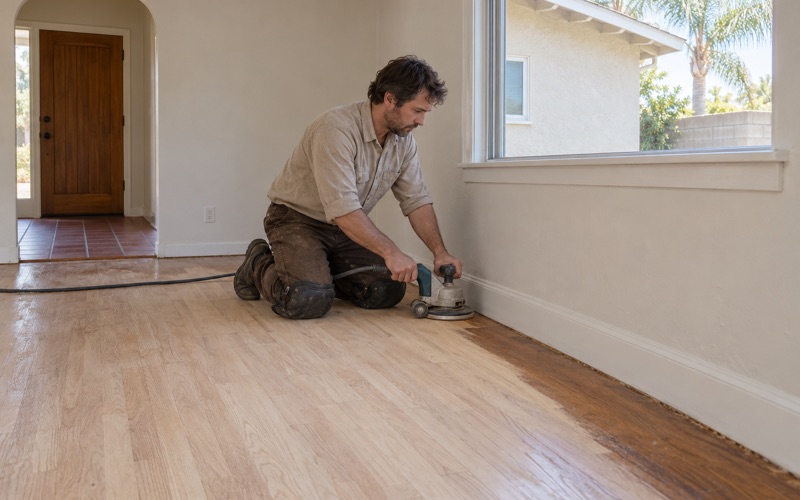
If a floor is sound but dull, a screen and recoat can refresh the existing finish without sanding into bare wood. We choose finishes that are legal to apply in the South Coast air basin, where SCAQMD Rule 1113 sets a 275 g/L VOC limit for wood coatings.
What we suggest holding off on
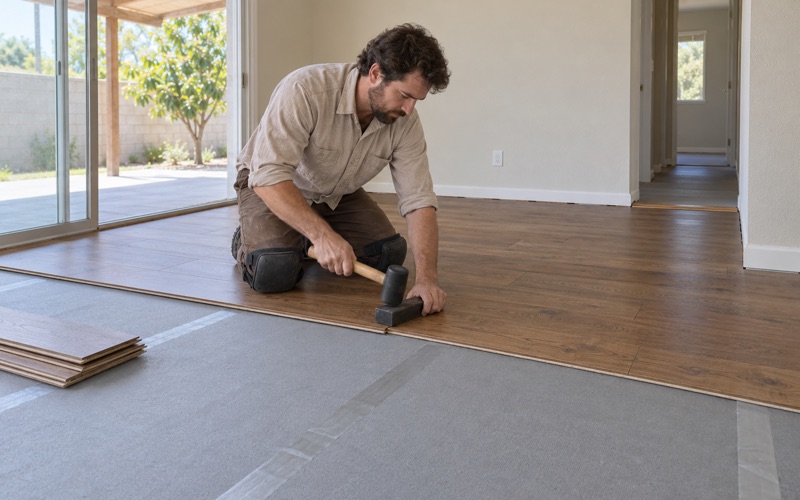
Full refinishing, tile removal, new installations over old coverings and anything that disturbs trim are the jobs we usually recommend postponing. If they are done now and the rehab scope later includes electrical, plumbing, HVAC or abatement work, the new floor may simply be opened up again.
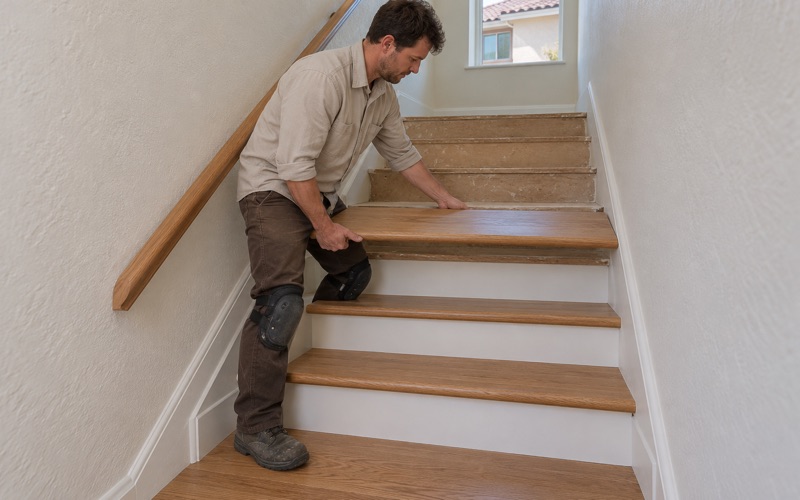
Stairs are one exception worth considering. We price stairs per tread and riser, so an owner can fix a worn or loose tread now without committing to the whole floor.
When the grant decision arrives
Once the Housing Division approves a scope and the health and safety work is complete, the floor becomes the last layer instead of the first. At that point we measure moisture again, confirm the subfloor, and give you a written estimate for the floor on its own terms, separate from anything the program handled.
If you are not in the program at all, the same order still applies. Safety repairs first, the floor last, and nothing sanded or scraped until the materials underneath are known.
- 20+ Years on Hardwood
- Written Moisture Readings
- Lead-Safe Work Practices