Bellflower Wood Flooring has spent more than 20 years on wood flooring in East Rancho Dominguez and the neighboring county communities, and much of that work happens in houses where one family has walked the same boards for a generation. We refinish, repair and replace hardwood while the owner keeps living in the house, and that shapes every decision from the first moisture reading to the last coat of finish.
A floor that has carried one household for twenty or thirty years tells us a great deal before any sander comes off the truck. Traffic lanes, furniture dents, pet stains and old patch work each point toward a different repair. We read them first, so the estimate reflects the floor you actually have rather than a generic square-foot number.
This page is written for owners who plan to stay. We explain when a screen and recoat is enough, when a full sand is worth it and when replacement makes more sense. Then we schedule the job so the family can keep using the rest of the house while one area is under way.
Owners Who Have Stayed in East Rancho Dominguez
A Community of Long Tenure
East Rancho Dominguez is an unincorporated pocket of Los Angeles County, surrounded by Compton and governed by the County Board of Supervisors. Census figures show how rooted its homeowners are. Of the 1,942 owner households, 49.6 percent moved in before 2000, and 27.9 percent have lived in the same house since before 1990.
About a quarter, 25.8 percent, own the house outright with no mortgage. For flooring, that means many of the people we meet are deciding about their own home for the long haul. They are not preparing a property for a quick sale, and the questions they ask reflect that.
Houses With Decades Behind Them
The housing stock is old even by Southern California standards. Of the community’s 3,636 housing units, 45.4 percent were built before 1950, and the 1940s were the single busiest building decade. Most owners live in detached houses, and many of those houses have gone through several rounds of remodeling since they were new.
Age alone tells us to check before we disturb anything. On pre-1978 housing we follow lead-safe practices under the EPA Renovation, Repair and Painting rule. Old tile or black mastic found under a floor is treated as a possible asbestos question, and an asbestos survey comes before anyone scrapes or sands it.
Renters on the Same Streets
Rental houses turn over on a very different clock. Among renter households, 59.1 percent moved in between 2010 and 2022, so the rented house next door may have changed hands several times while the owner across the fence stayed put. When a landlord needs a floor ready between tenants, we supply written estimates and invoices that document the work.
The two kinds of floor ask for different plans. A rental between tenants usually needs a durable, quick turnaround in an empty house. An owner who has been in place since the 1990s usually wants the floor done carefully once, with the family still at home, and expects it to last as long as they do.
Looking for wood-flooring closer to Santa Fe Springs? See Wood-Flooring Services in Santa Fe Springs.
What Decades of One Household Leave on a Floor
Traffic Lanes and Worn Finish
The first thing we look at is where the finish is gone. The path from the front door to the kitchen, the spot in front of a favorite chair, the hallway to the bedrooms: after twenty years these areas often show bare, gray wood while the edges of the room still look nearly new.
Worn finish is not the same as worn wood. If the finish has only thinned, a screen and recoat can restore protection without taking the floor down to raw wood. If the wood itself has grayed or started to splinter, the floor needs sanding to reach clean fiber again.
Stains, Dents and Earlier Repairs
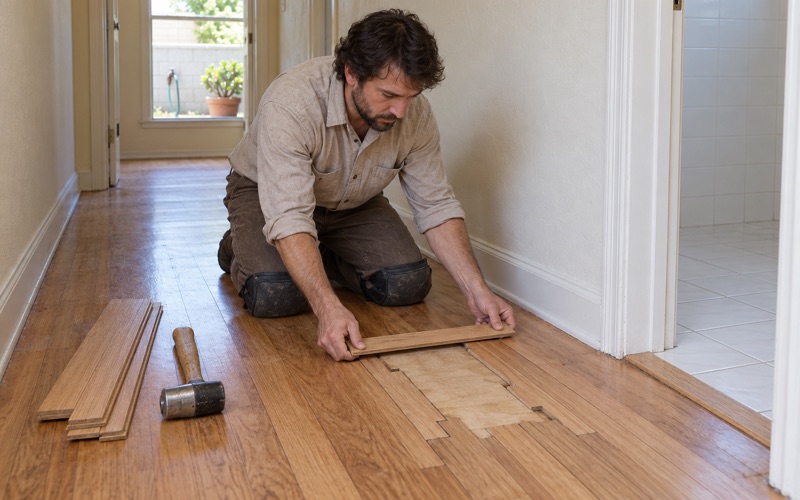
Long ownership leaves a record: white water rings near a plant stand, dark pet urine stains by a back door, dents from a heavy cabinet that sat in one spot for decades. White rings usually sit in the finish, while dark stains have usually gone into the wood, and that difference decides whether sanding clears them or boards must be replaced.
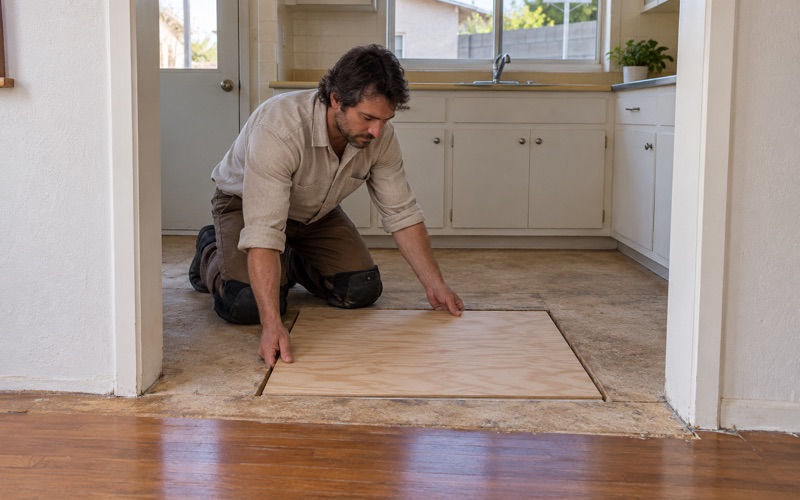
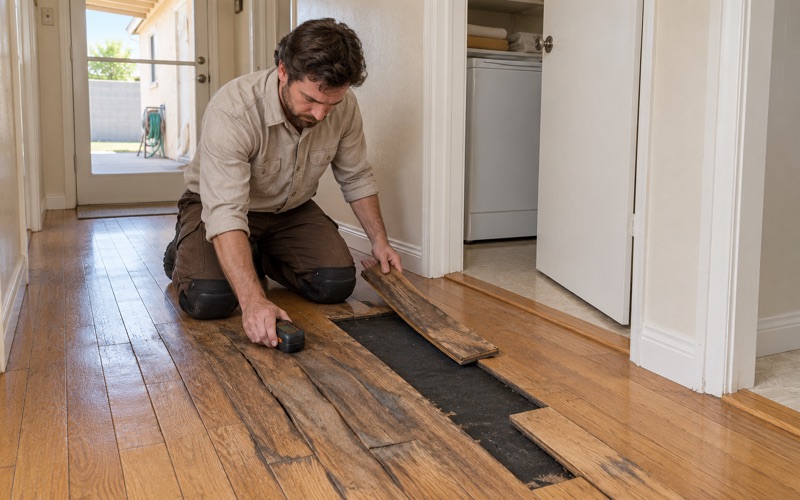
Sometimes we find repairs made years ago by a handyman or by the owner, such as a plywood square over an old floor furnace opening. We close those properly with framing and boards woven into the surrounding floor, so the patch disappears instead of hiding under a rug.
Squeaks, Gaps and Soft Spots
Squeaks, nail pops, seasonal board gaps and cupping are common in older floors. Some are cosmetic and some point to moisture or to trouble underneath. We check moisture content with a wood moisture meter, write down the readings, and trace any soft spot or bounce to its cause before we price a new finish over it.
A squeak that has been there for fifteen years is easy to stop noticing, and an owner who has lived with it may not mention it at all. We walk the whole floor with you, mark every noise and loose board, and decide together which ones are worth fixing while the room is already empty.
Refinish or Replace When You Are Not Moving
Why the Math Changes for a Staying Owner
An owner getting ready to sell often wants the cheapest fix that photographs well. An owner who expects to stay another decade or two should weigh different things: how many more sandings the floor can take, how the finish will hold up to daily life, and whether a repair will still look right in ten years.
That is why we assess the boards one by one before we quote a full replacement. A solid hardwood floor with enough wood above the tongue can often be sanded several more times, which makes refinishing the better long-term value for a household that is not going anywhere.
When Refinishing Is the Right Call
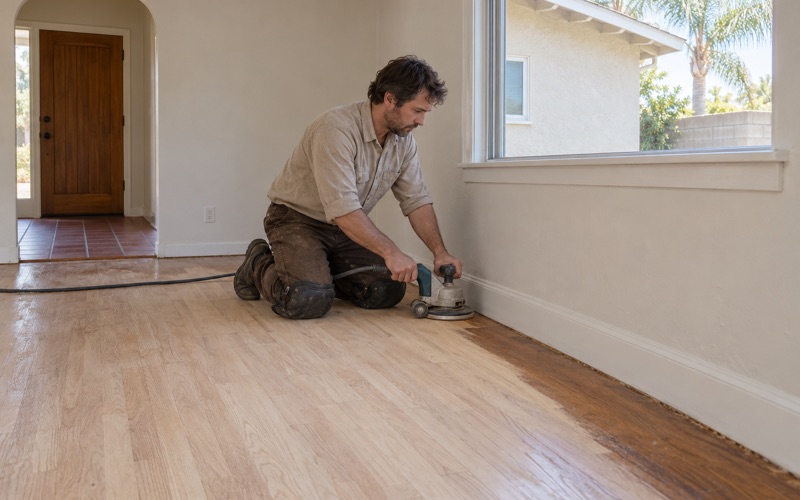
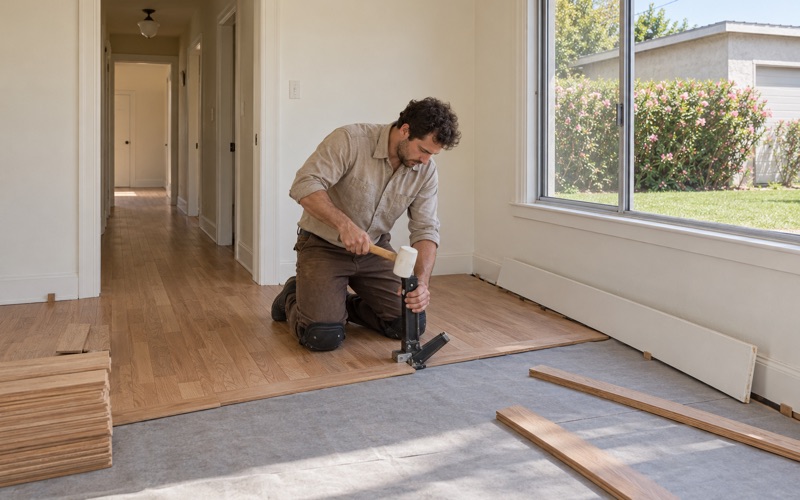
Refinishing makes sense when the boards are sound, flat and thick enough to sand, and the damage is limited to worn finish, scratches and stains that sanding or selective board replacement can remove. We run a full grit sequence with a drum sander, edger and orbital sander, using a dustless sanding system so the dust stays out of rooms the family is still using.
Many long-time owners also want to move away from orange oak left by an old amber finish. Sanding to bare wood lets us change the look with a new stain or a clear coat. We test on a small area first, so the color is approved before it goes across the whole room.
When Replacement Makes More Sense
Replacement becomes the better choice when boards have been sanded too thin, when water has cupped or buckled large areas, or when an earlier installation was never right. If water is involved we trace it to the source first, and after a slab leak we wait for the plumber to repair or reroute the line before new flooring goes down.
When the damage came from a leak that may be covered, we document it with photos and moisture readings an insurance adjuster can use. That record matters more to an owner who will live with the result than to one handing the house to a buyer.
Planning Around a Settled Household
Working Room by Room
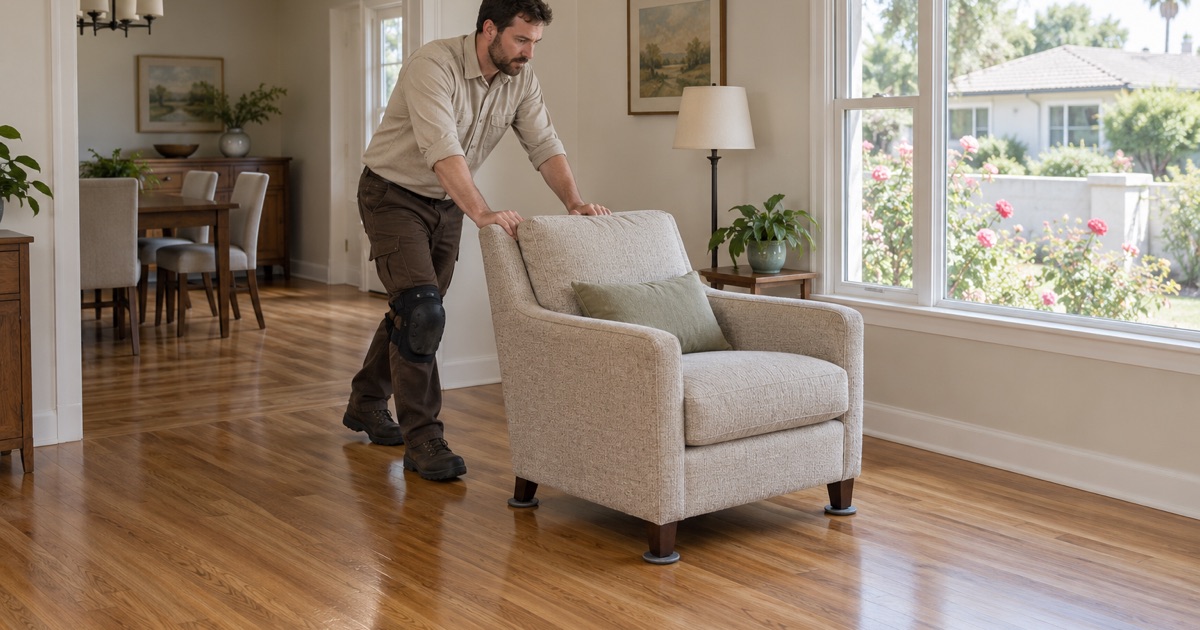
Families who have lived in a house for decades have full rooms, not staged ones. We plan the job in phases so furniture can move from one room to the next, and we agree in advance which rooms will be out of use and for how many days. Nobody should have to guess where they will sleep or eat.
Finish choice affects that schedule too. Waterborne polyurethane dries faster and carries less odor than oil-modified polyurethane, which helps when people are sleeping in the house. Every finish we apply is legal in the South Coast air basin under the 275 g/L wood-coating limit in SCAQMD Rule 1113.
Pets, Kitchens and Daily Routines
A household that is not moving out still needs a working kitchen, a path to the bathroom and somewhere for the dog. We map those routes before the first day, keep one way through the house open whenever we can, and tell you exactly when a fresh coat can take socks, then furniture, then rugs.
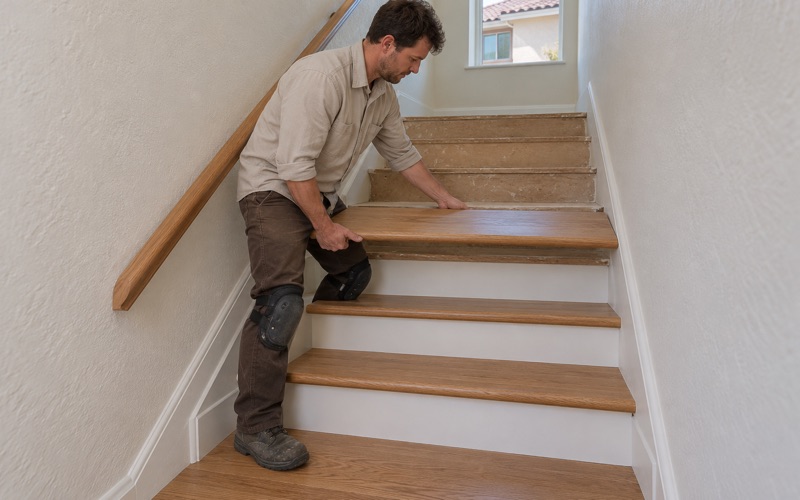
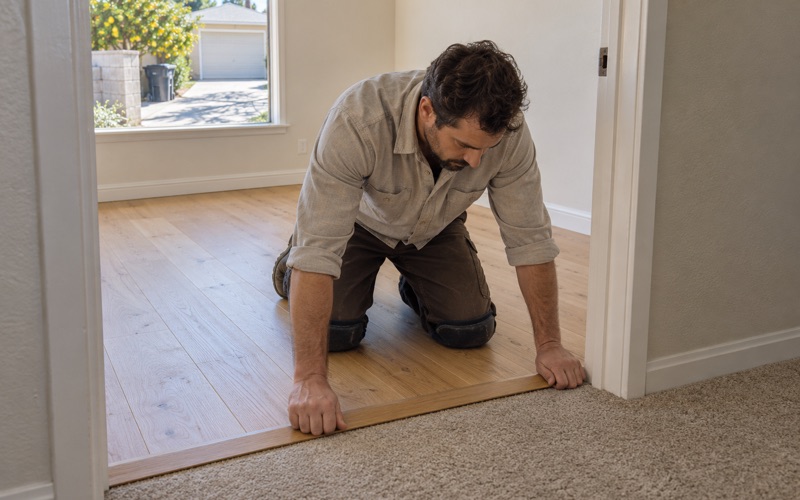
On stairs and at doorways we plan the transitions early. New stair treads and nosing, a reducer strip at a tile kitchen or a T-molding between rooms all need to line up with the finished floor height, and settling those details first keeps a staying family from tripping over a mismatched edge for the next twenty years.
Choosing a Floor for the Next Twenty Years
If replacement is the answer, we help owners pick a floor they will want to live on for a long time. The Janka hardness rating compares species: white oak and red oak are the familiar choices, and hickory is harder still for a busy household. A solid site-finished hardwood can be sanded again years from now.
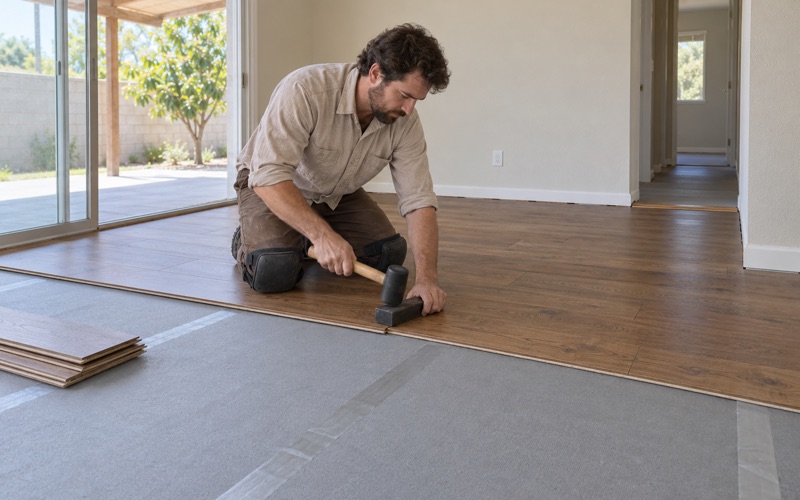
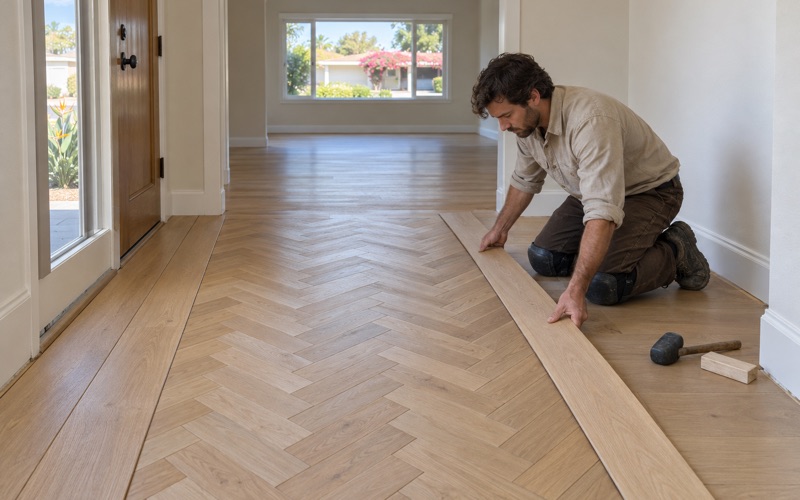
Engineered flooring can be a good fit too, but its wear layer thickness decides how many times it can be refinished. We explain the difference between prefinished and site-finished hardwood, and between nail-down, glue-down and floating installation, so the choice suits the house and the family’s plans.
We also talk about sheen level and finish type with the long view in mind. A satin waterborne finish hides everyday scratches better than high gloss, and a hardwax oil finish can be spot-repaired without sanding the whole room. For an owner planning to stay, easy upkeep over the years often matters more than how the floor looks on day one.
Before any material is ordered, we measure moisture in the wood and in any concrete slab and record the numbers. Acclimation and installation follow NWFA installation guidelines, and stairs are priced per tread and riser, so the estimate shows exactly what a long-term owner is paying for and why.
- 20+ Years on Hardwood
- Written Moisture Readings
- Lead-Safe Work Practices