
Hardwood floor repair is where Bellflower Wood Flooring does much of its work in Bellflower, CA, and we cover surrounding cities including Paramount, Lakewood, Norwalk, Artesia and Downey. A few damaged boards rarely mean the whole floor has to go. After more than 20 years of fixing oak strip, plank and parquet, we replace what is failing, keep what is sound and blend the two so you cannot tell where the repair begins.
The houses around here make that skill matter. Most owner-occupied homes in Bellflower were built from 1939 through 1959, which means original oak that has lived through decades of carpet, pets, leaks, furnace changes and termites. Those floors are usually worth saving, and a careful repair costs a fraction of starting over.
Below we cover the most common repairs we make, how we match old boards, what we check before fixing a symptom, and when a repair should be paired with a refinish. Every estimate we write lists each repair separately, so you can see exactly what is being fixed.
Board Replacement and Weave-In Repairs
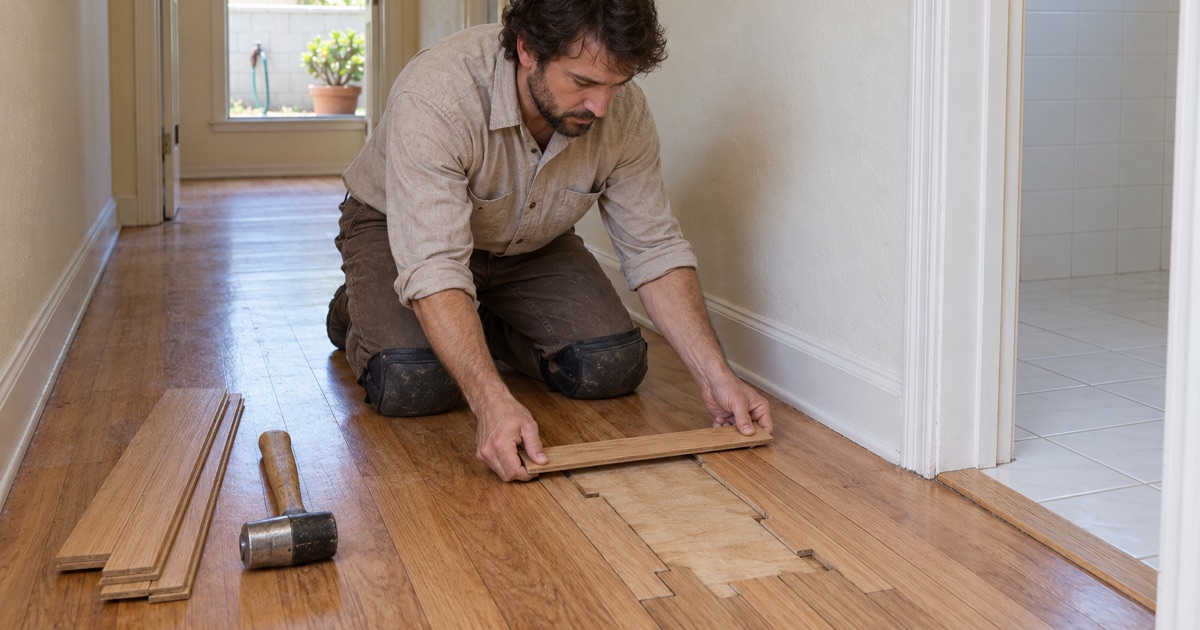
Cutting Out Damaged Boards
A damaged board is cut out along its length without disturbing its neighbors, and the tongue and groove edges are cleaned up so the new board seats properly. We do not simply glue a new face over the old one, because that leaves a board that sits high and fails again.
This is how we handle deep gouges, pet urine stains that have soaked into the grain, burns, split boards and boards chewed by termites.
Weaving New Boards Into the Floor
A weave-in repair staggers the new boards the same way the original floor was laid, so the end joints do not line up in an obvious square. That is what makes a repair disappear once the area is sanded and finished.
The larger the repair, the more this matters. A patch cut straight across several rows always looks like a patch, however well the color is matched.
Matching Species, Width and Color
Older oak strip was milled in widths and profiles that are no longer standard, and red oak and white oak look different once finished. We match the species first, then the width and profile, and salvage boards from hidden areas when that gives the best match. Color is blended during finishing, and sometimes a light refinish of the room is the best way to tie everything together.
Squeaks, Gaps and Loose Boards
Squeaks and Nail Pops
Squeaks come from boards rubbing against each other or against loose fasteners, and nail pops are nails backing out as the wood moves. We reset or replace fasteners from above where the floor allows, or work from a crawl space on a raised foundation to tighten the subfloor to the joists.
A squeak that returns right after being fixed usually means the real movement is in the subfloor, which is where we look next.
Gaps Between Boards
Small board gaps that open in dry months and close again are normal for solid wood. Gaps that stay open, grow over time or appear in just one area point to a moisture change, a missing expansion gap or a subfloor problem. We check moisture content with a wood moisture meter before choosing a fix.
Permanent gaps can be filled with thin wood slivers glued to one side, which move with the floor better than a hard filler.
Loose or Hollow-Sounding Boards
A hollow sound under a glue-down floor means the adhesive has let go. We inject adhesive to re-bond small areas or lift and reset the boards when the area is larger. On a floating floor, a hollow spot usually means a dip in the slab below that needs leveling.
Repairs Specific to Older Houses
Closing Floor Furnace Openings and Registers
Many 1950s houses once had a floor furnace in the hallway and floor registers in other rooms. When the heating is replaced, those openings are often covered with a plywood square and a rug. We frame the opening properly and weave in matching boards so the floor runs continuously and the old furnace location stops being a soft, obvious patch.
Termite and Beetle Damage
Drywood termites leave small pellets called termite frass and pinholes in the boards, while subterranean termites work from the soil up and powderpost beetles leave fine powder. After a pest control company treats the house, we remove weakened boards, check the subfloor and floor joists below and replace what is no longer sound.
Carpet Tack Strip and Staple Damage
When carpet comes up, carpet tack strip and pad staples leave a ring of holes and split board edges around every room. We pull them carefully, replace the boards that split and fill the rest before the floor is sanded, so the perimeter finishes as cleanly as the middle of the room.
Before We Fix the Symptom
Checking for Moisture Problems
Cupping, crowning, buckling and dark stains all start with water. Before replacing any board, we measure moisture content in the surrounding wood and look for the source, whether a leak, a slab problem or poor drainage near the house. Replacing boards over an active moisture problem only means replacing them again.
Checking the Subfloor and Framing
Soft spots and bounce usually come from below the finish floor. We check the plywood subfloor or board subfloor and the joists before repairing the hardwood above, and sister a sagging joist when the framing needs it.
Lead and Asbestos Precautions
In pre-1978 housing, removing shoe molding and baseboards can disturb lead paint, so we follow lead-safe practices under the EPA Renovation, Repair and Painting rule. If old 9x9 tile or black mastic turns up under or beside the wood, we stop and treat it as a possible asbestos question.
Repairs for Landlords and Home Sales
Turning Over a Rental
When tenants move out, floors often show scratches, pet damage and wear in the traffic lanes. We separate what is damage from what is normal wear and tear, repair the boards that need it and give you a written invoice listing each repair. That record helps if a question about the security deposit comes up under Civil Code 1950.5.
For many rentals, a few board replacements and a screen and recoat get a unit ready without the cost of a full refinish.
Before Listing a House
A floor with dark pet stains, a patched furnace opening or loose boards stands out in listing photos and during inspections. Targeted repairs before a sale fix the problems a buyer will notice without taking on a full replacement.
Documenting Damage
We photograph damaged areas before and after the repair and note moisture readings where water was involved. Landlords, sellers and homeowners working with an insurer all find that record useful later.
Repair or Replace
When Repair Is Enough
If the damage is limited to a few boards or one area, and the rest of the floor is sound, repair almost always costs less and keeps the original floor. That is true for most tack strip damage, pet stains in one room, a furnace opening and isolated termite damage.
When Replacement Makes More Sense
When damage runs across most of a room, the floor has been sanded too thin to refinish, or the subfloor below has failed widely, replacing the floor is usually the better value. We explain the reasons in writing so the choice is clear.
Our Step-by-Step Hardwood Floor Repair Process
Step 1: Diagnose the Damage
We look at the damaged area, take moisture readings and check the subfloor so we fix the cause as well as the boards.
Step 2: Written Estimate
You get an itemized estimate listing each repair and whether a partial or full refinish is recommended to blend it.
Step 3: Remove and Replace
Damaged boards come out, any structural repair is made, and new or salvaged boards are woven into the floor.
Step 4: Sand, Finish and Blend
The repaired area is sanded and finished to match the surrounding floor, or the room is refinished when that gives a better result.
- 20+ Years on Hardwood
- Written Moisture Readings
- Lead-Safe Work Practices