
Hardwood stairs from Bellflower Wood Flooring are built, capped and refinished for homes in Bellflower, CA, and we cover surrounding cities including Paramount, Lakewood, Norwalk, Artesia and Downey. A staircase is the most visible piece of flooring in a house with a second story, and also the most hand-worked, which is why we price every tread and riser as its own line instead of hiding the stairs inside a square-foot number.
Across more than 20 years of flooring work, stairs have always been the part of a job that shows whether the details were done right. A nosing that sits proud of the floor, a tread that rocks or a stain that does not match the landing gets noticed every time someone walks up.
Stair Parts and What Each One Does
Treads
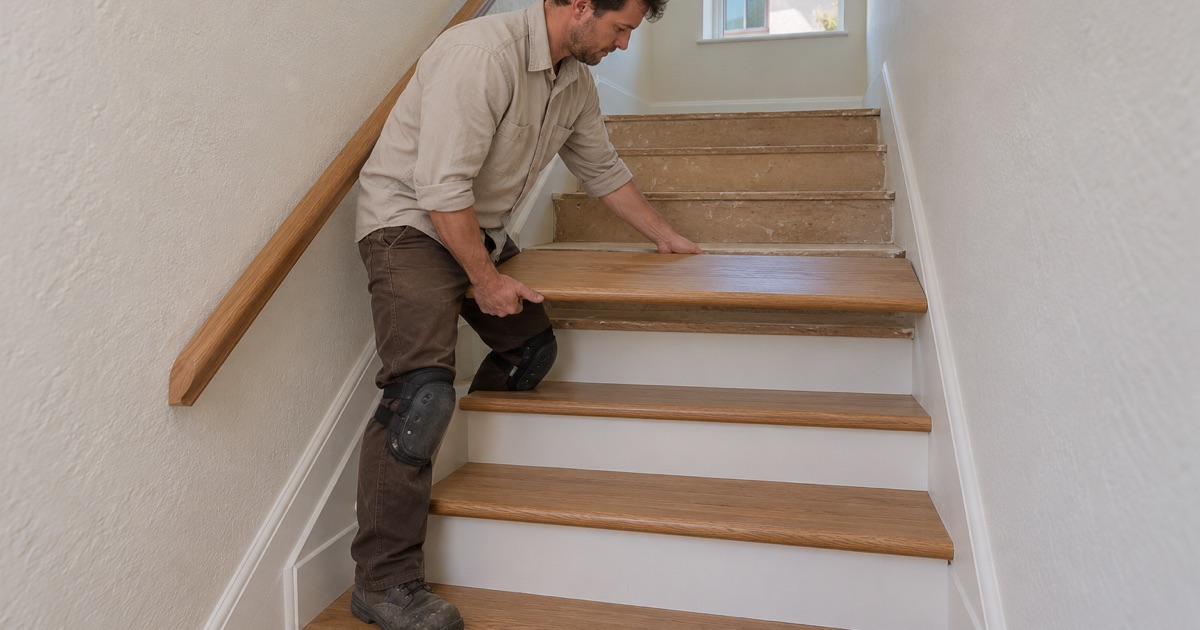
A stair tread is the horizontal board you step on. Hardwood treads are usually solid wood, often red oak or white oak, and thicker than floorboards so they can span the stringers without flexing. A good tread is fastened with construction adhesive and fasteners so it stays silent for years.
Risers
The stair riser is the vertical board between treads. Risers can be hardwood to match the treads or painted for contrast, a common look with white risers under stained oak treads. Painted risers are easier to keep clean where shoes scuff them.
Nosings and Landings
The stair nosing is the rounded front edge of a tread, and the landing nosing ties the top of the stairs to the floor. We match its height and profile to the hardwood it meets, so the transition is flush and safe rather than a lip that catches toes.
Converting Carpeted Stairs to Hardwood
What Is Under the Carpet
When carpet comes off a staircase, the stairs underneath are either finished hardwood treads that were covered, or rough construction treads that were never meant to show. We pull the carpet, pad, tack strip and staples first so we can see which you have.
Refinishing Existing Treads
If the treads are hardwood, they can be repaired and refinished. Staple holes are filled, damaged treads are replaced one at a time and the whole staircase is sanded by hand and with detail sanders, since a drum sander cannot work on steps.
Capping Rough Stairs With New Hardwood
If the treads are rough lumber, we cut back the old overhang and install new hardwood treads and risers over them, sometimes called a stair retrofit. Each piece is measured and cut for its own step, since stairs in older houses are rarely perfectly uniform.
Finishing and Matching
Stain Matching With the Floor
When stairs and a floor are site-finished together, they share one stain and one finish, which gives the closest match. If the stairs are done separately, we stain samples on scrap treads to match the existing floor under your own lighting.
Finish and Grip
Stairs take more wear per square foot than any floor, so the finish matters. We use durable waterborne polyurethane or other finishes that meet the South Coast air basin’s 275 g/L limit, and a matte or satin sheen level gives better grip and hides wear better than gloss.
Railings and Balusters
Handrails, newel posts and balusters can be refinished to match the new stair color or painted to contrast with it. Loose railings are tightened while we are there, since a staircase job is the easiest time to fix them.
Safety and Older Houses
Lead-Safe Work on Stairs
In pre-1978 housing, painted risers, stringers and skirt boards may carry lead paint. We follow lead-safe practices under the EPA Renovation, Repair and Painting rule when sanding or removing those parts, with containment and cleanup to match.
Consistent Step Heights
Adding new treads over old ones changes the height of the top and bottom steps. We plan the new tread thickness so step heights stay as even as possible, since an uneven step is a real tripping hazard.
Pricing and Planning a Stair Project
Why Each Tread and Riser Is Its Own Line
No two staircases are alike. One has twelve straight steps, another has a winder at the turn, a landing and a bullnose starter step. Folding all of that into a square-foot flooring price hides where the work actually is, so our estimates list each tread, each riser, the nosings, the landing and any railing work separately.
That also lets you decide what to include. Some homeowners do the treads in hardwood and paint the risers themselves, and the estimate shows exactly what that choice saves.
Stairs as Part of a Larger Floor Job
Stairs are often done at the same time as a new floor or a refinish on the level above or below. Doing them together means one stain batch, one set of finish coats and a landing nosing cut to the final floor height, which gives the cleanest match.
If the stairs are done later, we keep a record of the stain and finish used on the floor. That makes a close match much easier when the second phase comes.
Time and Access During the Work
A staircase is usually the only route between floors, so we plan the work to keep it usable. Treads can be finished in alternating steps, letting you use every other step while the rest dry, or the work can be timed so the house can do without the stairs for a day.
Caring for Hardwood Stairs
Everyday Wear on the Nosings
The front edge of each tread takes most of the wear, and the finish there usually dulls first. A light screen and recoat of the treads every few years keeps the wood protected and costs far less than sanding the whole staircase again.
Runners and Pets
A stair runner protects the middle of each tread and adds grip for children, older family members and pets. It can be added after the stairs are finished, with the exposed wood at each side left to show.
- 20+ Years on Hardwood
- Written Moisture Readings
- Lead-Safe Work Practices