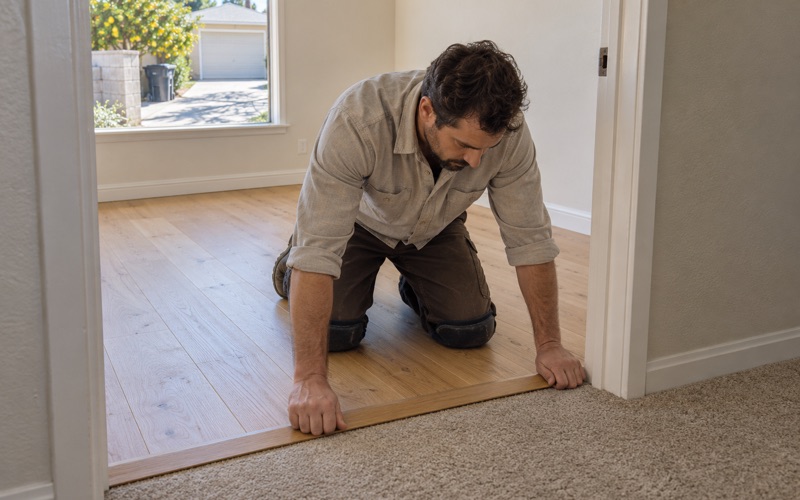
Bellflower Wood Flooring brings more than 20 years of wood-flooring work to Hermosa Beach, installing, sanding, refinishing and repairing hardwood in houses, condos and small rental buildings close to the water. Every job starts with a wood moisture meter on the existing boards and a check of anything underneath them. The readings are written down before a single carton is ordered.
Floors near the ocean wear differently from floors inland. Fine grit rides in on shoes, towels and paws, doors stay open for the breeze, and the finish inside each entry dulls long before the rest of the room. We plan species, finish and layout around that pattern of wear rather than around a showroom sample.
The sections below explain how water behaves at the edge of this town, what the city’s adaptation planning is designed to address, and what we weigh when choosing, installing and caring for wood in a home a short walk from the sand. None of it replaces a site visit, but it shows how we think before we quote.
How Water Moves at the Edge of Hermosa Beach
Most of the water stories we hear inland involve a river, a hillside or a broken supply line. In Hermosa Beach the city’s own planning describes something different: water that arrives from the ground, from the drains under the beach and from the air. Knowing that difference helps a homeowner ask better questions about the floor they are about to buy.
Storm Drains Buried Under the Beach
The city’s climate adaptation and resiliency work describes pluvial flooding that happens when storm drains buried under the beach are overwhelmed by a backflow from the ocean during high tides and storms. That is a public-drain mechanism at the shoreline. It is the kind of flood path that belongs to a beach town and nowhere else in the county.
We mention it because it shapes how people here talk about water, not because it describes what happens inside a house. When we assess a wet or cupped floor, we trace the actual source room by room, whether that is a leaking appliance, a door threshold or a plumbing line, and we document what we find with photos and moisture readings.
Groundwater and Sea-Level Rise Planning
The same adaptation work notes that groundwater risks increase at 6.7 feet of sea-level rise, a scenario with a 1 in 200 chance of occurrence by 2100. The State Coastal Conservancy also awarded the city $100,000 to assess infrastructure vulnerability to sea-level rise and associated salinity intrusion into the shallow groundwater table.
Those are long-horizon planning numbers for streets, pipes and public systems. For a floor being installed this year, the practical lesson is simpler: in a sandy, low-lying town, we measure moisture conditions instead of assuming them, and we choose materials and installation methods that match what the meter shows on the day.
Permeable Streets, Bioretention and a Vegetated Dune
The designs developed from that work answer the drain and groundwater problems with permeable streets, sidewalks and trees, bioretention planters and underground filtration systems. A vegetated dune is proposed to anchor sand, reduce beach narrowing and buffer inland areas from waves, flooding and erosion.
Hydrological and sea-level-rise studies set the level of vulnerability for three priority sites, and residents saw preliminary and final designs at public workshops. We treat these as designs, not finished projects. They matter to a floor owner mainly as a signal that the city takes water at the sand seriously, and so should anyone planning an interior renovation.
Looking for wood-flooring closer to San Marino? See San Marino Wood-Flooring.
Wood Floors a Few Blocks From the Sand
The housing here is older and more varied than the new construction along the water suggests. About 11.2 percent of the city’s housing units were built before 1940, and 2,150 units sit in two-to-four-unit buildings. That mix means we see everything from worn strip floors in small cottages to prefinished planks in recent duplexes.
Choosing a Species for Beach Traffic
The Janka hardness rating gives a useful first comparison. Hickory sits near the top of the common domestic species, while white oak and red oak fall in the middle and take stain and sanding predictably. For a busy entry near the beach, a harder species or a tighter grain hides fine scratches better than a soft, open-grained board.
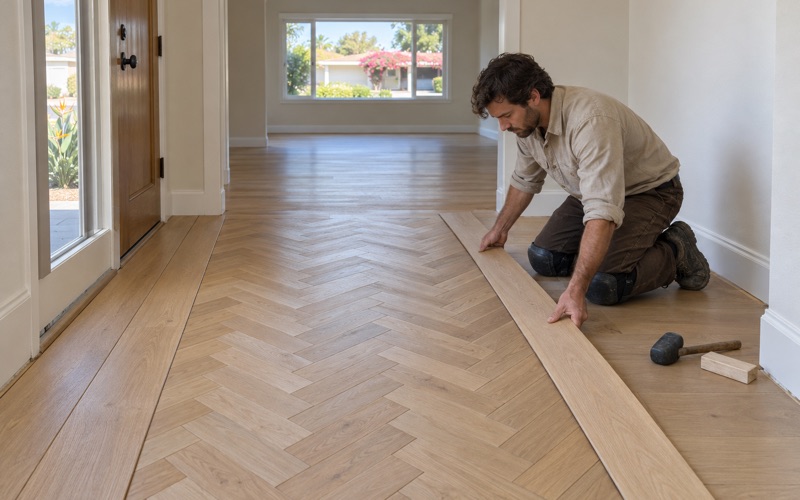
Hardness is only half the choice. A wire-brushed or lightly textured surface in a matte sheen masks the micro-scratches grit leaves behind, while a smooth, glossy floor shows every one. We often steer clients toward white oak in a low sheen because it balances hardness, stability and a look that suits a coastal home.
Engineered or Solid Near the Coast
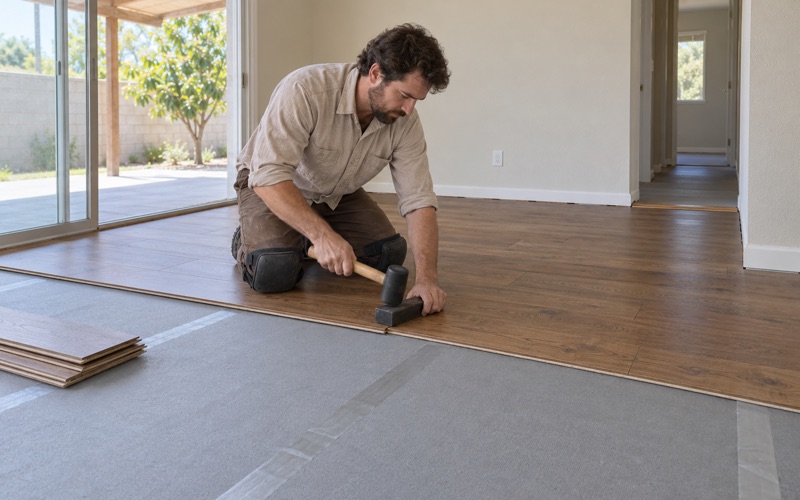
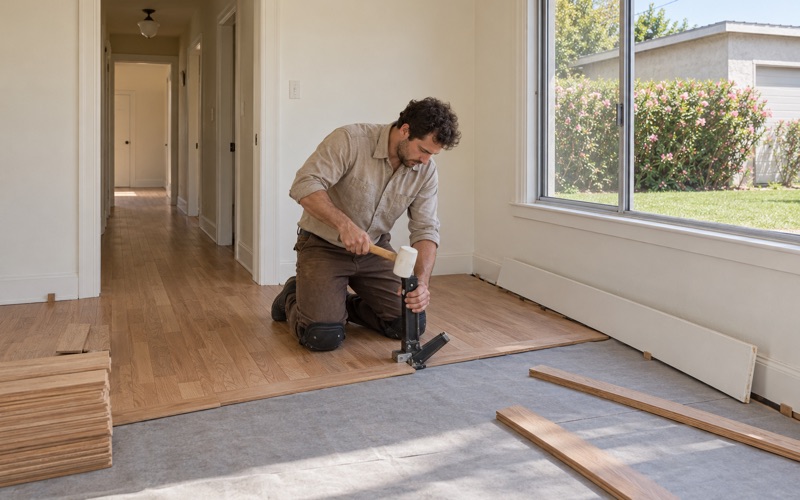
Engineered hardwood uses a real wood wear layer over a layered core, and that engineered core construction resists seasonal movement better than a solid board of the same width. That makes it a common choice for wide plank floors, for floating installation over concrete, and for units where the floor height is limited.
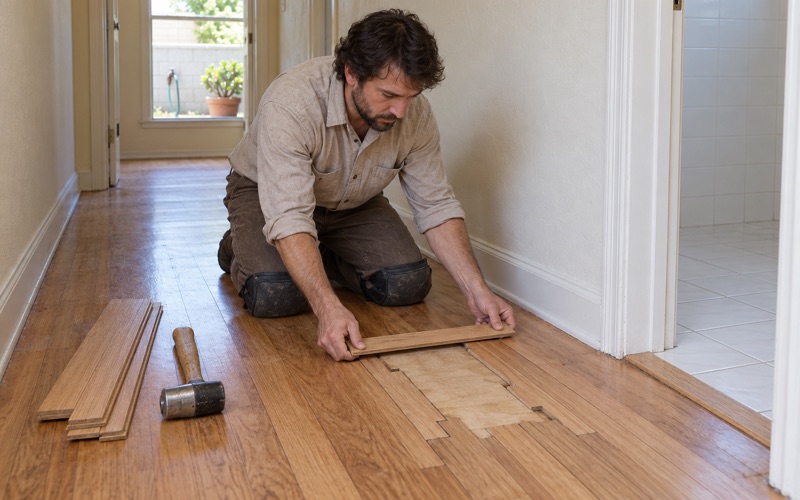
Solid hardwood still has a place, especially where a house already has solid strip flooring and a matching repair or weave-in repair is the goal. We look at wear layer thickness before recommending any engineered product, since a thicker wear layer allows more future sanding and a longer life in a high-traffic beach home.
Measuring Before Material Arrives
We take readings in the wood with a moisture meter and, where a floor will go over concrete, test the concrete too, using the ASTM F2170 in-situ relative humidity test or a calcium chloride moisture test depending on the job. The results decide whether a vapor retarder, a glue-down system or a floating installation is the right call.
Acclimation follows the same logic. New boards sit in the home until their moisture content is close to the subfloor and the room, following NWFA installation guidelines. Skipping that step near the ocean is how a floor ends up cupping, crowning or showing board gaps within its first year.
Grit, Doors and Finish Wear Near the Beach
Sand Tracked In at the Door
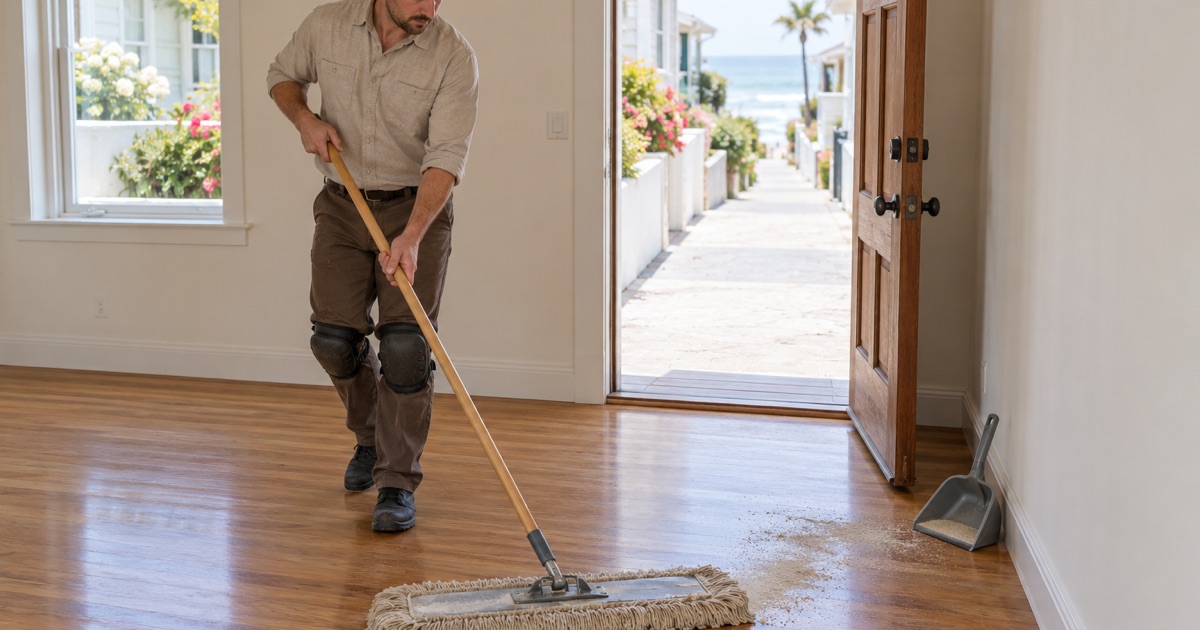
Fine grit works like loose sandpaper under every step. In a home near the beach it collects at the front door, the slider to the patio and the path to the laundry room, and the finish in those lanes wears faster than anywhere else in the house.
The fix is mostly habit. We recommend washable mats on both sides of each exterior door, frequent dry sweeping or vacuuming with a hard-floor head, and felt pads under chairs and stools. A damp mop with a cleaner made for finished wood is fine, but standing water and steam mops are not.
Finishes That Stand Up to Grit
We apply only finishes legal in the South Coast air basin under SCAQMD Rule 1113, which caps wood coatings at 275 g/L of VOC. Within that rule, a two-component waterborne polyurethane gives a clear, hard surface that resists abrasion well, while an oil-modified polyurethane adds warmth and color to red oak.
A hardwax oil finish is another option for owners who prefer spot repairs to full recoats. It shows wear sooner but can be refreshed in a single worn area without sanding the whole room. Sheen level matters as much as chemistry, and a satin or matte finish hides grit scratches far better than semi-gloss.
Screen and Recoat Before the Wood Wears Through
When a finish turns dull and scratched but the wood underneath is still sound, a screen and recoat restores protection without a full sanding. We abrade the existing finish, clean thoroughly and apply a fresh topcoat, which saves wood and keeps the floor in service longer.
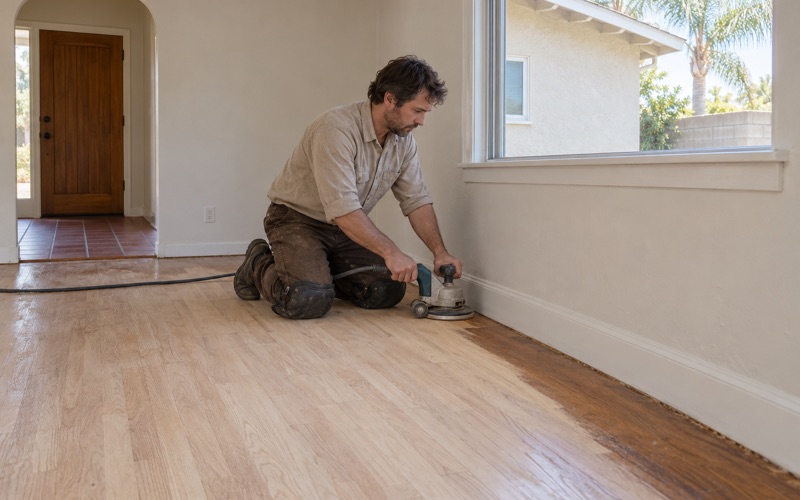
Waiting too long changes the job. Once grit has cut through to bare wood at the entries, gray patches and stains set in and the floor needs a full sanding with a drum sander, edger and orbital sander, following a proper grit sequence. We use a dustless sanding system to keep that work cleaner in smaller homes.
Planning Floor Work in Hermosa Beach
Scheduling Around the Beach Forecast
The city’s internal point falls in National Weather Service forecast zone CAZ366, Los Angeles County Beaches. We check that zone forecast when scheduling finish coats, because cure times and ventilation plans depend on the conditions in the house over the next few days.
Finishing often means keeping doors and windows managed carefully, since open doors let grit and damp air reach wet coats. We plan the sequence of rooms so the household can still move through the home, and we explain each step before the first coat goes down.
Older Houses, Rentals and Lead-Safe Work
Many homes here predate 1978, so we follow lead-safe work practices under the EPA Renovation, Repair and Painting rule whenever sanding could disturb old painted trim or coatings. Old 9x9 tile and black mastic under a floor are treated as a possible asbestos question, and we arrange an asbestos survey before anything is sanded or scraped.
Owners of duplexes and small rental buildings get written estimates and invoices they can use when a unit turns over between tenants. That paperwork helps separate normal wear and tear from damage and keeps the turnover schedule predictable.
Stairs, Repairs and Water Damage
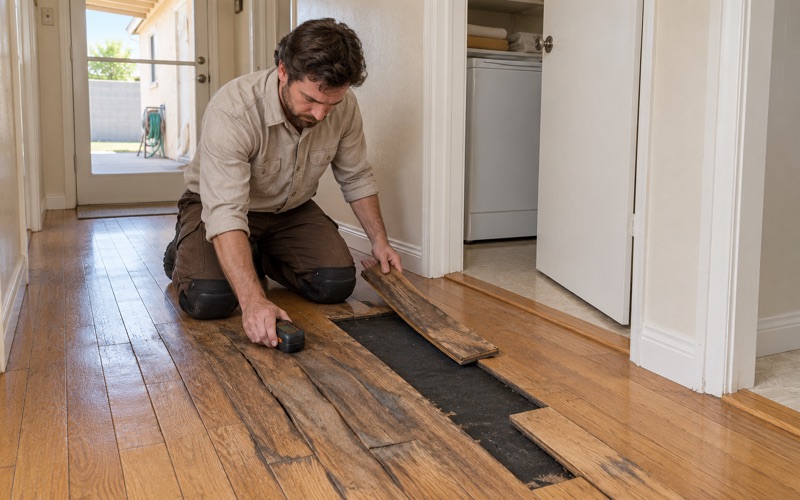
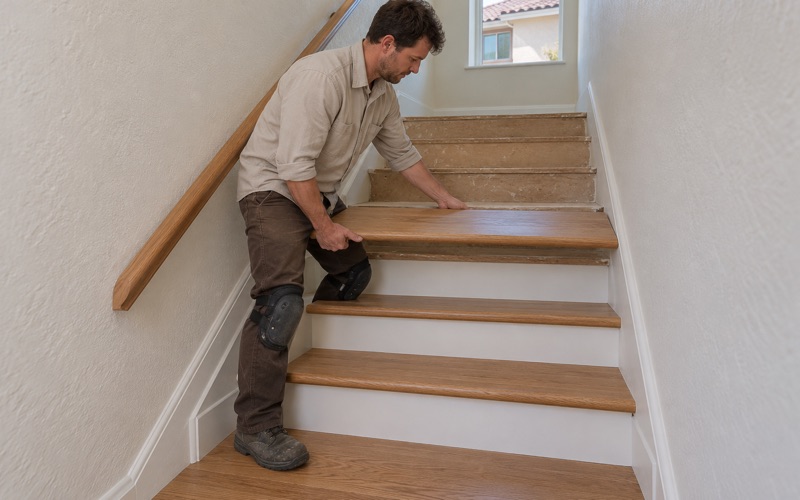
Stairs are priced per tread and riser, with stair nosing and shoe molding listed separately, rather than folded into a square-foot number. Board replacement and weave-in repairs let us fix a damaged area without replacing an entire room when the rest of the floor is sound.
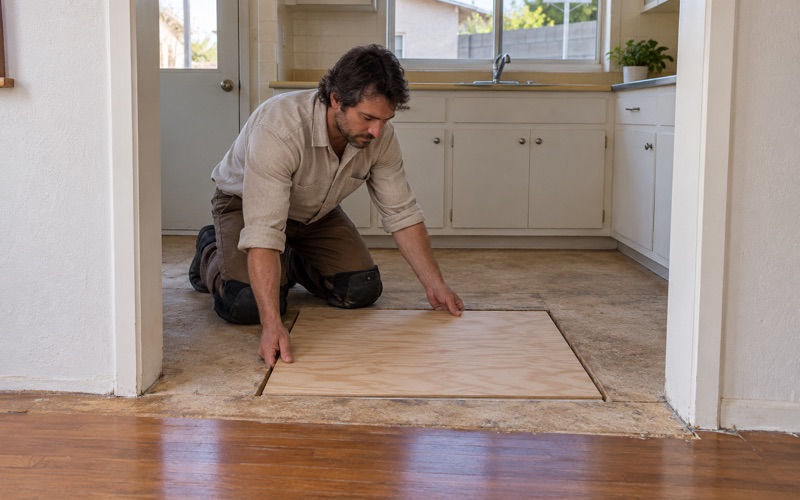
When a floor has been soaked, we trace the damage back to its source and document it with photos and moisture readings an insurance adjuster can use. Soft spots and bounce are followed down to the subfloor and floor joists before we price a new finish floor, so the repair lasts.
- 20+ Years on Hardwood
- Written Moisture Readings
- Lead-Safe Work Practices