Bellflower Wood Flooring handles wood flooring in Laguna Woods with more than 20 years in the trade behind it, and every job here begins with one question before any sample comes out: who will be at home while the crew works? The answer usually shapes the schedule, the choice of floor and the paperwork more than the square footage does.
Most of the owners we meet in this city are in their late seventies, eighties or nineties, and they are not leaving for an office each morning. So we plan the work around a resident who stays put, a daily routine that should keep running, and approvals that belong to the owner before anyone ships a single carton of flooring.
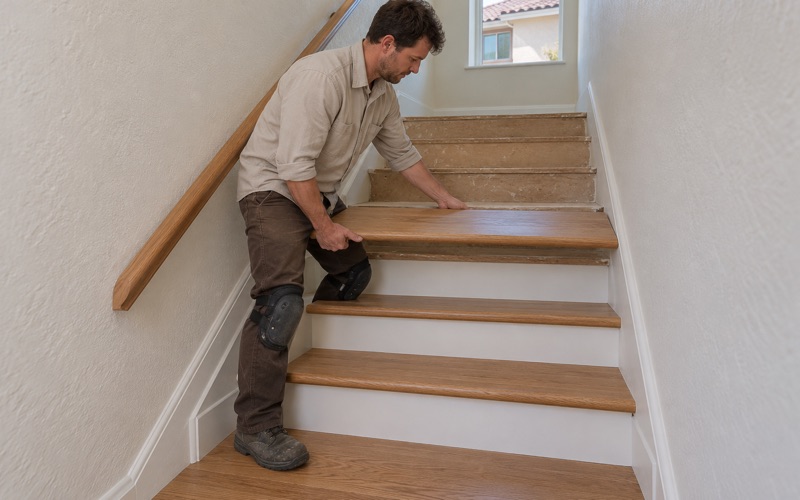
What stays the same is how we price and document a job. Moisture is measured in the wood and in any concrete before material is ordered, and the readings are written down. The estimate is itemized in writing, and stairs are priced per tread and riser rather than buried inside a square-foot number, so a family member reviewing it later can follow every line.
A City of Very Old Owners, and a Job That Works Around Them
Census figures for Laguna Woods explain why our planning looks different here. Of 8,387 owner households, 7,509, or 89.5 percent, are headed by someone 65 or older. Just over half, 53.2 percent, are headed by someone 75 or older, and 20.7 percent, about one in five, by someone 85 or older.
The homes change hands more often than those ages might suggest. Among owner households, 71.2 percent moved into their current home in 2010 or later, which means many owners are living on floors someone else chose decades ago. In Laguna Woods Village, at least one occupant of every manor must be 55 or older, so an older resident at home is the normal case.
Who Is Usually Home During the Work
On a typical job we are working in a home where the owner, and sometimes a spouse, will be present from the first morning to the last. That changes where tools are set down, where boxes are stacked and how long a doorway can stay blocked. We walk the rooms with the owner first and ask which spaces they cannot be without.
We also ask who else should hear the plan. Many owners here want an adult child, a friend or a trusted neighbor on the phone when dates and costs are discussed. We are glad to repeat the walk-through for that person and send them the same written estimate, so nobody has to relay details secondhand.
Staging the Work One Room at a Time
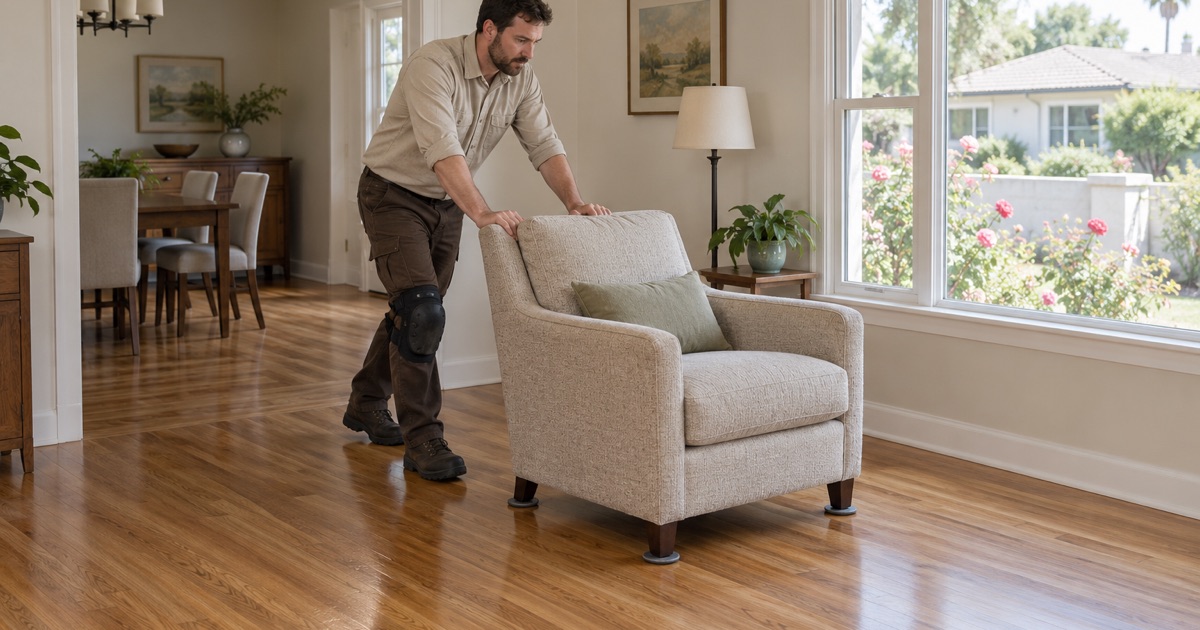
Clearing a whole home for a week of floor work rarely suits someone who lives there all day. We break the job into stages so the bedroom, the bathroom path and at least one comfortable sitting area stay usable at every point. Furniture moves in small, planned batches rather than all at once.
Where a single room has to be emptied, we agree ahead of time where its contents will sit and for how long. A recliner, a bedside table and a lamp matter more than a dining set. When a stage wraps up, we move those pieces back before the crew leaves, not the next morning.
Noise, Dust and the Hours We Keep
Inside Laguna Woods Village, contractor hours put noisy work such as power tools on weekdays from 8:00 a.m. to 5:00 p.m. and Saturdays from 9:00 a.m. to 5:00 p.m., with no work on Sundays or major holidays. We plan sanding and cutting inside those windows and keep quieter tasks for the edges of the day.
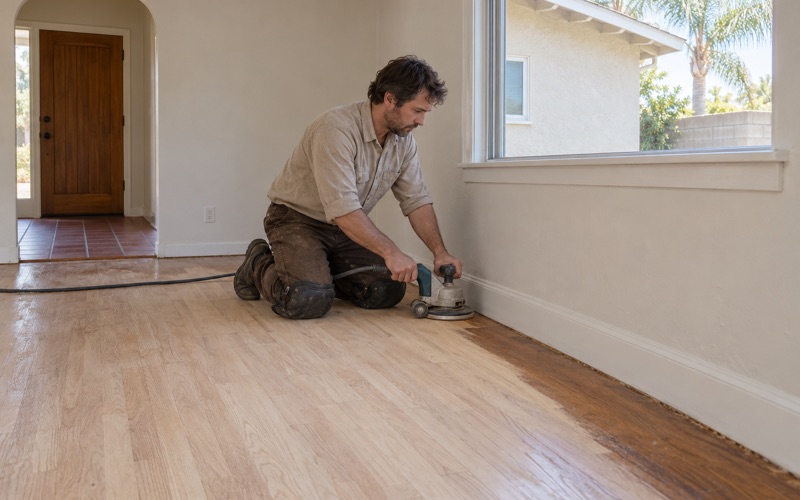
When sanding is part of the job, a dustless sanding system keeps most of the fine dust out of the air the resident is breathing. Finishes come from products legal to apply in the South Coast air basin under the 275 g/L wood-coating limit in SCAQMD Rule 1113, and we plan cure time so the owner is not shut out of a room longer than needed.
Looking for wood-flooring closer to Paramount? See Wood-Flooring in Paramount.
Choosing a Floor Around the Resident’s Daily Routine
The right floor for an owner in their eighties is the one that fits how they actually move through the day. We start by asking what rolls across the floor, where the owner stands longest, and what cleaning they can manage on their own. Species, color and plank width come after those answers, not before.
Walkers, Wheelchairs and Rolling Traffic
A walker, a wheelchair or a rolling shower chair puts steady, concentrated wear on a floor. Harder species, measured on the Janka hardness rating, resist denting better under that traffic, which is why white oak and hickory often come up. A thicker wear layer on engineered flooring also leaves room for a future refinish.
We look at the whole route, not just the flooring. A long hallway to the bathroom, a tight turn beside the bed and the path to the front door get the most use. Knowing that route tells us where a glue-down installation makes more sense than a floating one, and where an extra-hard finish is worth the cost.
Doorways, Thresholds and Transitions
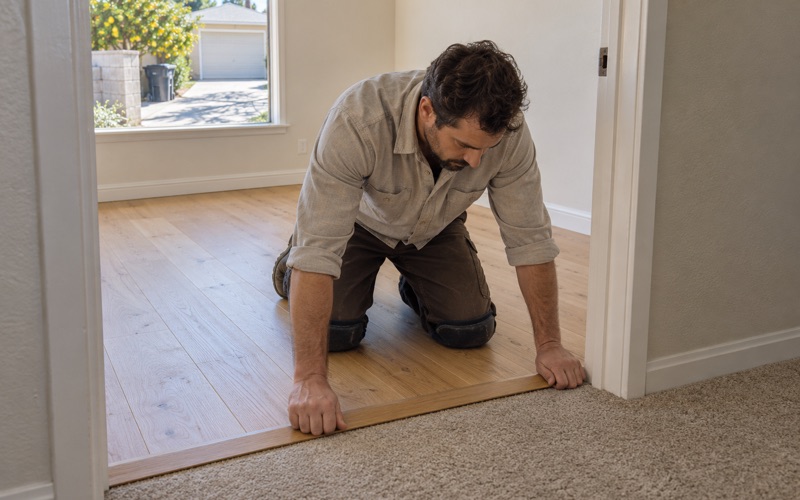
Where a new floor meets tile or carpet, the transition piece matters. A reducer strip or T-molding set at the right height lets a walker or a wheelchair roll from one room to the next without a bump. We measure each doorway before ordering, because floor heights in an older home are rarely consistent from room to room.
When an owner uses a mobility aid, we ask them to show us their usual path through each doorway. That short demonstration often tells us more than any drawing. It is also the moment to talk about shoe molding, which covers the expansion gap along the walls without sticking out into the room.
Finish, Sheen and Everyday Care
A lower sheen level hides scuffs and footprints better than a high gloss, and it asks less of someone who does not want to mop every day. Waterborne polyurethane dries clear and carries less odor than an oil-modified product, which matters when the owner is sleeping in the next room.
For floors that are sound but tired, a screen and recoat can restore the surface in far less time than a full sanding. That keeps the disruption short. When we recommend one approach over another, the estimate says why in plain words, so the owner and whoever helps them can weigh the choice together.
What Lies Under the Existing Floor
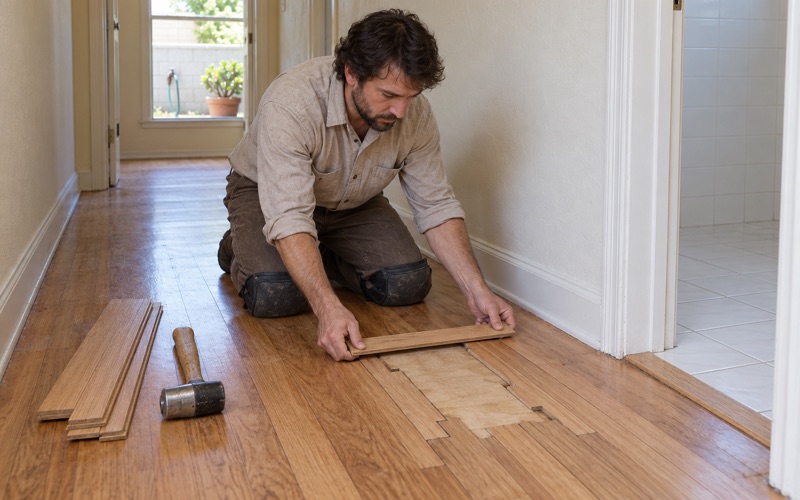
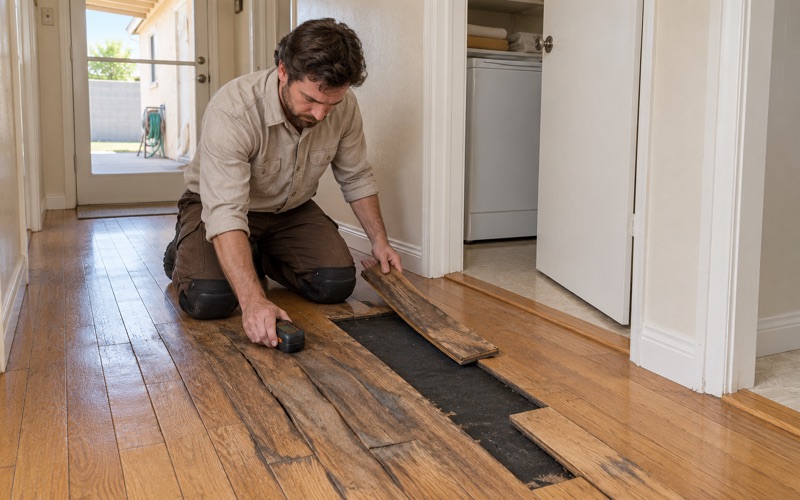
Of the housing units in Laguna Woods, 83.1 percent were built between 1960 and 1979. We never assume what sits under carpet or linoleum in a home that age. Existing boards are assessed one at a time before anyone quotes a full replacement, and the findings go into the estimate.
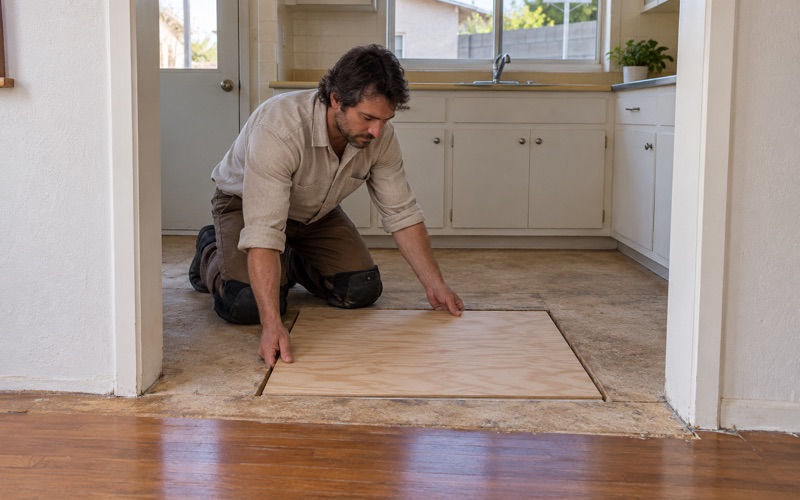
Because almost every home here predates 1978, we follow lead-safe work practices under the EPA Renovation, Repair and Painting rule. Old tile and black mastic under a floor are treated as a possible asbestos question before anything is sanded or scraped. We explain those steps to the owner before the first day, so there are no surprises.
What the City’s Fee Waiver Says and What It Leaves Open
The City of Laguna Woods publishes a Schedule of User and Regulatory Fees, and a footnote in its building fees is worth knowing about for owners in this city. We are not the ones who decide how it applies, but we can make sure an owner knows it exists and where to ask.
The Footnote Itself
The schedule effective October 19, 2026 cites California Health and Safety Code Section 17951.7. Under it, the City may waive or reduce all building permit fees for improvements to the home of a person at least 60 years of age with a qualifying disability, where the improvements are made to accommodate that disability.
That language has three conditions in it: a resident at least 60, a qualifying disability, and work done to accommodate it. The word is may, so the City keeps its discretion. A separate footnote gives the same option for improvements to the home of a veteran with a qualifying disability, under Section 17951.5.
What the Schedule Does Not Say
The fee schedule lists 97 numbered building fee lines, and none is named for flooring. It does not say that floor work qualifies for the waiver, and it does not say whether a given floor job needs a permit at all. Those answers come from the City, not from us or from a reading of the table.
The City of Laguna Woods Building Division is at 24264 El Toro Road and answers at (949) 639-0500. Its permit counter is open Monday through Friday from 7:30 a.m. to 2:30 p.m., closed from noon to 1:00 p.m. An owner who thinks the waiver may fit their situation should ask there before assuming either way.
How We Help an Owner Ask the Question
When floor work is part of a wider change to suit a resident’s needs, we write the scope in plain terms: which rooms, what material, and what the change is meant to do for the person living there. That written description gives the owner something concrete to bring to the City.
We do not tell an owner that a fee will be waived or that a permit is or is not required. We give them clean paperwork, keep our dates flexible until the City has answered, and adjust the estimate if the scope changes after that conversation.
Approvals the Owner Clears Before the Crew Arrives
Laguna Woods became Orange County’s 32nd city on March 24, 1999, and roughly ninety percent of it is Laguna Woods Village. For an owner there, two sets of rules sit above any flooring decision: the Village’s and the City’s. Clearing them is the owner’s step, and we plan our calendar around it.
The Village’s Approval Comes First
Mutual Consent is the Village’s approval that a proposed alteration meets the owner’s mutual’s requirements. It is meant to be in hand before work begins, and the City will not issue its own permit without the approved application. Each mutual has its own requirements, so we ask the owner which mutual they belong to at the first visit.
We supply the product details, installation date and contractor information an owner needs for that paperwork. We do not submit anything in the owner’s name without their say-so, and we do not schedule a start date until the owner confirms the Village has signed off. A crew idling at the gate helps nobody.
Family, Trustees and Who Signs
In a city where one in five owners is 85 or older, the person who lives in the home is not always the person who signs. Sometimes a spouse, an adult child or a trustee handles contracts and payments. We ask early who has that authority, and we put their name on the estimate.
We still talk to the resident directly about the choices that affect their day. The person who signs approves the cost; the person who lives there tells us which chair cannot move and which room they need by evening. Keeping both people informed avoids a finished floor nobody actually agreed on.
Delivery, Acclimation and the Start Date
Wood flooring usually needs time in the home before installation so its moisture content can settle. That means cartons sitting in a room for a stretch, and in a smaller manor that space has to come from somewhere. We plan where the boxes will go before the delivery truck is booked.
Once approvals are in place and the material has acclimated, we confirm the start date with the owner and any family helper in writing. The written schedule lists which rooms are worked on which days, so the resident knows each morning what the day will look like and when the crew will be gone.
- 20+ Years on Hardwood
- Written Moisture Readings
- Lead-Safe Work Practices