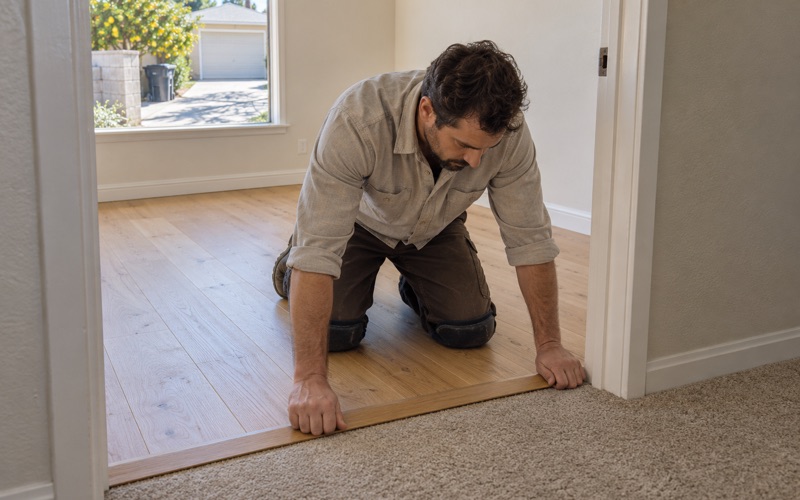
Bellflower Wood Flooring has spent more than 20 years on wood flooring in Lynwood, and much of that work happens in homes where a lot of people share one roof. We repair, refinish and install hardwood in houses and apartments that see traffic from early morning to late at night, and we plan every job around the fact that the household is still living there.
Before we quote anything, we measure the moisture content of the boards and of any concrete slab beneath them, and we write the readings down. Soft spots, sagging and bounce get traced to the subfloor and framing first, because a new surface on a failing base wears out fastest right where the most feet land.
This page covers where a full home wears its floors, which finishes and repairs hold up to heavy daily use, how we phase the work so nobody has to move out, and how the same approach serves owner households and landlords alike.
Big Households and Where the Floors Take the Load
What Lynwood’s Housing Element Reports
The City of Lynwood’s draft 2021-2029 Housing Element finds that four-person households are the most common size in the city, at 20.9 percent, followed closely by five-person households at 19.5 percent. It also reports that 7.9 percent of Lynwood households have seven or more people, against 3.1 percent across the SCAG region.
Census counts point the same way. The American Community Survey shows 28.6 percent of occupied units in Lynwood with more than one person per room, and 8.3 percent above one and a half. For a floor, that is simply a count of footsteps, chair legs and dropped backpacks across the same square footage every day.
Hallways, Thresholds and the Kitchen Path
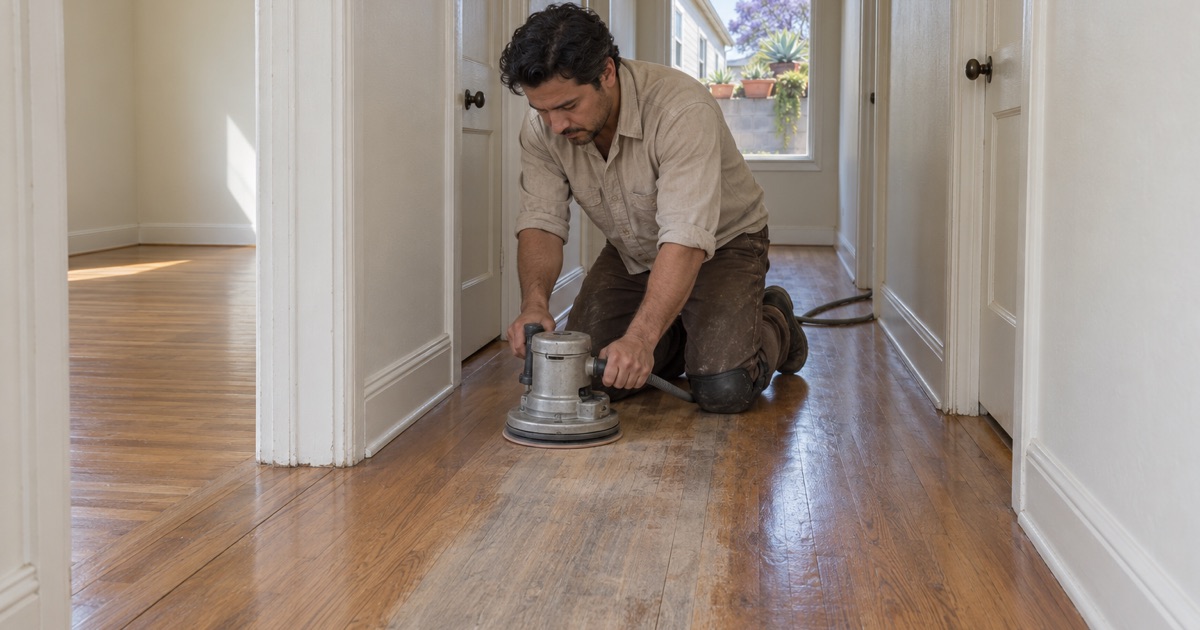
In a full house, wear collects along a few predictable lines: the hallway between bedrooms, the route from the front door to the kitchen, and the thresholds everyone crosses dozens of times a day. Those strips lose their finish first, then turn gray as bare wood picks up dirt.
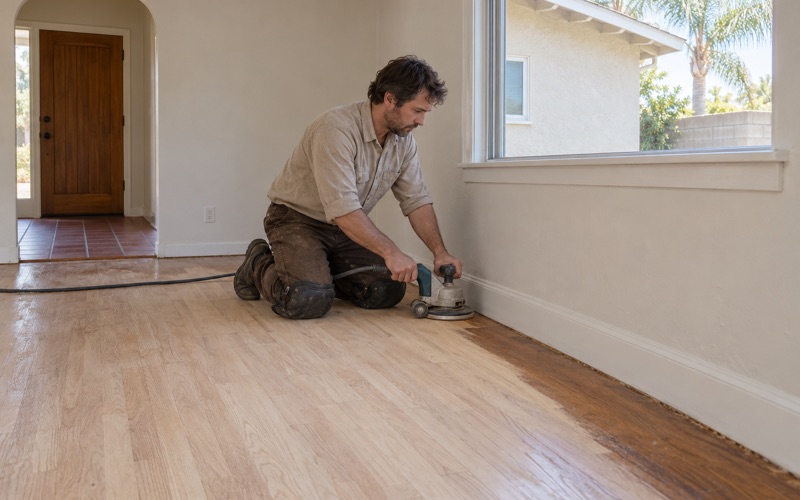
We study those paths before we look at the rest of the room. Often the field of the floor still has plenty of finish while a narrow lane down the middle is worn through, and that difference decides whether the job is a screen and recoat, a spot repair or a full sanding.
Bedrooms That Double as Living Space
When rooms are shared, a bedroom may also be a study, a play area and a place to fold laundry. Bed frames, desk chairs and rolling bins sit on the same boards all day and grind grit into the finish in small circles.
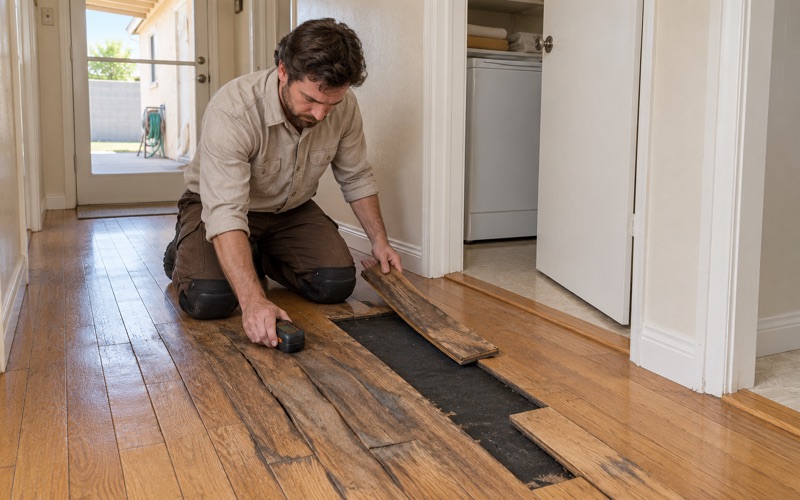
Felt pads and chair mats help, but the first thing we check is whether the boards themselves are sound. Loose boards, squeaks and nail pops show up sooner under constant use, so we correct the fastening before any new finish goes on top.
Older Houses Carrying Today’s Traffic
The same survey counts 85.9 percent of Lynwood’s housing units as built before 1980. Floors in homes of that age have often been sanded before, so we check how much wear layer remains above the tongue before we recommend another full sand.
Pre-1978 housing also calls for lead-safe work practices under the EPA Renovation, Repair and Painting rule. Any old 9x9 tile or black mastic found under a floor is treated as a possible asbestos question before anything is scraped or sanded.
Looking for wood-flooring closer to Hawaiian Gardens? See Wood-Flooring in Hawaiian Gardens.
Finishes and Repairs Built for Heavy Daily Use
Choosing a Finish for Constant Traffic
For busy homes we usually compare waterborne polyurethane with oil-modified polyurethane, and sometimes a hardwax oil where easy spot repair matters more than a hard shell. Each one trades off cure time, odor, color and how easily a worn patch can be touched up later.
Every product we apply is legal in the South Coast air basin, where SCAQMD Rule 1113 sets a 275 g/L VOC limit for wood coatings. That rule narrows the shelf, but it still leaves durable choices that suit a household unable to stay out of a room for long.
Sheen, Species and Hiding Daily Wear
A lower sheen level hides fine scratches and dust far better than gloss, which matters when a floor gets swept several times a day. Species matters too: on the Janka hardness rating, white oak and hickory resist denting better than softer woods, and a mid-tone stain disguises grit marks that a very dark or very pale floor shows at once.
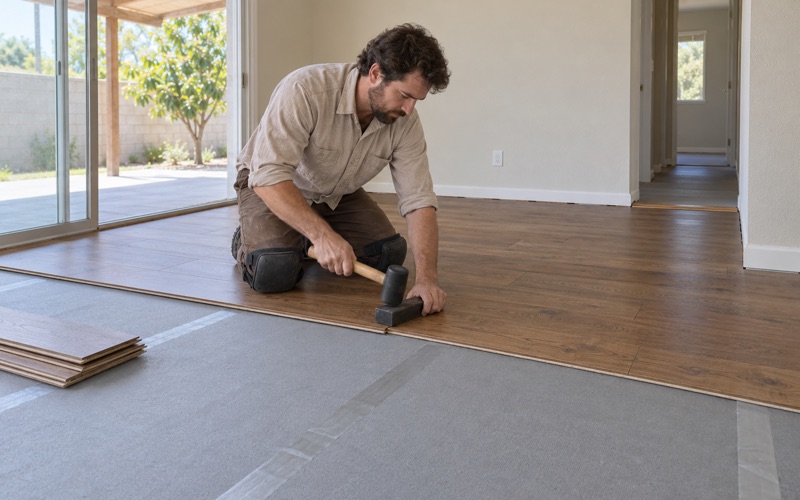
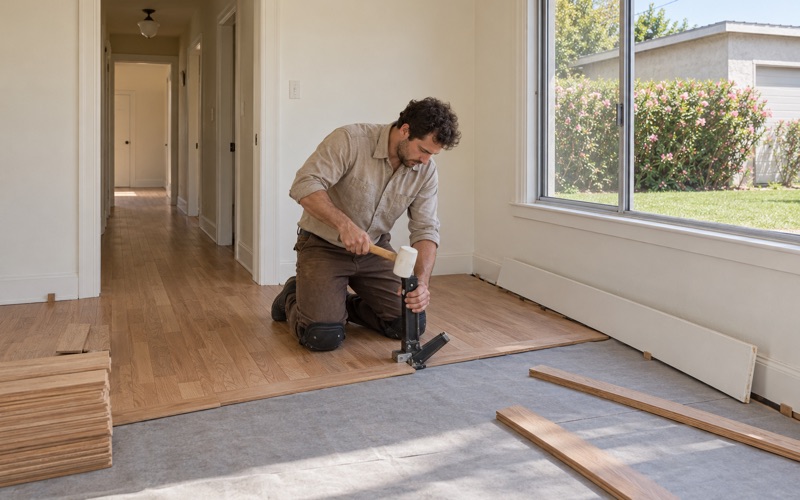
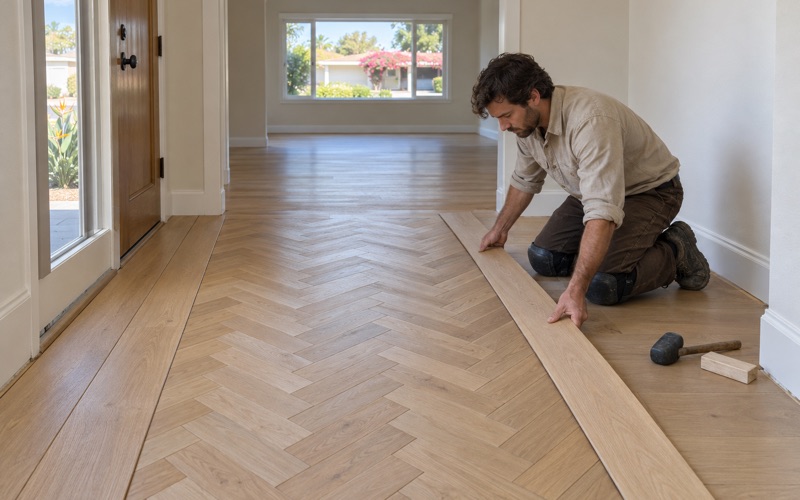
For new installations we talk through prefinished hardwood against site-finished hardwood. Prefinished boards go down faster and can be walked on sooner, while site finishing seals the seams between boards, which helps where spills from a busy kitchen are routine.
Repairs That Keep a Floor in Service
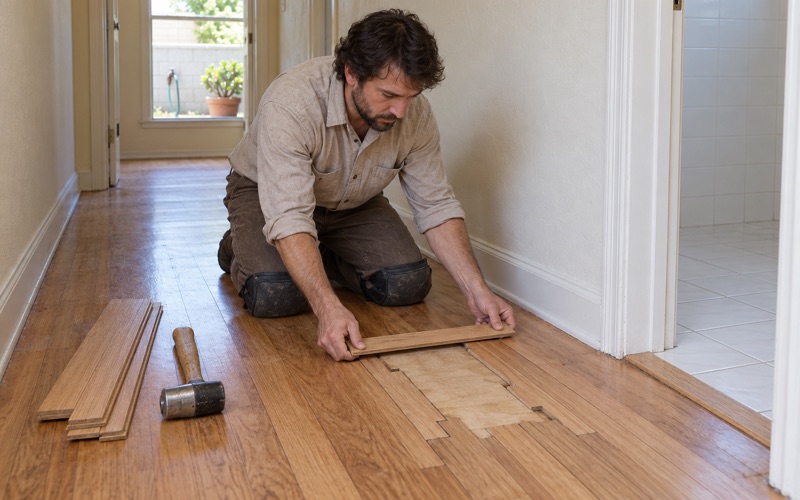
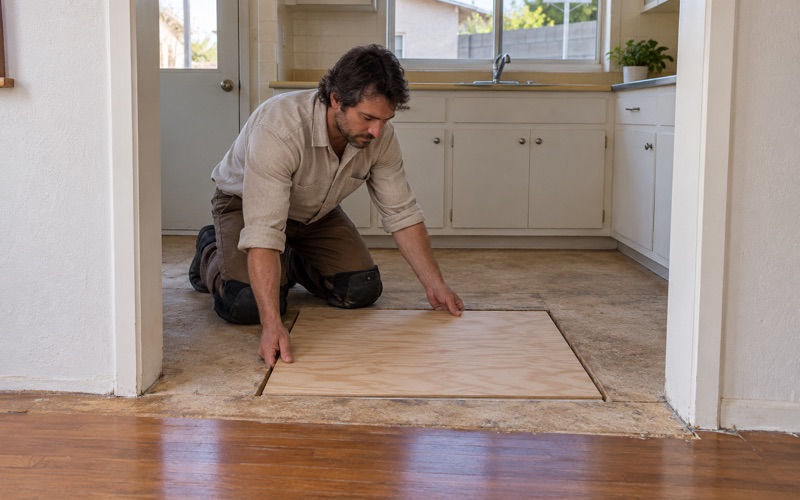
Not every worn floor needs replacing. Damaged boards can often be cut out and woven in, and a screen and recoat can renew the top coat when wear has not reached bare wood. We also close old floor furnace openings and floor vents with framing and woven-in boards rather than a plywood square under a rug.
Where water has been the problem, we trace it to the source and document the damage with photos and moisture readings an insurance adjuster can use. If a slab leak caused it, we put the floor back properly once the plumber has repaired or rerouted the line.
Phasing Floor Work So the Family Stays Home
Planning the Job Room by Room
Moving a household of five or seven out for a week is rarely realistic, so we sequence the work in zones. Bedrooms are often finished first while the family uses the living areas, and the main rooms follow once the bedroom finish has cured enough to take furniture again.
We map the order with the household before we start: which rooms must stay usable each night, where furniture can be stacked, and which doorway gives everyone a route to the kitchen and bathroom without crossing fresh finish.
Dust, Odor and Cure Time
A dustless sanding system connected to the drum sander, edger and orbital sander keeps most of the dust out of rooms still in use. Waterborne finishes carry less odor than oil-based ones, which matters when children or older relatives are sleeping in the next room.
Cure time is the part families feel most. We give a clear schedule for light foot traffic, furniture return and rugs, then build the phasing around those windows instead of asking everyone to wait on the whole house at once.
Measuring Before Material Arrives
Moisture readings come before any order is placed. We use a wood moisture meter on the boards and, over concrete, a calcium chloride moisture test or an ASTM F2170 in-situ relative humidity test, and we record the results. New wood then goes through acclimation under NWFA installation guidelines before it is fastened down.
That step guards against cupping, crowning and board gaps later. Those problems are much harder to live with in a home where every room is occupied and there is no spare space to move into while a floor is corrected.
Rentals and Owner Homes Under the Same Load
Renter and Owner Households Alike
Lynwood is a majority-renter city, with 52.2 percent of occupied units rented. The room counts cover both sides: 32.3 percent of renter households live at more than one person per room, and so do 24.6 percent of owner households. Heavy floor wear is not confined to one kind of home.
Most owners here live in detached houses, 86.4 percent of owner households, while renters are spread across detached houses, small multi-unit buildings and larger complexes, including 1,269 renter households in five-to-nine-unit buildings. The floors differ from one building type to the next, but the daily traffic looks much the same.
What Landlords Need at Turnover
When a rented unit turns over, we give landlords written estimates and invoices they can keep with their records. We describe normal wear and tear separately from damage in plain terms, which leaves a clear paper trail if a security deposit question comes up later.
On a tight turnover, a screen and recoat or a set of board replacements can often restore a floor in the days between tenants. A full refinish is scheduled for a time when the unit can sit empty a little longer.
What Owners Weigh Over the Long Run
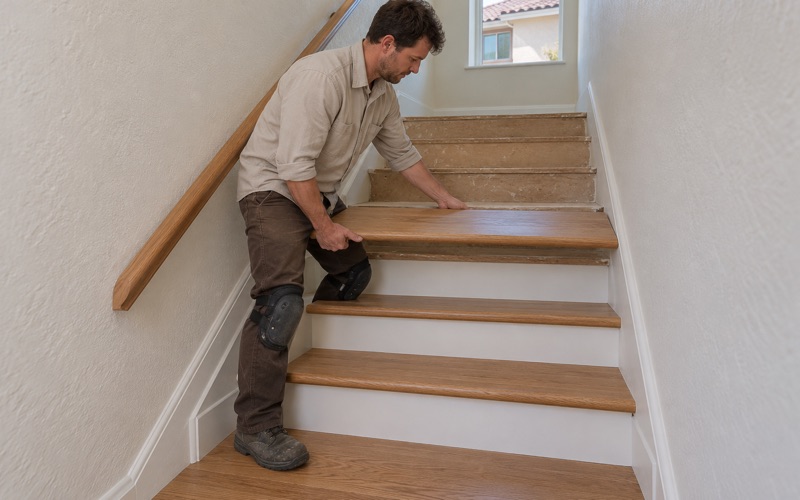
Owners who plan to stay tend to ask about the long view: whether to refinish what is there, put a harder species in the busiest rooms, or replace worn stair treads. We price stairs per tread and riser, so the cost of a heavily used staircase sits on its own line rather than inside a square-foot number.
Either way, we start with what the existing floor can still give. Oak found under carpet or linoleum is assessed board by board before anyone talks about a full replacement, and many floors have more life in them than their surface suggests.
A City Built Out Over a Century
Lynwood was incorporated in 1921 and took its name from the Lynwood Dairy and Creamery, and much of its housing has been lived in for decades. The housing element also expects demand for homes with four or more bedrooms to be significantly greater than for smaller units.
Our job is to keep these floors working for the household living on them now, with the least disruption we can manage. That means honest measurements, repairs before replacement where the wood allows it, and a schedule that respects a full house.
- 20+ Years on Hardwood
- Written Moisture Readings
- Lead-Safe Work Practices