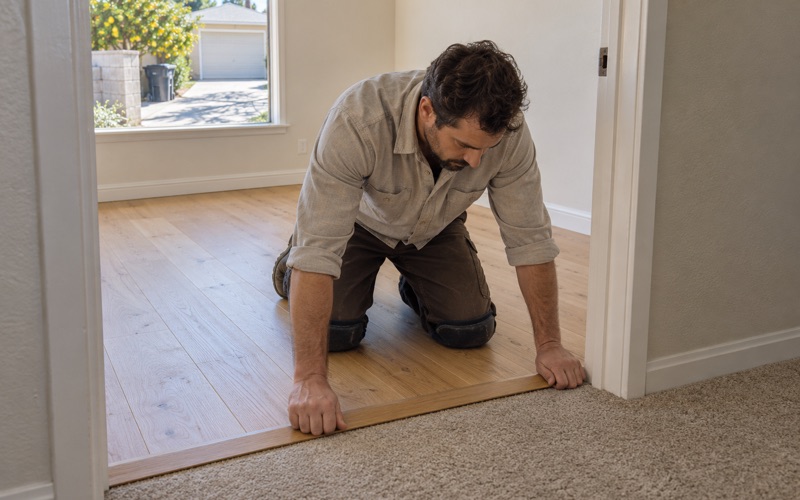
Bellflower Wood Flooring has handled wood flooring in Norwalk for more than 20 years, and a good share of that work starts in a house nobody has lived in for a while. An empty house changes how a floor ages. Nobody runs the air, nobody notices a slow drip, and small problems get months to grow before anyone walks the rooms again.
Our job on those houses is to find out what the floor actually needs before anything gets priced. We walk every room, read the boards and the finish, lift carpet where we have permission, and write down what we see. That way an owner, heir, investor or listing agent works from one clear record instead of a guess.
From there the work runs in a sensible order. The house gets secured and cleaned out first, the floor gets assessed next, and only then do we refinish, repair or replace. How long the house sat, and what happened to it while it sat, decides how much of each step it needs.
What Norwalk’s Vacant Property Ordinance Means for an Empty House
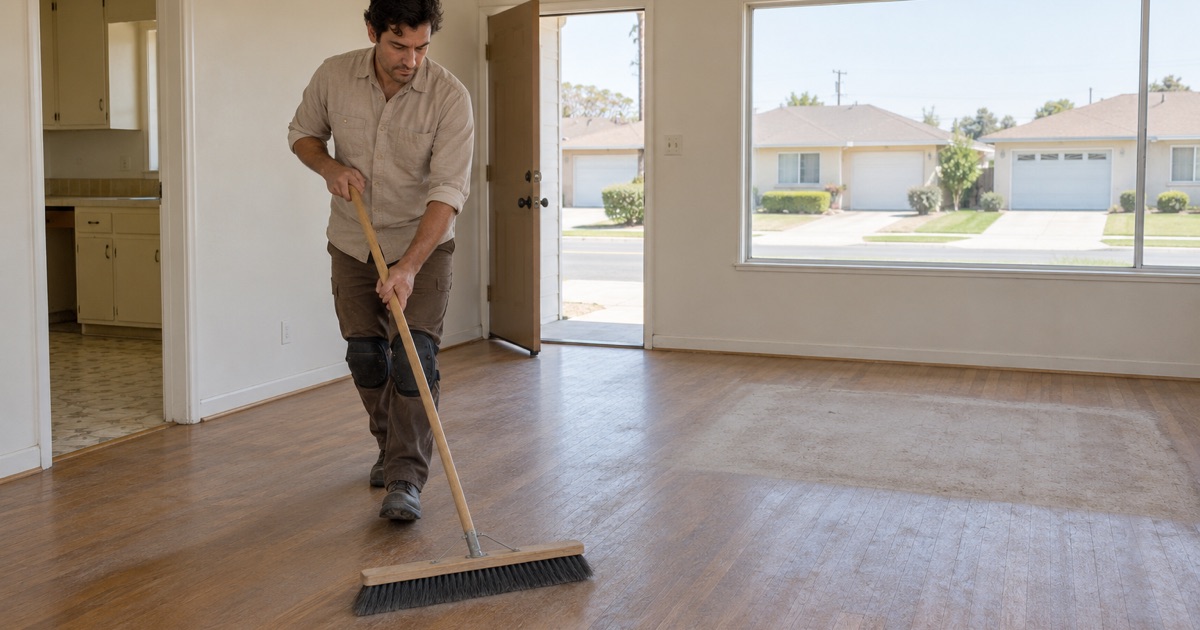
Ordinance 22-1731 and Who Has to Register
Norwalk adopted Ordinance 22-1731 to set property maintenance and security requirements for vacant and foreclosed properties, and it took effect on June 2, 2022. Registration covers three kinds of property: abandoned, foreclosed, and those under a notice of default. If you just took title through foreclosure, or a relative’s house has sat empty while an estate settles, it is worth checking where it stands.
The city’s Code Compliance Division, at 12700 Norwalk Boulevard, enforces property maintenance, zoning and related provisions of the Norwalk Municipal Code, and it runs the Vacant Property Registration program. That office, not a flooring contractor, is where questions about a property’s registration status belong, and we send owners there rather than answering for the city.
Standards That Step Up With Time
The ordinance organizes its standards by how long a property has been vacant, with tiers at 10, 30, 45, 90, 180 and 365 days. The city’s summary describes boarding, fencing, security and general maintenance requirements, set out in a separate standards document. We have not read that document line by line, so we do not tell anyone what it says about the inside of a house.
What the tiers do signal is practical. The longer a house has been empty, the more has usually been done to it and the more has usually happened to it. A house empty for two weeks and one empty for more than a year are different floor jobs before we lift a single corner of carpet.
Citations and Why Timing Matters
Enforcement runs through administrative citations: $1,000 for the first, $2,500 for the second, and $5,000 for each one after that. Those amounts are a big part of why owners secure and clean up a vacant house quickly and leave interior finishes for a second stage.
That order suits the floor as well. We would rather start once the house is locked, the utilities are sorted and the debris is gone. A floor refinished in a house that is still being cleared gets scratched, dented and dusty before anyone moves in, and the owner ends up paying for part of it twice.
Looking for wood-flooring closer to Artesia? See Wood-Flooring in Artesia.
Floors in a House That Sat Closed Up
What We Look for on the First Walk-Through
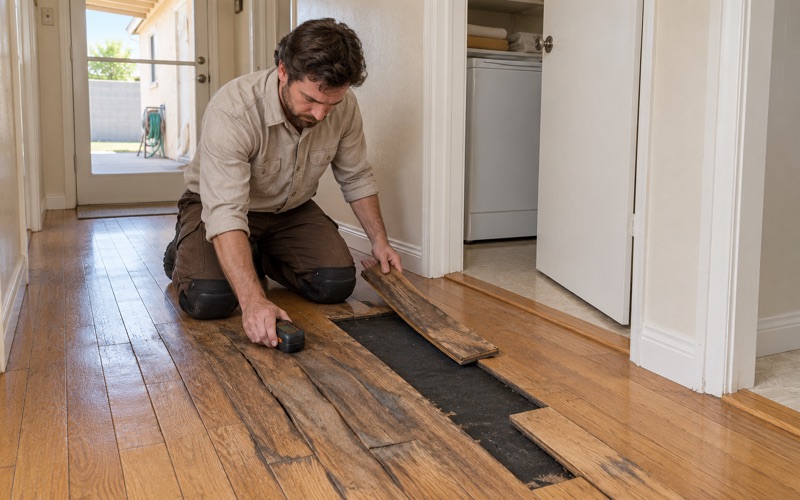
A closed-up house tells its story on the floor. We look for white water rings near windows and doors, pet urine stains in corners, cupping or crowning where moisture got under the boards, and board gaps that opened while the rooms sat still. We also note tacky or peeling polyurethane where someone tried a quick fix before the house went empty.
Every finding goes on a written list with photos, room by room. On an estate or an investor purchase, several people often need to see the same picture from different places. A documented walk-through keeps that conversation about what is really on the floor, not about who remembers what.
Leaks, Pests and Hidden Damage
A slow leak in a house nobody occupies can run for weeks. Where boards are stained or swollen, we trace the damage back toward its source, take readings with a wood moisture meter, and record them so the plumbing repair and the floor repair line up. If the trouble started at a slab leak, we wait until the plumber has repaired or rerouted the line before we rebuild anything.
Empty houses also give insects time to work undisturbed. Termite frass along baseboards, termite swarmers on windowsills, or pinholes left by powderpost beetle all change what a floor needs. We point them out so the right specialist looks first, because new wood laid over an active problem only feeds it.
What Is Under the Carpet in a 1950s House
Norwalk’s housing leans hard toward one era: 47.0 percent of the city’s housing units were built in the 1950s, and 62.4 percent went up before 1960. The city itself incorporated in 1957, in the middle of that stretch. Most vacant houses we see here have passed through decades of owners, so whatever sits under the carpet has to be found, not assumed.
When we pull back carpet and tack strip, we might find hardwood, linoleum or old tile. Any wood gets assessed board by board before anyone talks about full replacement. Old 9x9 tile and black mastic get treated as a possible asbestos question, and nothing is sanded or scraped until an asbestos survey has answered it.
Refinish or Replace, in the Right Order
Sequencing Floor Work After the House Is Secured
We schedule floors after the securing and cleanup are finished, never in the middle of them. Crews boarding windows, hauling furniture or clearing a yard track grit across every room, and fresh finish is the first surface to show it.
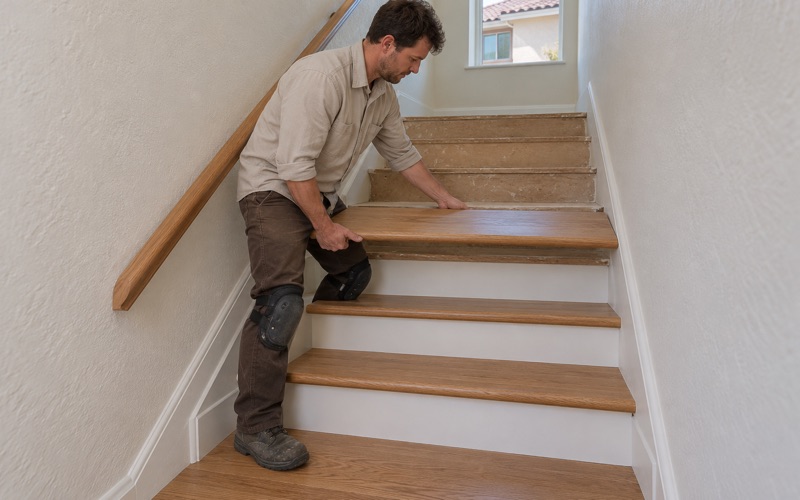
The order we usually suggest runs like this: cleanout, then plumbing, electrical and roof work, then subfloor and framing repair, then walls and paint, then the finish floor. Shoe molding, reducer strips and T-molding go back last, so other trades are not knocking them loose on their way out the door.
Subfloor and Framing Come First
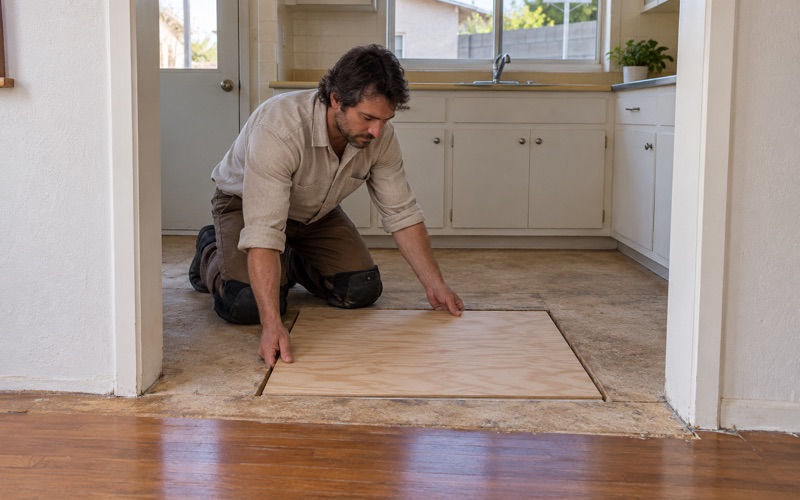
Soft spots, sagging and bounce get traced to the subfloor and framing before we price a finish floor. In a house that sat with a leak, a sagging joist or a delaminated section of plywood subfloor is common, and covering it only moves the problem a few months down the road.
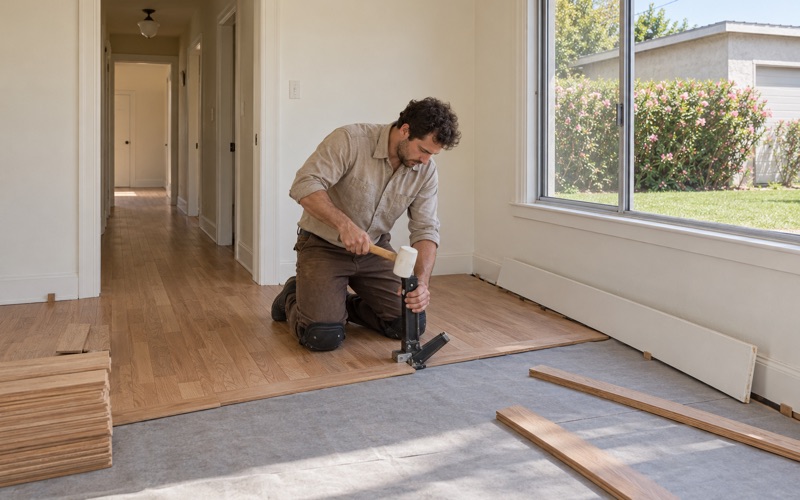
Where framing needs help, joist sistering or new plywood underlayment goes in first, and the finish floor follows on a flat, solid base. We note each repair in writing, which matters later when a buyer’s inspector asks what was done under the boards.
Lead-Safe Work in Pre-1978 Houses
With so much of Norwalk built before 1960, most houses here fall under the EPA Renovation, Repair and Painting rule for pre-1978 housing. We use lead-safe work practices on those houses, containing dust and cleaning carefully instead of simply sanding and sweeping.
A vacant house often has flaking paint on baseboards and door casings that got bumped during cleanout. We handle that dust as part of the floor job, because a floor sanded in a room with loose old paint needs more care than one in newer construction.
When Refinishing Is Enough, and When It Isn’t
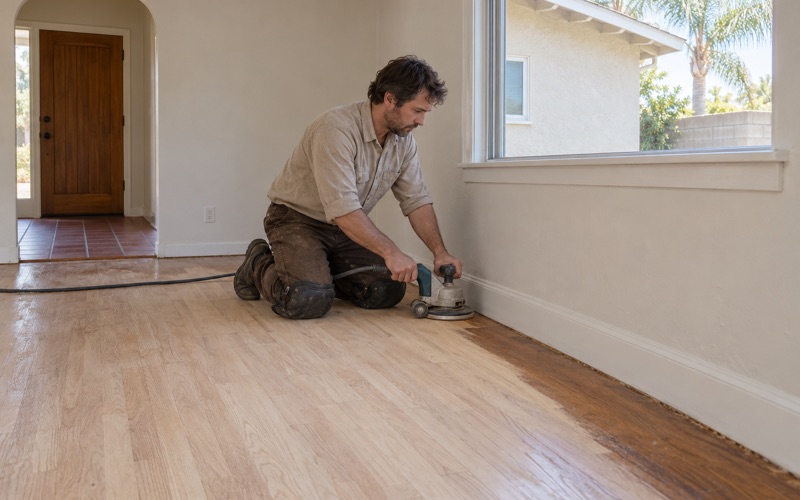
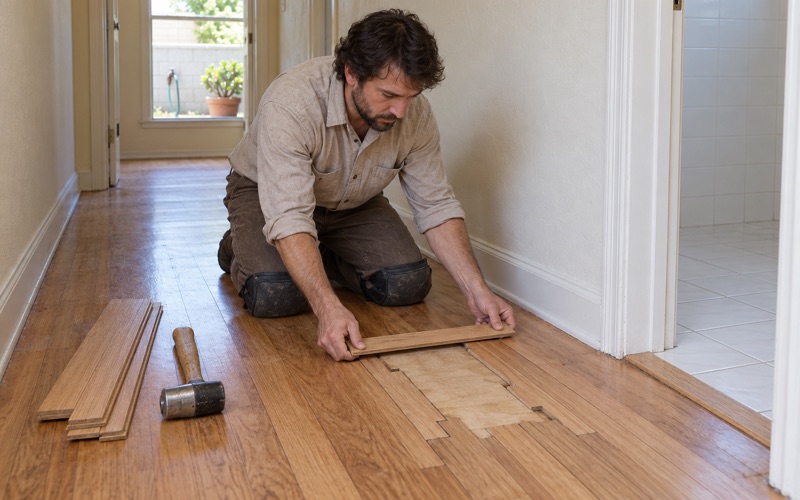
If the boards are solid and the damage sits mostly in the finish, a full sand and refinish often brings a vacant floor back. We work through a grit sequence with a drum sander, edger and orbital sander tied to a dustless sanding system, and weave in replacement boards where a spot is past saving.
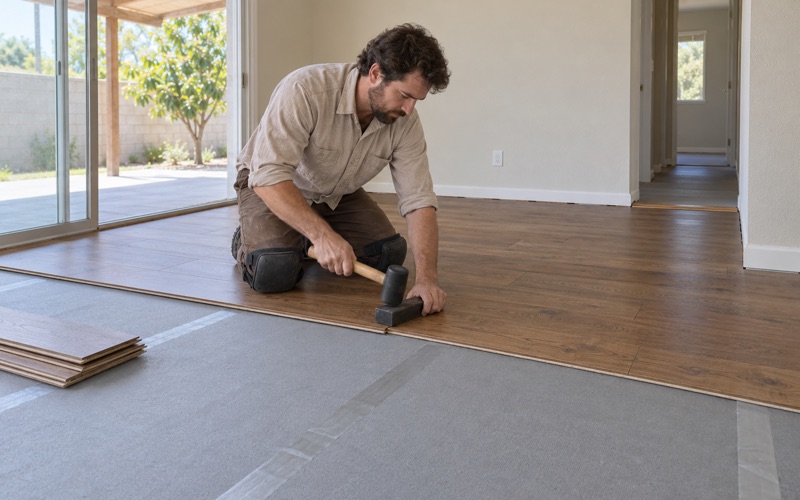
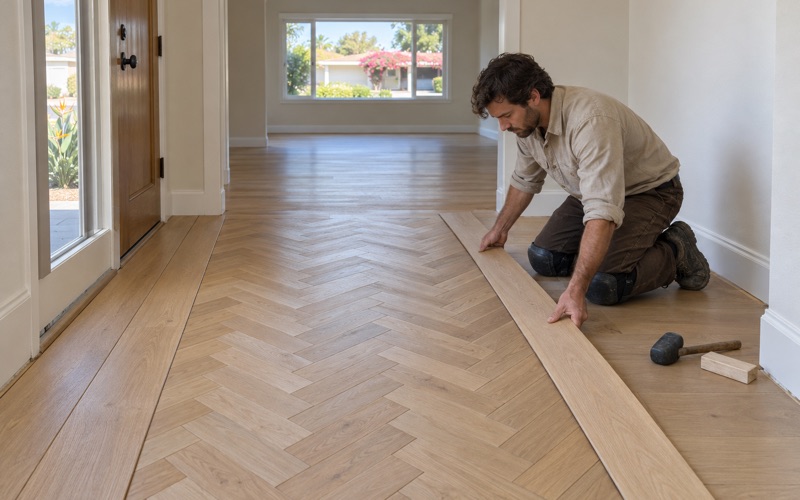
Boards that cupped badly, rotted near a leak, or were sanded thin in earlier refinishes may not come back. Then we price replacement, either site-finished hardwood matched to the rest of the house or prefinished hardwood when the schedule is tight. Before ordering, we measure moisture in the wood and any concrete slab and write the readings down.
Getting a Vacant Norwalk House Ready to Live In or Sell
Preparing a House for Listing
Houses coming out of foreclosure or an estate often go straight to market. For a listing, we focus on what buyers notice: a uniform finish, a sheen level that photographs well, no orange oak shading from an old coating, and transitions that sit flat at doorways. A satin or matte sheen hides the scuffs of showings better than gloss.
Finish choice matters on a deadline too. We use products legal to apply in the South Coast air basin under the 275 g/L wood-coating limit in SCAQMD Rule 1113. Waterborne polyurethane dries faster and keeps color closer to natural, while oil-modified polyurethane warms the tone and takes longer before the rooms can be shown.
Preparing a House to Move Into or Rent
Owners make up 68.3 percent of Norwalk’s occupied households, and 91.2 percent of those owner households live in detached houses, so many vacant houses here become someone’s home again. For a family moving in, we lean toward durable choices, such as a harder species by Janka hardness rating where the old floor is being replaced.
When a house is headed for the rental market instead, we write estimates and invoices a landlord can keep with the property records. That paperwork earns its keep at the first tenant turnover, when ordinary wear on the floor has to be told apart from damage.
Permits and Paperwork
Norwalk runs its own Building & Safety Division within Community Development, and its permit page lists the 2022 California Building, Residential, Plumbing, Mechanical, Electrical and related codes. When floor work touches framing, plumbing or wiring, we ask owners to confirm the permit question with that division before work starts rather than guessing for them.
The division issues owner-builder permits to the property owner shown on the grant deed, with California ID and a signed Owner Builder Declaration. For a house that just changed hands, that means the paperwork on the title matters before the paperwork on the floor, and we plan our start date around it.
- 20+ Years on Hardwood
- Written Moisture Readings
- Lead-Safe Work Practices