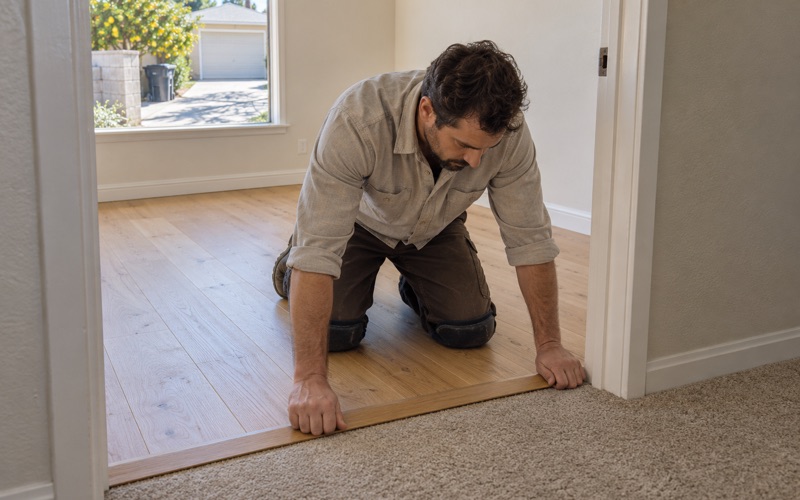
Bellflower Wood Flooring brings more than 20 years in the trade to wood flooring in Palos Verdes Estates, and many of our visits here begin with a question rather than a quote. An owner lifts a corner of carpet, finds boards underneath, and wants to know whether they are worth saving. We answer that board by board, in writing, before anyone prices a full replacement.
That assessment matters more here than it would in most cities. The choice to keep an older floor, repair it or tear it out rests almost entirely with the person who owns the house, so a clear and honest reading of what is actually down there is the most useful thing we can hand over. We write the findings down, moisture readings included, so they outlast our visit.
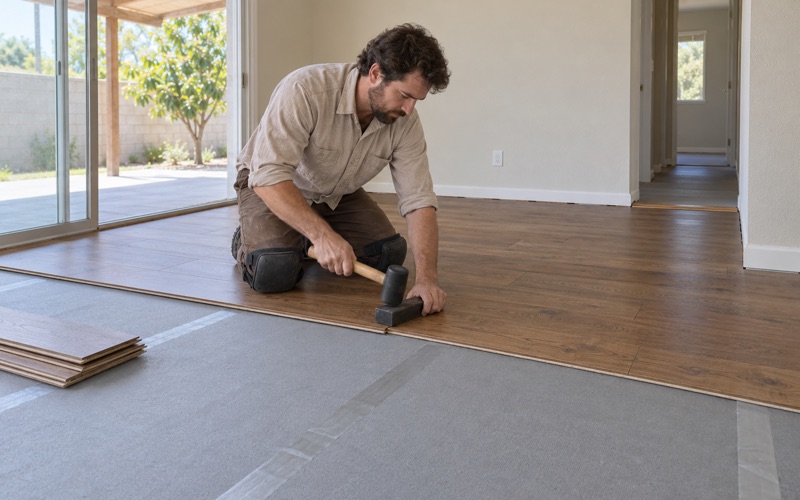
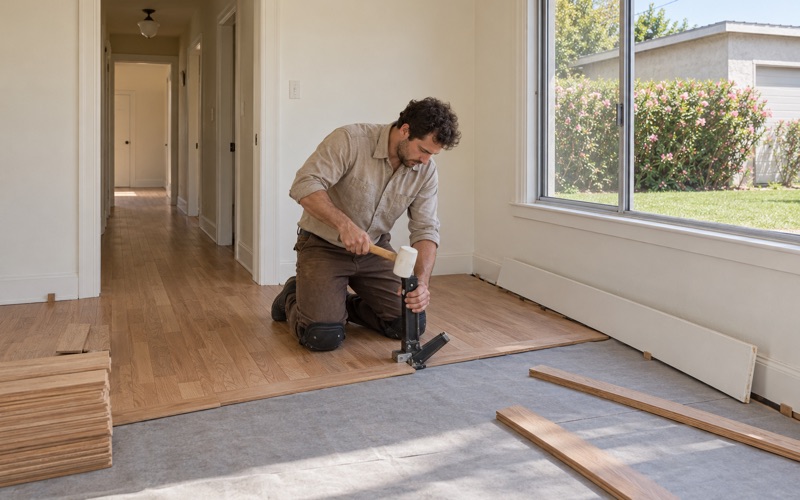
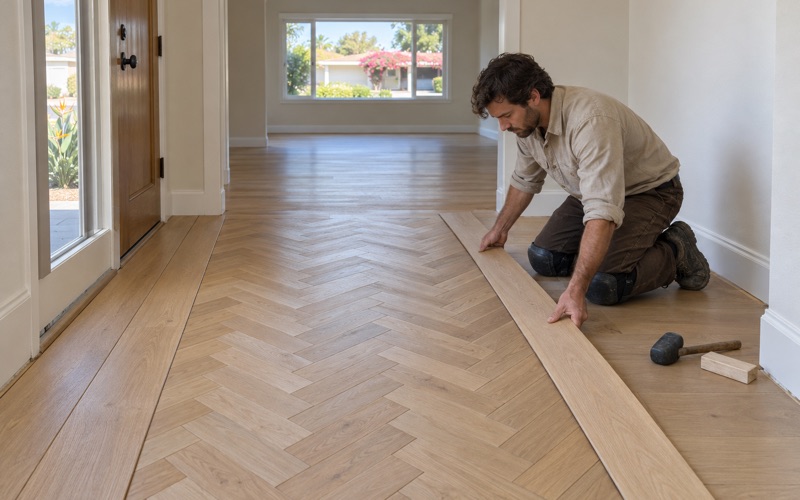
Our work covers refinishing, board replacement, weave-in repairs, stairs and new installation in solid or engineered wood. Before any material is ordered, we measure moisture in the wood and in any concrete beneath it, and we choose finishes that are legal to apply in the South Coast air basin. The sections below explain why the owner’s judgment carries so much weight in this particular city.
A City Without a Preservation Ordinance
No Local Ordinance and an F Grade
Palos Verdes Estates does not currently have a historic preservation ordinance. The Los Angeles Conservancy, which grades cities across the county on how they protect older buildings, gives the city an F, with zero points in every category it scores. In the Conservancy’s own words, the lack of any historic preservation policies prevents the city from offering protection to privately owned historic resources.
That absence is easy to miss, because the city was master-planned by Frederick Law Olmsted Jr. and contains a number of houses designed by master architects, built from the community’s inception through the postwar era. The Conservancy also notes there is no citywide historic resources survey, although early construction in the city is well inventoried. An inventory records a building; it does not keep one standing.
The 504 Paseo Del Mar Record
The clearest example sits in the city’s own environmental paperwork. The Final EIR for the 504 Paseo Del Mar Project, filed with the state under SCH 2010051022 and received December 9, 2011, identified the existing 3,376-square-foot residence as a significant historic resource. The same document covered demolishing it and building a 5,935-square-foot single-family home on the same 0.3-acre parcel.
That house was the Moore House, designed by Lloyd Wright and completed in 1959. The Conservancy describes walls clad in locally quarried Palos Verdes stone and expansive windows, a striking example of modernism in a city dominated by Spanish Colonial Revival and Mediterranean Revival homes. It was also one of only two Lloyd Wright structures anywhere in the city.
The Appeal and the Following Day
The Conservancy appealed, and the City Council denied that appeal on April 24, 2012. The Moore House was demolished the next day, April 25, 2012, even though the city’s own review had named it a significant historic resource. We do not retell this to argue the case again; it simply shows how much protection an older interior has here, which is whatever its owner chooses to give it.
Looking for wood-flooring closer to Sierra Madre? See Sierra Madre Wood-Flooring.
When the Owner Is the Only Protection
What the Housing Numbers Say
Palos Verdes Estates is an older city, but not in the way people often assume. Of its 5,370 housing units, only 4.5 percent were built before 1940, while 52.0 percent date from 1950 through 1969. The 1950s alone account for 27.3 percent, the largest single decade. Most of the housing stock is therefore postwar rather than from the city’s founding years.
Ownership is just as settled. About 97.3 percent of owner households live in detached houses, so the person deciding the fate of a floor is usually the person who lives on it every day. That is a different conversation from a rental turnover, and we treat it that way: the question is what the household wants to keep, not what is quickest to replace.
Who Reviews What
Owners here do answer to more than one body. The Palos Verdes Homes Association Art Jury enforces the Basic Protective Restrictions recorded in 1923 and reviews plans that pertain to the external aesthetic appearance of structures and properties. City of Palos Verdes Estates Building and Safety, within the Planning and Building Department, handles permits and plan check.
None of that review is aimed at preserving what sits inside an older house. The Art Jury’s published guidance speaks to exterior appearance and does not address interior-only work, so we never guess at its answer for a floor project. When a job touches anything an agency might review, we ask the owner to confirm with the city or the Art Jury before we put it on the schedule.
Why a Written Assessment Helps
Because no ordinance weighs in, the owner often makes the call with little outside input, sometimes in the middle of a larger remodel where floors are one line item among many. A written assessment slows that moment down. We note which boards are sound, which are cupped, split or stained, how the subfloor behaves underfoot, and whether moisture readings point to a problem that replacement alone would not solve.
Keeping Older Floors by Choice
Assessing Before Replacing
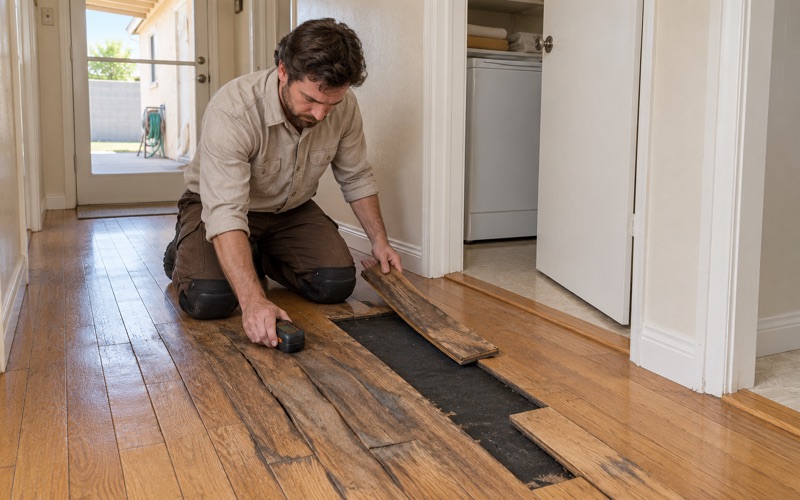
Our first visit is about finding out what exists. We lift a carpet corner or a vent cover where we can, identify the species and whether it is strip flooring or plank, check board thickness, and test moisture content with a wood moisture meter. Soft spots, sagging or bounce get traced to the subfloor and framing before we price any finish floor.
Hardness matters when an owner is weighing a softer existing floor against a new one. We explain the Janka hardness rating in plain terms, compare it with how the room is actually used, and set that against the value of keeping boards that have already lasted for decades. Sometimes the honest answer is replacement, and we say so in writing as well.
Repair, Weave-In and Refinish
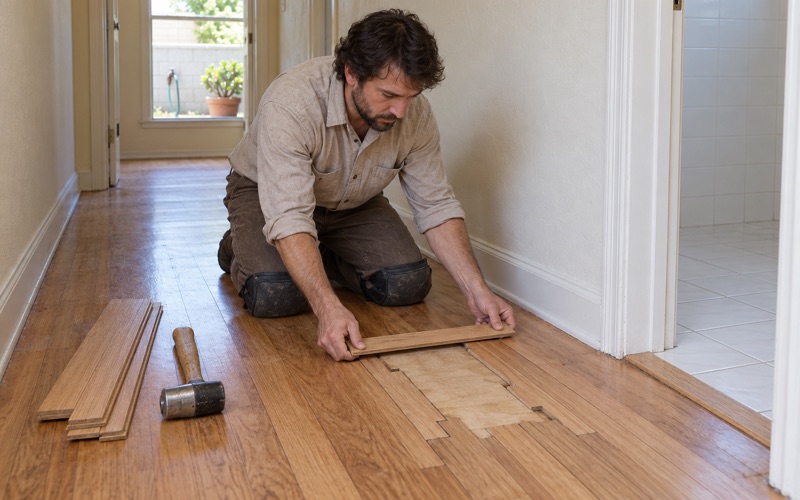
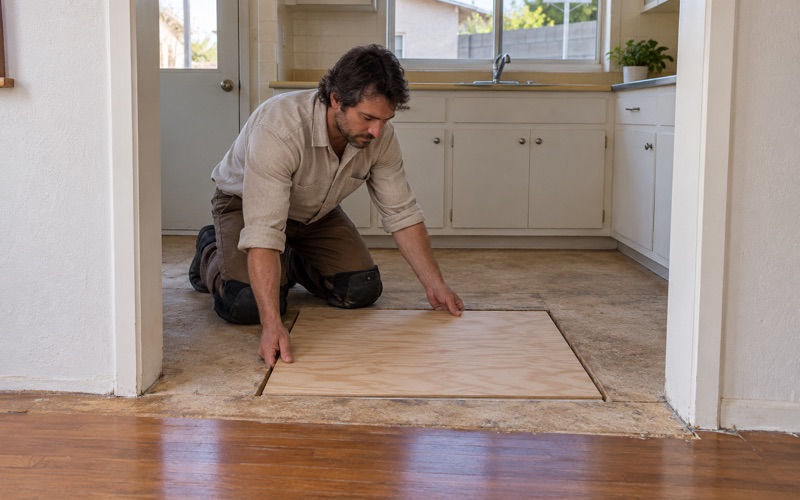
Many older floors need less than their owners fear. Damaged or stained boards can be cut out and replaced, with new pieces woven into the surrounding field so the repair does not read as a patch. Old floor register openings and floor furnace holes get framed and woven in rather than covered with a plywood square and a rug.
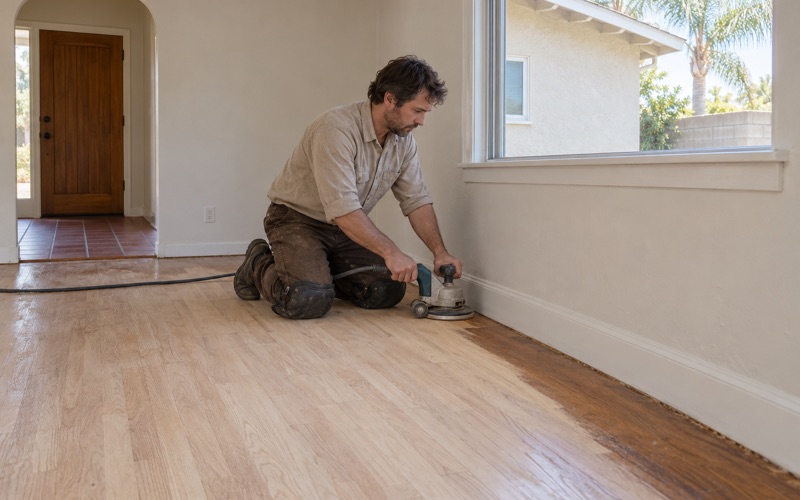
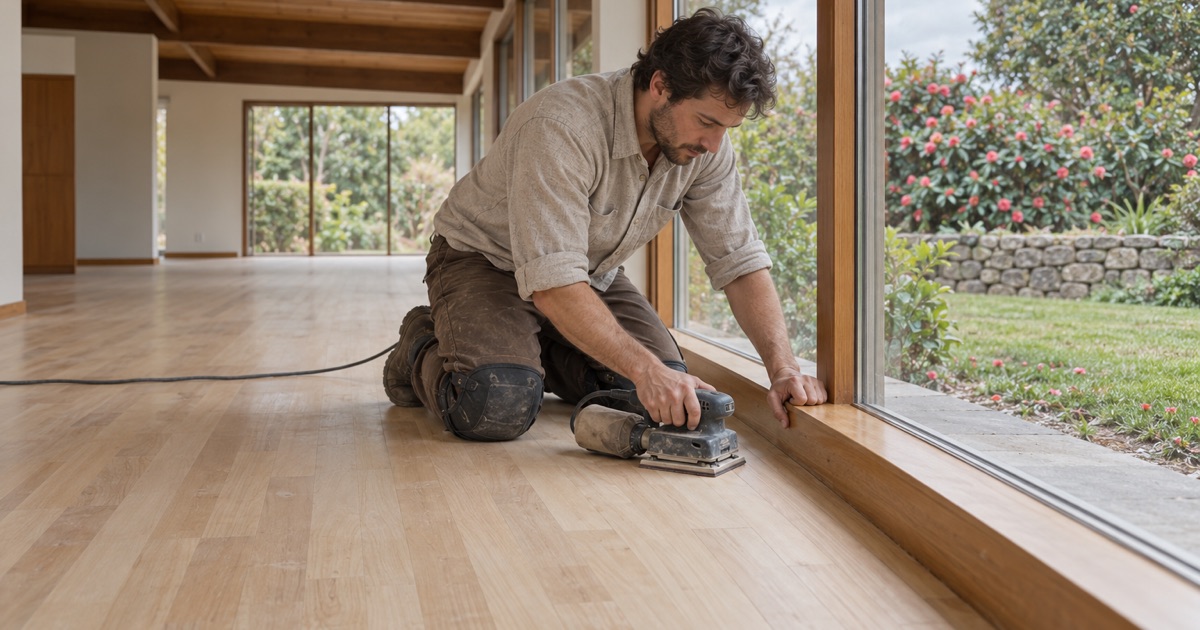
Refinishing follows a measured grit sequence with a drum sander, edger and orbital sander, run with a dustless sanding system to keep dust out of the rest of the house. Where the finish is worn but the wood is not damaged, a screen and recoat can restore it without removing any wood. Protecting the remaining wear layer is part of keeping the floor.
Finishes and Safety in an Older House
Most homes in this city were built before 1980, so we plan around lead and asbestos before anything is sanded. We follow the EPA Renovation, Repair and Painting rule on pre-1978 housing, and we treat old 9x9 tile or black mastic beneath a floor as a possible asbestos question that may call for an asbestos survey under SCAQMD Rule 1403.
Finish choices stay within SCAQMD Rule 1113 and the wood-coating VOC limit it sets. Within that limit, owners can choose waterborne polyurethane, an oil-modified polyurethane or a hardwax oil finish, along with the sheen level. When a repair has to blend with boards that already exist, we test stain samples on the actual floor before committing a whole room to one color.
Stairs and Transitions
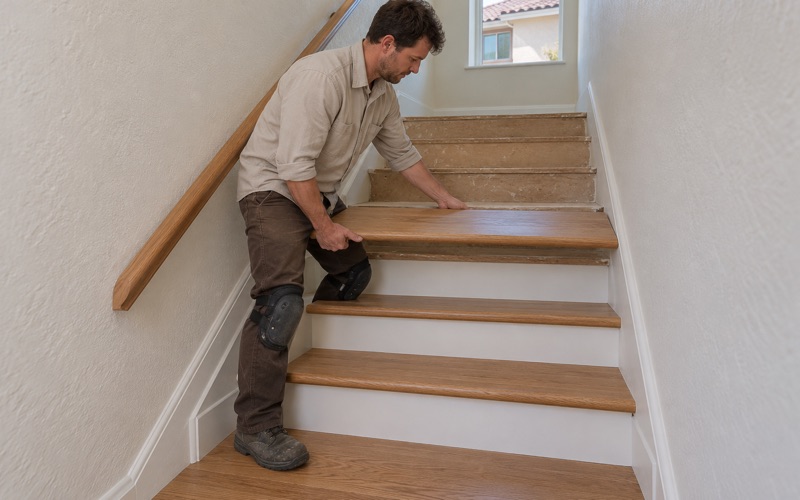
Stairs in older houses often carry the heaviest wear. We price them per tread and riser rather than folding them into a square-foot number, and we repair or replace stair nosing so it matches the floor it meets. Where old and new flooring meet at a doorway, a reducer strip, T-molding or shoe molding finishes the edge cleanly.
Documenting an Older Interior Before It Changes
Photographs and Measurements
Even when an owner has already decided to replace a floor, we suggest recording what is there first. Nothing about it is complicated, and the record costs little. We photograph each room before work begins, note the board width, direction and species we can identify, and write down the moisture content readings we take on the day we start.
That record serves practical purposes. It helps match new boards to old ones if a single room is kept, it gives an adjuster usable evidence if water damage appears later, and it tells a future owner what the house once held. In a city where an inventory can outlast the building it describes, a simple file of photos and numbers is worth keeping.
Salvage Before Removal
If a floor is coming out, sound boards do not have to be thrown away. Where the material allows, we lift boards carefully so they can be reused elsewhere in the house, perhaps on a landing or in a closet, or held back as repair stock. Salvaged pieces keep their original color and age, which is very hard to find again later.
Keeping the Olmsted Plan in View
The city’s planning history is drawing fresh attention. At the May 12, 2026 City Council meeting, the Olmsted Network presented a digital trail about Palos Verdes Estates as an Olmsted-related site, according to an automated meeting summary. That attention has not produced a local ordinance, so what an owner keeps inside a house remains a private choice.
When you are weighing an older floor, we will give you the facts in writing: what the boards are, what condition they are in, what a repair costs against a replacement, and which finishes are legal to use. The decision stays yours, and we will carry out whichever choice you make with the same care and the same written record.
- 20+ Years on Hardwood
- Written Moisture Readings
- Lead-Safe Work Practices