
When you replace carpet with hardwood through Bellflower Wood Flooring, the first thing we do in any Bellflower, CA house is find out what the carpet has been hiding. We handle carpet-to-wood projects there and in surrounding cities including Paramount, Lakewood, Norwalk, Artesia and Downey. In a city where most owner-occupied houses were built between 1939 and 1959, the answer is often original oak strip that only needs to be uncovered, repaired and refinished.
With more than 20 years in wood flooring, we assess what is under the carpet board by board before quoting a full replacement. If the original floor can be saved, we will tell you. If it cannot, or if the carpet sits over concrete or plywood, we help you choose the new hardwood that fits the base underneath.
Taking Up the Carpet the Right Way
Removing Carpet, Pad and Staples
Carpet and pad come up first, followed by the hundreds of pad staples left in the floor. We remove staples by hand rather than scraping them off, because scraping gouges the wood and leaves broken staple legs that tear sandpaper later.
Pulling Carpet Tack Strip
Carpet tack strip is nailed straight into the floor along every wall. Pried up carelessly, it splits the edges of the boards it sits on. We lift it slowly and replace any board that cracks, so the perimeter of the room finishes as well as the middle.
Checking for Old Tile and Mastic
Some carpet sits over older 9x9 floor tile or black mastic. We treat both as a possible asbestos question and recommend an asbestos survey before anything is sanded or scraped. Removal, if needed, is done by an abatement contractor following SCAQMD Rule 1403.
If There Is Hardwood Underneath
Assessing the Original Oak
Original oak strip flooring is checked for thickness above the tongue, water stains, pet damage, termite damage and past patches. We look at a floor register or threshold to measure how much wood is left for sanding, then tell you whether refinishing makes sense.
Repairing Before Refinishing
Most uncovered floors need some repair: boards split by tack strip, stained areas near doors, and sometimes an old floor furnace opening that was covered with plywood. We weave in matching boards before sanding so the repairs disappear under the new finish.
Sanding and Finishing
The floor is sanded to bare wood, stained if you want a new color, and finished with a product that meets SCAQMD Rule 1113. Many uncovered floors have an orange tone from old finish that sanding removes, which is often the biggest change a homeowner notices.
If There Is No Hardwood Underneath
Carpet Over a Wood Subfloor
If the carpet sits on a plywood subfloor or board subfloor, we check it for soft spots and flatness, repair what needs it and install new solid or engineered hardwood. Solid wood nails down directly to a sound wood subfloor.
Carpet Over a Concrete Slab
Over a slab, we run a calcium chloride moisture test or an ASTM F2170 in-situ relative humidity test first and write down the readings. Engineered hardwood glued down or floated over a vapor retarder is usually the right choice on concrete.
Heights, Doors and Transitions
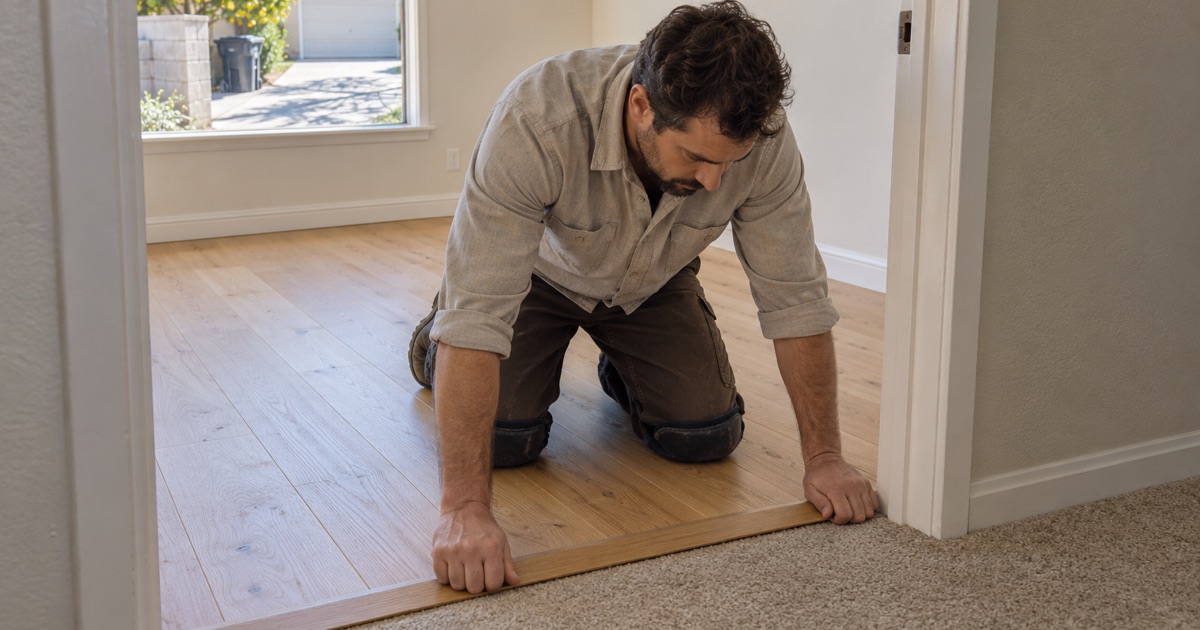
Hardwood sits at a different height than carpet, so doors may need trimming and transitions need planning. Where the new floor meets tile, vinyl or remaining carpet, we use a threshold, T-molding or reducer strip sized for both floors.
Living Through the Change
Lead-Safe Work in Older Houses
In houses built before 1978, removing baseboards and shoe molding to lay a new floor can disturb lead paint. We follow lead-safe practices under the EPA Renovation, Repair and Painting rule during that work.
Rentals Between Tenants
Landlords often replace worn carpet with hardwood when a unit turns over, since wood lasts longer between tenants and can be refinished instead of replaced. We provide written estimates and invoices for your records.
Choosing Between Refinishing and New Hardwood
When Saving the Original Floor Makes Sense
An original oak floor is worth saving when the boards are firmly attached, there is enough wood left above the tongue for a full sanding and the damage is limited to the edges and a few stained areas. In those cases a repair and refinish costs less than new flooring and keeps a floor that already suits the age of the house.
Uncovered floors often surprise people. Boards that looked gray and scuffed under years of carpet dust usually come up clean once the old finish is sanded away.
When New Hardwood Is the Better Choice
Replacement makes more sense when the old floor has been sanded too thin, has large areas of termite or water damage, or was patched with mismatched materials across several rooms. It is also the answer when the carpet was laid over plywood, particleboard or concrete in the first place.
In those cases we compare solid and engineered options for your subfloor, and you see the price of each on the estimate.
Mixing Old and New in One House
Sometimes the answer is both: the original oak in the living room and bedrooms is refinished, and new hardwood goes into a room that was never wood, such as a converted garage or an addition on a slab. We match species and width where the two floors meet, then finish them together so the color reads as one floor.
Planning the Work Around Your House
Furniture, Rooms and Order of Work
Carpet removal, repairs and finishing go room by room, so the house does not have to be emptied all at once. We agree the order at the estimate stage, and let you know how long each area will be out of use while finish coats dry.
Dust and Debris
Old carpet and pad hold years of dust. We roll it up and bag it in the room, then use a dustless sanding system for the floor itself, which keeps most sanding dust out of the rest of the house.
- 20+ Years on Hardwood
- Written Moisture Readings
- Lead-Safe Work Practices