Bellflower Wood Flooring brings more than 20 years of hands-on work to wood-flooring in Willowbrook, and much of that work happens inside rental buildings rather than owner-occupied houses. For an apartment or plex owner, a damaged floor is more than a repair ticket. It is part of the unit a tenant lives in, and the paperwork around the job matters almost as much as the boards themselves.
We repair, refinish and replace hardwood and engineered floors in duplexes, fourplexes and larger apartment buildings, working one unit at a time. Every job starts with a look at the subfloor and a moisture reading, and every job ends with a written invoice naming the unit, the rooms and the work performed, so an owner can file it with the rest of that unit’s records.
This page is written for owners and managers of multi-unit rentals. It covers how the County’s rent registry frames a floor repair, what we actually do inside an older building, and how we keep records clean enough to sit beside a registration. We do not give legal advice or decide whether a building is covered, because that determination belongs to the County.
Willowbrook’s Apartments and the County Rent Registry
Willowbrook is an unincorporated community in Los Angeles County, so rental rules here come from the County rather than a city hall. The Board of Supervisors governs the area, which sits in Supervisorial District 2, and the County’s Department of Consumer and Business Affairs, known as DCBA, administers the rent ordinance and its online registry.
Most Households Here Rent
Of the 5,914 occupied housing units in Willowbrook, 3,384 are renter-occupied, which works out to 57.2 percent. Renting is the majority arrangement here, and it shapes who calls about a damaged floor. Often it is the owner or a property manager on the phone, not the person who walks across that floor every morning.
Among those renters, 1,566 households live in buildings of two or more units, from side-by-side duplexes up to large complexes, including 400 households in buildings of fifty units or more. Those are the properties this page is about: buildings where a floor repair happens inside a unit that the owner also has to describe to the County every year.
Which Buildings the Ordinance Fully Covers
The County’s Rent Stabilization and Tenant Protections Ordinance, found in County Code Chapter 8.52, fully covers rental properties with two or more units whose certificate of occupancy is dated on or before February 1, 1995. Fully covered units carry rent limits along with eviction protections, while partially covered units carry eviction protections only.
The age of the local housing makes that date relevant. In Willowbrook, 68.0 percent of housing units were built before 1980, well ahead of the 1995 cutoff. Whether any particular building qualifies is still a question for DCBA rather than a flooring crew, and we point owners to the County whenever coverage is unclear.
The Annual Registration and Its Deadline
Owners who rent units in unincorporated Los Angeles County must register them with DCBA and pay an annual fee. The current cycle asks for registration by September 30, 2026, and the fee is $90 for each fully covered unit and $30 for each partially covered unit. Missing that deadline brings penalties and late fees.
The registration is more than a head count. For each unit, the owner supplies details such as the start of the tenancy, the rent amount, the housing services provided and the security deposit. That is where our work meets the registry: the floor is something a tenant uses every day, and the owner is the one describing the unit.
Looking for wood-flooring closer to La Mirada? See Wood-Flooring in La Mirada.
What a Registered Unit Says It Provides
Once a unit is on file, the owner has described it to the County in writing. The practical goal for any floor repair follows from that. The unit after the work should still match the unit the owner described, and the record of the work should show clearly what changed, what stayed the same and when it happened.
Keeping the Floor Consistent With the Unit
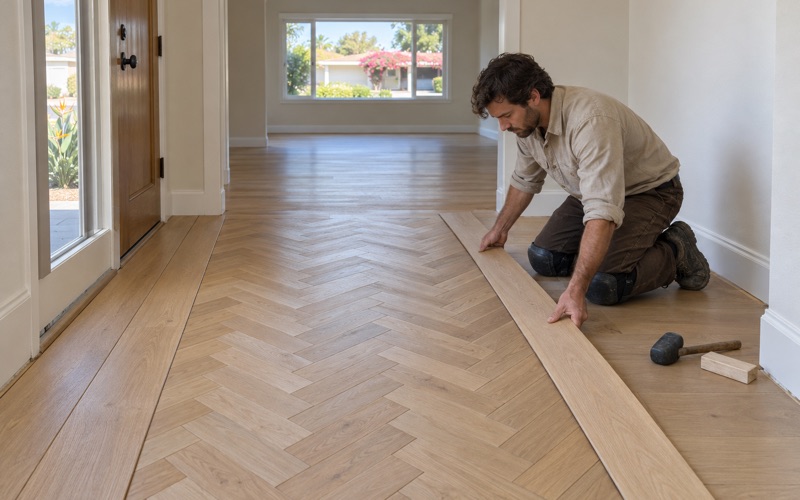
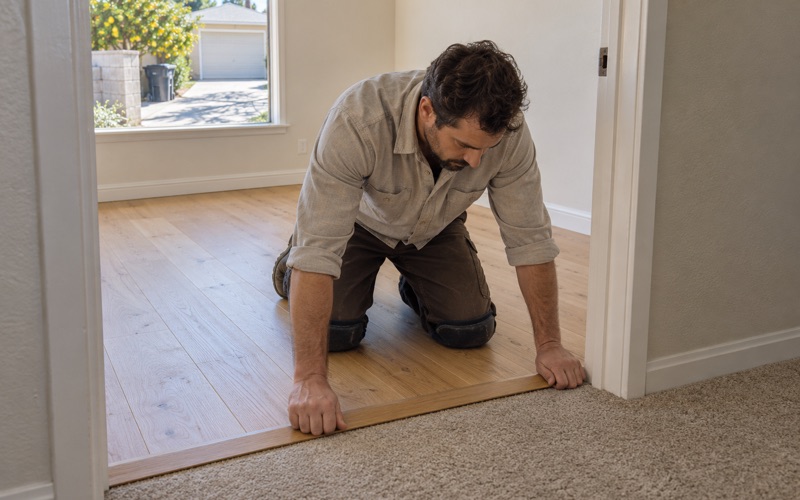
If a unit has been rented with wood floors in the living room and bedrooms, a damaged section is best repaired in wood rather than patched with whatever is cheapest that week. We match species, board width and finish color where the existing floor allows it, so the room reads as one floor after the repair.
When a close match is not possible, we say so in writing before work starts and lay out the options, such as replacing a full room or running a reducer strip or T-molding at a doorway. The owner decides, and the estimate records what was chosen and why, which is far easier to explain later than an unrecorded patch.
Unpaid Fees and Rent Increases
One registry rule is worth knowing before scheduling major floor work. According to DCBA, a landlord with unpaid registration fees cannot increase rent or pass through costs to tenants. That rule applies no matter what the work was, how much it cost or how necessary it turned out to be for the unit.
We do not advise on rent, pass-through applications or amortization, and nothing on our invoice predicts a rent outcome. What we can do is date and describe the work accurately, so anything the owner later files with the County rests on a clear, specific record of what was done in that unit.
Layers Left by Earlier Turnovers
Floors in older rentals have usually been through several tenants and several repairs. We find carpet over wood, wood-look vinyl plank laid over earlier layers, and boards patched in more than one species. Before quoting, we note each layer we find, because the unit’s floor history often explains its current problem.
That inventory also protects the owner. A written description of what was under the carpet, and what condition it was in, tells the next manager or the next contractor what they are working with, instead of leaving them to pull up a corner and guess.
Repairing Floors in an Older Covered Building
Willowbrook’s housing stock skews old. The 1950s produced 1,146 of the community’s 6,143 housing units, the largest single decade, and 41.4 percent of units predate 1960. Floors in buildings of that age call for careful diagnosis before any material is ordered, and for work practices that respect neighbors on the other side of a shared wall.
Board Replacement and Weave-In Repair
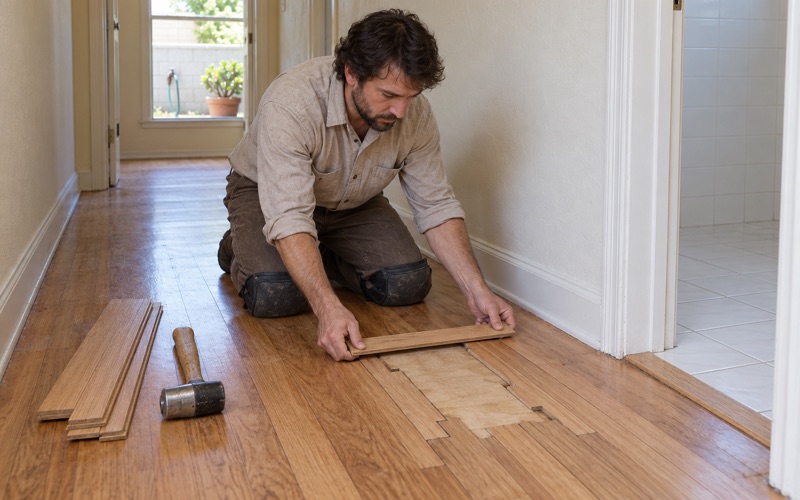
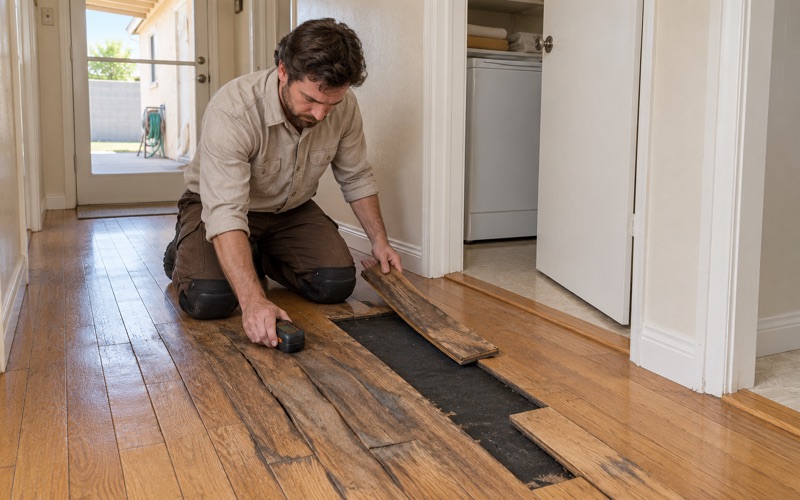
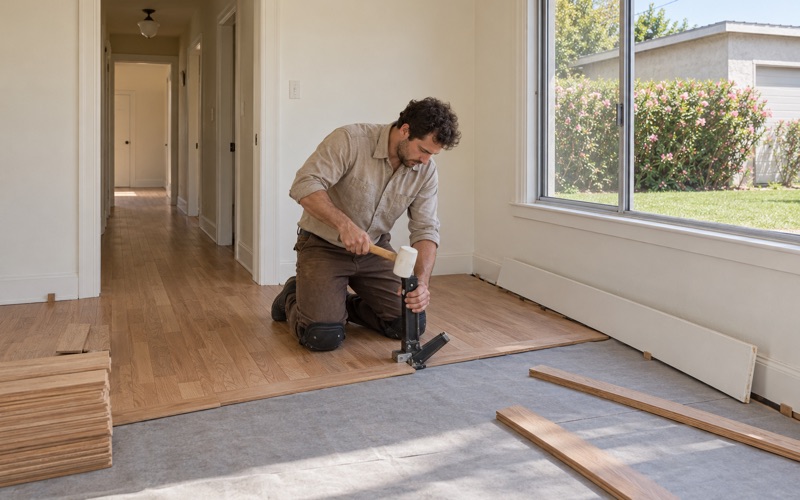
Most apartment floor damage is local: a ruined section near a kitchen sink, a scorched spot, cupping by a window, or a run of boards loosened by nail pops and squeaks. We cut out damaged boards and weave new ones into the surrounding field so the joints stagger naturally, instead of dropping in a square patch.
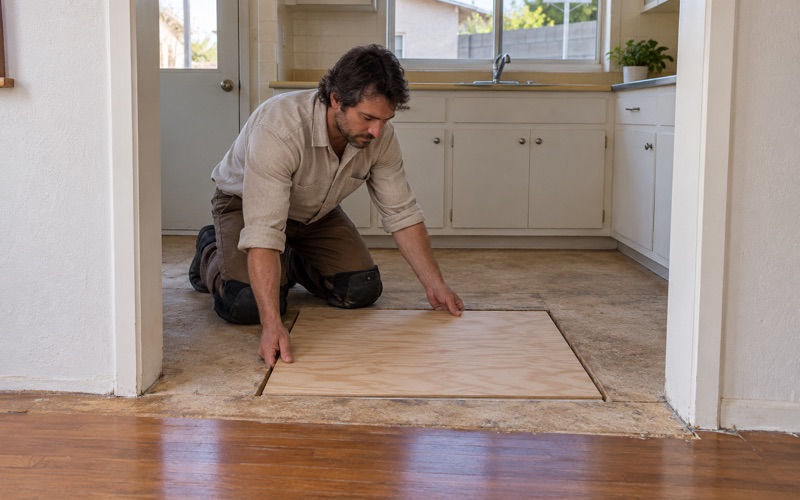
Soft spots and bounce are traced to the subfloor and framing before we price a finish floor. A sagging joist or delaminated plywood subfloor will outlast any new boards laid on top of it, so we open the area, look, and write down what we found before recommending joist sistering, new underlayment or another fix.
Moisture Readings Before Material Is Ordered
Cupping, crowning and buckling are moisture problems before they are flooring problems. We take readings with a wood moisture meter on the existing boards, and where a floor sits over concrete we test the slab with a calcium chloride test or an ASTM F2170 in-situ relative humidity test, depending on the job.
The readings are written down with the date and the spot in the unit where each was taken. New material goes through acclimation until its moisture content suits the space, following NWFA installation guidelines, so the repair does not shrink or swell away from the surrounding floor after the tenant moves furniture back in.
Lead, Old Tile and Black Mastic
Because so much of the local stock predates 1978, we treat old paint and finishes as a lead question and follow EPA Renovation, Repair and Painting rule work practices when disturbing them. Dust control matters even more in a building where neighbors share walls, hallways and sometimes ventilation with the unit being worked on.
Old 9x9 floor tile and black mastic under an apartment floor are treated as a possible asbestos question before anything is sanded or scraped. If the layers look suspect, work stops until an asbestos survey answers the question, and SCAQMD Rule 1403 governs how any confirmed material is handled and removed.
Finishes Within the Air District Limit
Willowbrook sits in the South Coast Air Quality Management District, where SCAQMD Rule 1113 caps wood coatings at 275 g/L of VOC. We choose finishes that are legal to apply here, usually a waterborne polyurethane, which also carries less odor in a building where the other units stay occupied during the job.
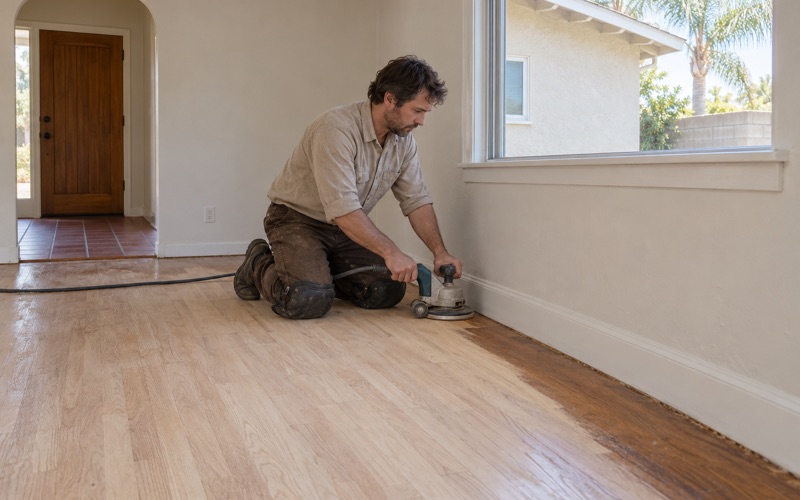
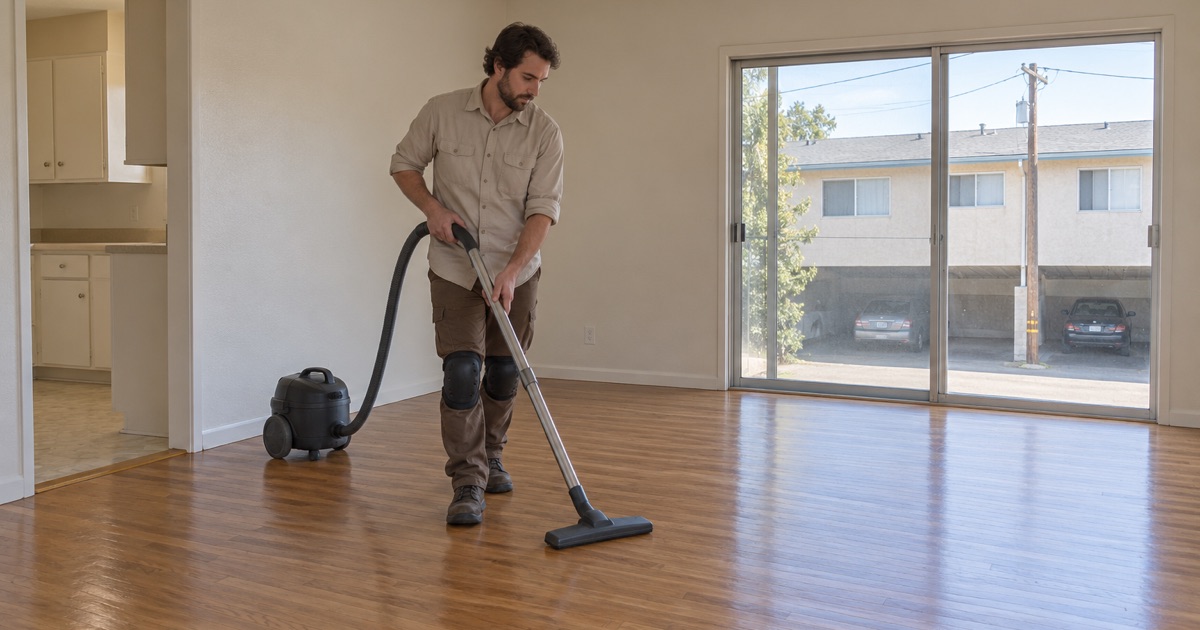
A screen and recoat can refresh a worn but sound finish during a unit turn without full sanding. When the finish is peeling, milky or worn through to bare wood, we sand with a dustless sanding system through a proper grit sequence and note the sheen level, so a later touch-up can match it.
Records, Unit Turns and Tenants Who Stay
Registration asks owners to describe their units accurately, and the flooring record is one part of that picture an owner fully controls. We write our paperwork so it can sit in a unit file and make sense to someone reading it years later, without anyone needing to call us to explain it.
Estimates and Invoices Written for the Unit File
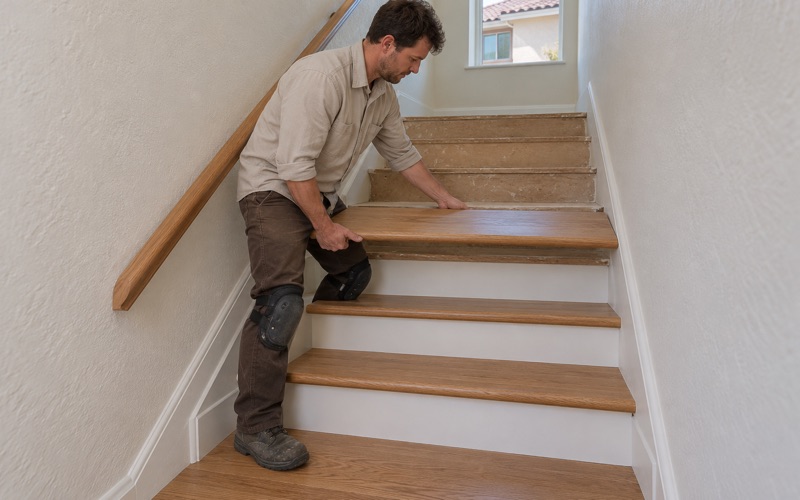
Each estimate names the building address, the unit number, the rooms and the square footage involved, and lists materials by type and finish. Stairs in a townhouse-style unit are priced per tread and riser rather than buried inside a square-foot number, so the line items match what a manager sees walking the unit.
The invoice repeats that detail after the work is done and adds before and after photos, the moisture readings and the finish used. When damage came from water, we trace it to its source and document it in a form an insurance adjuster can use. The owner keeps everything, and the history stays with the unit.
Unit Turns in Plexes and Apartment Buildings
The cleanest time to repair a floor is between tenants. A vacant unit lets us sand, finish and allow the finish to cure with nobody walking on it. It also lets the owner compare the floor against move-in records when separating normal wear and tear from damage under the Civil Code 1950.5 security deposit rules.
Renters in Willowbrook tend to stay, so turns come less often than an owner might plan for. Of renter households, 1,818 moved in between 2010 and 2017, and another 632 between 2000 and 2009. When a long tenancy finally ends, the floor has seen years of daily use, and we scope the turn with that in mind.
Working in a Building Where Tenants Stay
Many floor repairs cannot wait for a vacancy. When a tenant stays in place, we plan the job with the owner and the tenant around room-by-room access, move furniture in stages and keep a working path through the unit. Dust barriers go up at doorways, and neighbors hear about noisy work in advance.
The County prohibits starting construction work in unincorporated areas before 6:30 a.m. or after 8:00 p.m., Monday through Saturday, and all day Sunday, with certain exceptions. We schedule sanding and nailing well inside those hours, because in a building with shared walls the people next door hear an edger almost as clearly as the tenant does.
- 20+ Years on Hardwood
- Written Moisture Readings
- Lead-Safe Work Practices